
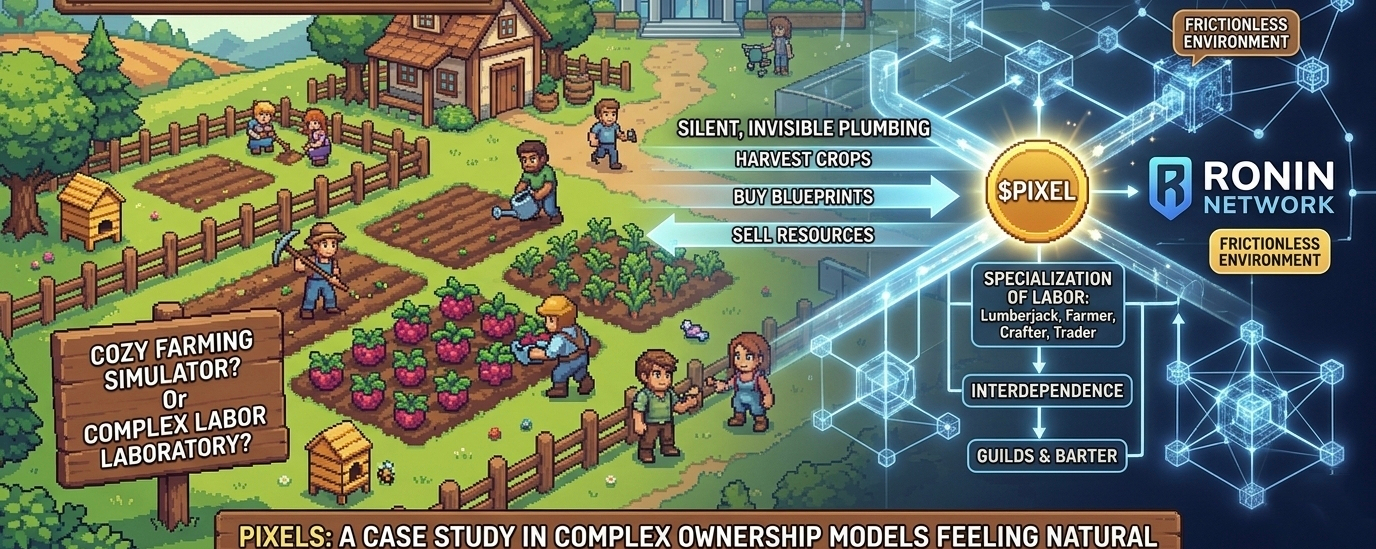
I have spent the better part of the last year navigating the intricate, pixelated soil of Terravilla. As someone who studies digital behavior and emergent virtual economies, I find myself drawn not to the flashy, high-budget spectacles of the gaming world, but rather to the quiet, persistent hum of a place like Pixels. What strikes me first—and what I believe is the secret to its remarkable retention rates—is the brilliant disguise it wears. It looks like a cozy farming simulator, a nostalgic nod to the games I played on a chunky CRT monitor decades ago. But once I put my shovel in the ground and started tracking the flow of resources, I realized I was standing in the middle of a complex, real-time laboratory for labor and asset ownership.
The first thing I had to adjust my academic lens to was the role of the Ronin Network. In my previous research, I often encountered blockchain games that were clunky, expensive, and ultimately hostile to the casual player. Ronin changes the equation entirely. For me, it functions as the silent, invisible plumbing. I harvest a crop of Popberries, I list them for sale, I buy a new blueprint for a beehive; the transactions happen in the background without a single pop-up demanding a gas fee that costs more than the digital honey I'm trying to sell. This frictionless environment is why I see grandparents and crypto skeptics standing shoulder-to-shoulder in the in-game plazas, completely unaware that the soil they're tilling is secured by a multi-million dollar blockchain.
From a researcher's perspective, the true depth lies in the specialization of labor. I didn't just play the game; I observed how the society within it structures itself. I chose the path of a lumberjack, focusing entirely on woodworking. Very quickly, I realized I was useless without the farmers growing the specific cotton I needed for advanced blueprints. I had to interact. I found myself walking through the marketplace, watching players barter and form guilds with an organic efficiency that most corporate "metaverses" would kill for. This isn't a game of solo grinding; it's a game of interdependence. The PIXEL token, in my view, is less a speculative asset and more of a keycard. Holding it gave me access to the better land and the rarer crafting recipes, which in turn made my time feel valued. It’s a simple system, really: I contribute to this little world, and the world gives me back a tangible, tradeable piece of its infrastructure.
I’ve come away from this project with a clear conclusion. Pixels is not just another Web3 title trying to cash in on a trend; it is a case study in how to make complex ownership models feel as natural as watering the tomatoes in my own backyard garden. The pixel art is the invitation, but the community and the ownership are the reason I keep logging back in.