
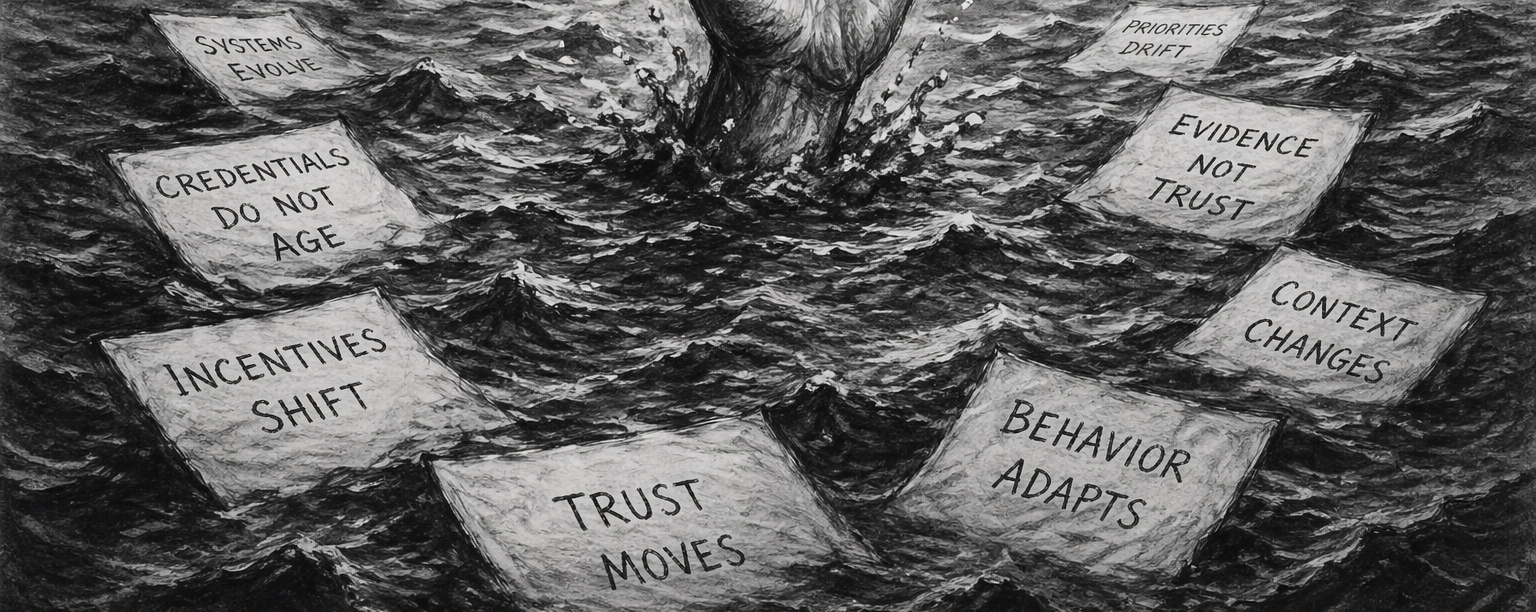

I stopped looking for clean systems in crypto a long time ago. The longer you stay in this space, the more obvious it becomes that nothing actually removes trust from the equation. It just moves it somewhere else. It hides inside different layers, different assumptions, different incentives. You think a mechanism solved something, but really it just changed where the pressure sits. And that pressure always finds a way back out.
When I look at something like PIXEL and the broader Pixels ecosystem, I do not see a finished system that neatly solves trust. I see something much more real. An experiment that is still unfolding. Something that will behave in expected ways at first, and then slowly drift into edge cases no one fully planned for.
On the surface, credential systems feel reassuring. You participate, you earn something, it gets recorded. Maybe verified. Maybe rewarded. There is a sense that actions are being tracked in a way that creates structure. It gives the impression that behavior can be measured and therefore trusted.
But that impression does not last.
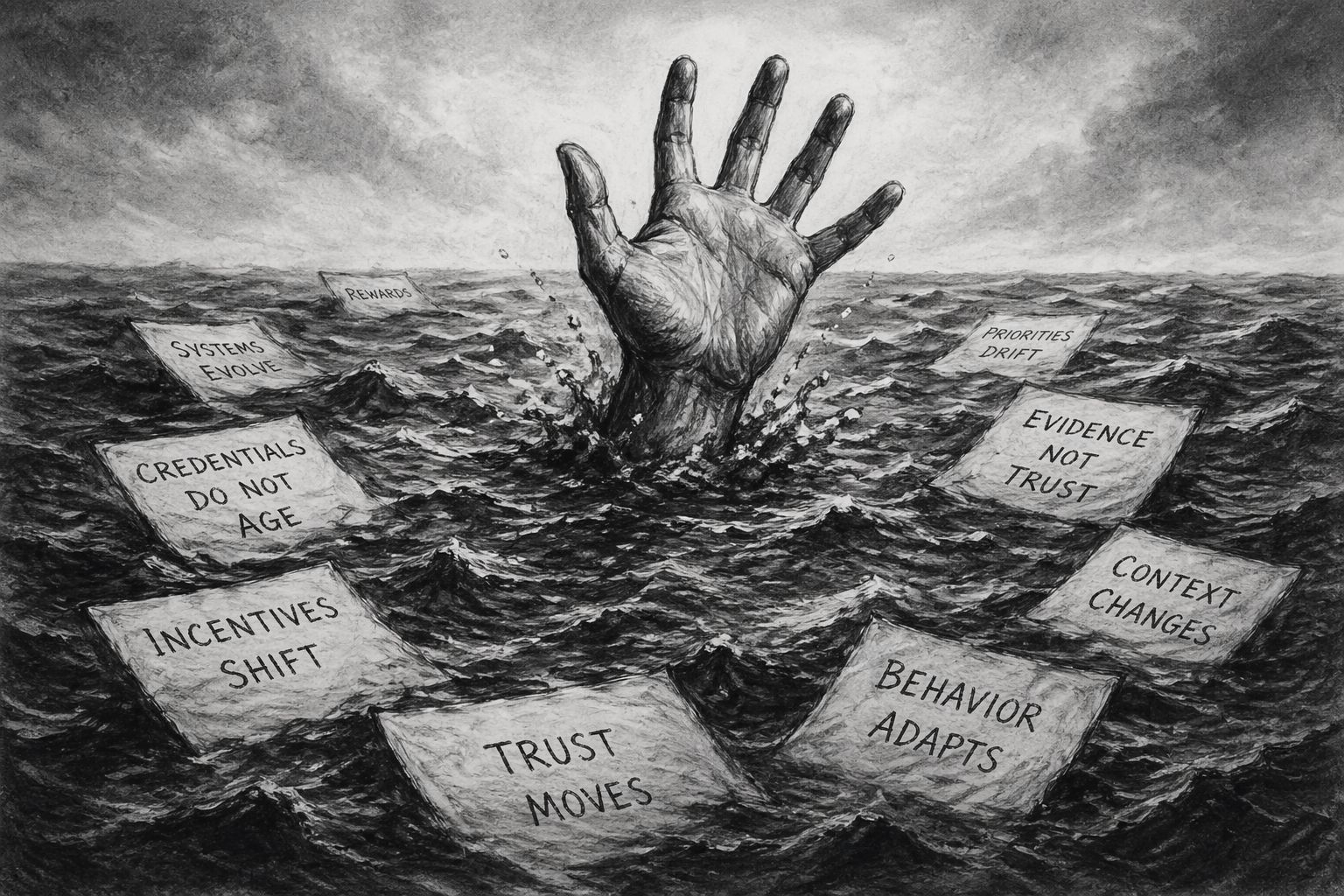
The problem is not with the data itself. It is with time. Credentials do not evolve. They stay fixed while everything around them shifts. The person behind a wallet changes. Their goals change. The environment changes. What once looked like genuine engagement can later look like positioning. The record stays the same, but the meaning behind it does not.
That is where things begin to blur.
Introduce incentives, even small ones, and behavior starts to adjust almost immediately. Not in obvious ways at first. People do not suddenly break systems overnight. They adapt quietly. They optimize just enough to qualify. Then a little more. Then they start exploring the edges.
This is not necessarily malicious. It is simply human. People respond to incentives. They learn faster than systems expect them to.
And once that happens, credentials begin telling a different story.
They no longer represent pure participation. They represent adaptation. You still see activity, consistency, engagement. But underneath it, there is a deeper question. Is this meaningful behavior or optimized behavior? The system records both the same way because it can only measure what it was designed to measure.
Over time, that gap becomes harder to ignore.
Some users continue interacting naturally. Others shift toward efficiency. A smaller group pushes further, automating or coordinating actions at scale. At that point, credentials stop feeling like proof. They start feeling like traces. Signals that something happened, but not necessarily why or how.
That shift changes how you look at everything.
Instead of seeing credentials as a source of trust, you start seeing them as stored evidence. And evidence without context is always incomplete. A long history does not guarantee reliability. High activity does not guarantee value. Sometimes it simply means someone understood the system better than others.
Pixels exists right in the middle of this dynamic. And because it is a game, the situation becomes even more layered. Games naturally encourage exploration, experimentation, and pushing boundaries. That mindset does not disappear when tokens are introduced. It becomes stronger.
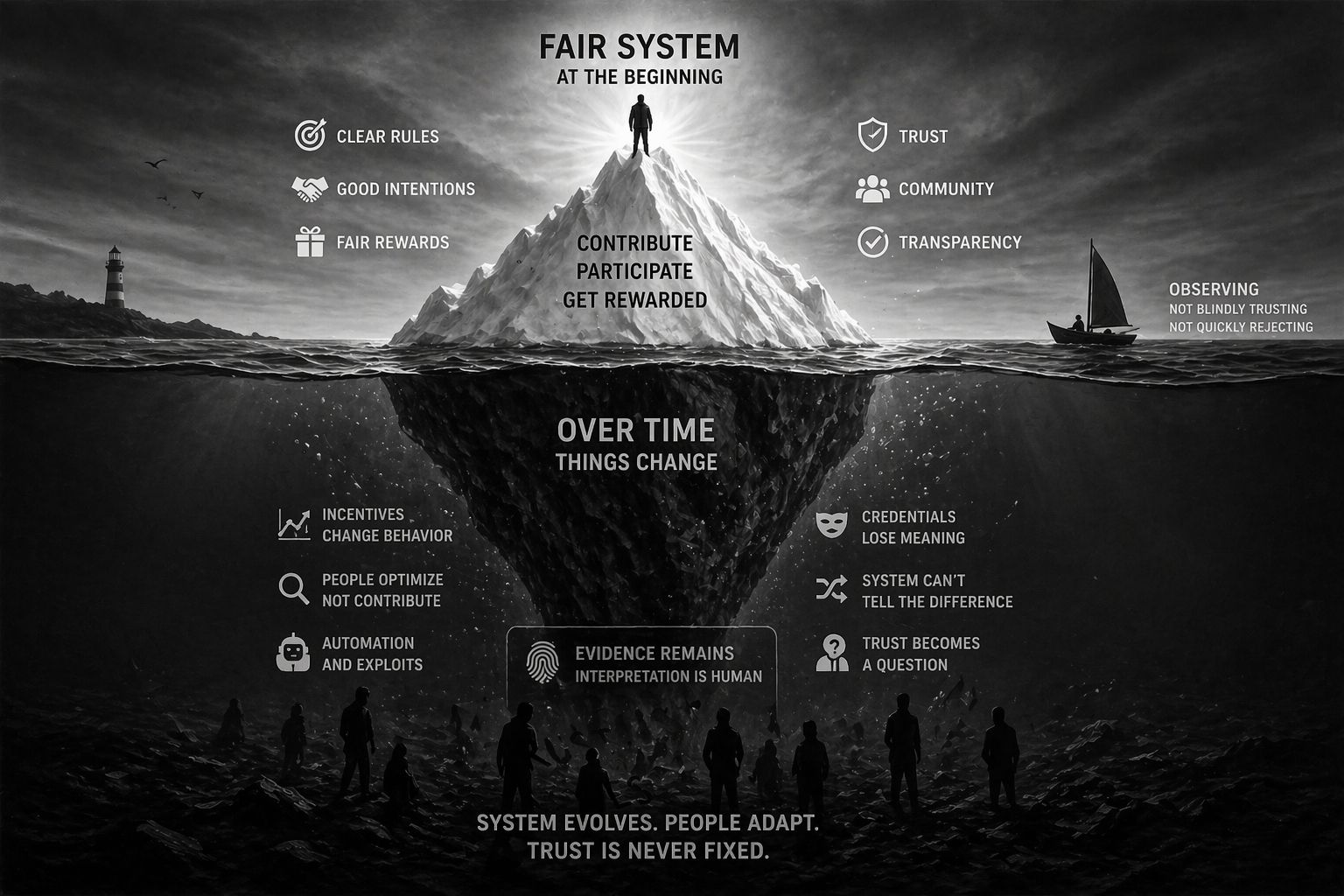
Now you have a space where behavior is both playful and strategic at the same time. A player can be genuinely engaged one moment and purely extractive the next. Both actions can exist side by side. And the credential system has to somehow make sense of that.
It probably cannot fully do that.
But maybe that is not the point.
What matters more is whether the system remains readable over time. Whether someone can look at a history of actions and still ask useful questions. Not blindly trust it, but not dismiss it either. Just interpret it.
That feels like the real shift in crypto systems. Trust is no longer something that is handed to you. It is something you examine. Something you revisit as conditions change.
And conditions always change.
The people designing these systems are not outside of them. They respond to incentives too. What they choose to reward today may not align with what they value tomorrow. When that shift happens, older credentials begin to feel out of place. Not incorrect, just disconnected from the current reality.
That is when doubt quietly enters.
People start asking why certain actions mattered before but matter less now. Who decided that shift. What changed behind the scenes. There are not always clear answers, and that uncertainty does not cause immediate collapse. It creates gradual hesitation.
Trust rarely disappears instantly. It fades.
Users become more cautious, but also more opportunistic. They start balancing belief with strategy. Participating while questioning at the same time.
This pattern has repeated enough times across crypto that it no longer feels surprising. The real question now is whether newer systems are improving how they handle this erosion, or simply extending the time before it becomes visible.
Pixels feels like it is leaning toward honesty in that regard. It does not try to eliminate noise completely. It organizes it. It records behavior as it happens, even when that behavior is imperfect or reactive.
There is value in that approach. But it does not resolve the deeper issue.
Recording trust is not the same as understanding it.
Understanding requires interpretation. It requires people paying attention, noticing patterns, questioning inconsistencies. That layer cannot be fully automated. It depends on perspective, context, and sometimes intuition.
So the system ends up in an in between state.
Not something you can fully rely on. Not something you can dismiss either.
Just something you observe.
You watch how people behave when incentives shift. You watch what happens when rewards tighten or expand. You watch how quickly strategies evolve. And through that, you begin to understand the system not as a fixed structure, but as something alive.
Trust in crypto does not arrive fully formed. It moves. It stretches. It weakens and rebuilds over time.
And credentials simply record the journey.
Whether we interpret that record correctly is still uncertain. And maybe that uncertainty is not a flaw. Maybe it is just part of how these systems actually work.
