The US-South Korea alliance is one of the most strategically important partnerships in the Indo-Pacific. Tens of thousands of American troops are stationed on the Korean peninsula. The two countries share decades of military cooperation, joint exercises, and intelligence infrastructure built on mutual trust. That relationship is now showing cracks — and the trigger is a statement about a nuclear site that was already publicly documented in a 2016 report by a US thinktank.
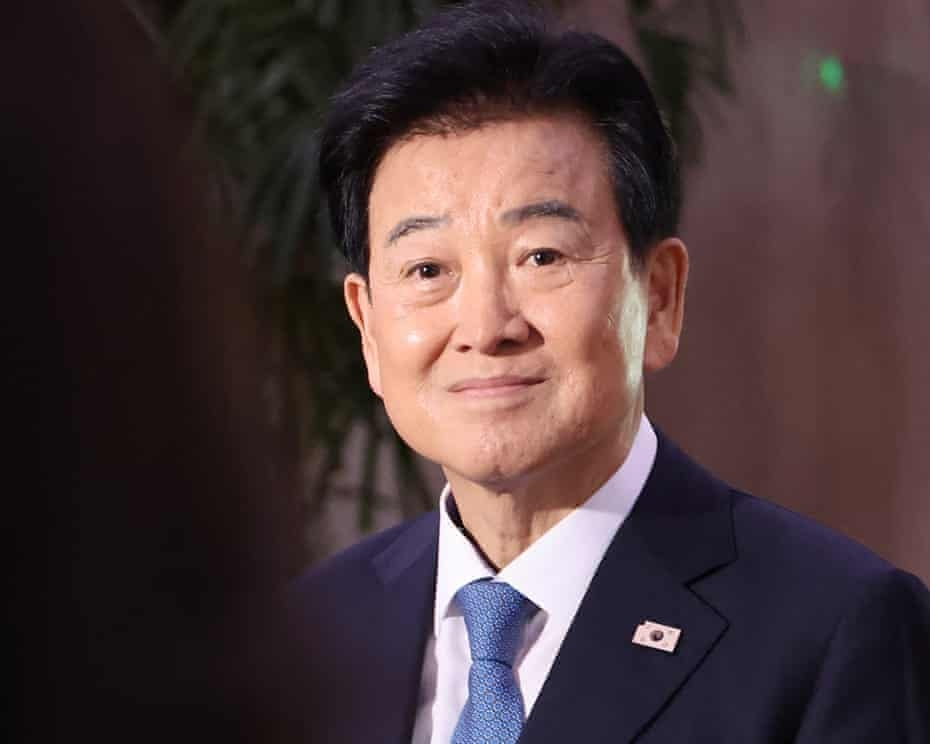
Here is what actually happened. South Korea's unification minister Chung Dong-young told lawmakers that North Korea was operating uranium enrichment facilities in Kusong — a north-western area not previously officially confirmed alongside known sites at Yongbyon and Kangson. Washington reportedly protested, describing the disclosure as unauthorized sharing of sensitive intelligence. The US has since partially restricted satellite-gathered intelligence sharing with Seoul, according to South Korean military sources.
Chung's response is worth examining carefully. He has consistently maintained that his remarks were drawn entirely from publicly available sources — specifically citing that 2016 report and existing South Korean media coverage. He noted that he had mentioned Kusong during his confirmation hearing the previous year without any objection from Washington. He is understandably bewildered that the same information has suddenly become a diplomatic crisis nine months later.
President Lee Jae Myung, writing from Delhi during a state visit to India, backed his minister unequivocally, stating that claims premised on Chung having leaked classified US intelligence were simply wrong. That a sitting president felt compelled to make that statement publicly — from abroad — reflects how seriously Seoul is taking both the restrictions and the principle at stake.
The timing and context of Washington's response raises legitimate questions. South Korean media reports suggest the US cited multiple grievances alongside the Kusong disclosure — including pending South Korean legislation that would grant Seoul authority over access to the demilitarised zone, currently managed exclusively by the US-led UN command. That suggests this incident may be less about one minister's parliamentary testimony and more about broader tensions in how the alliance is being managed under the current US administration.
There is a meaningful difference between a genuine intelligence breach — where classified, operationally sensitive information is exposed in ways that compromise sources, methods, or ongoing operations — and a minister referencing publicly available academic research during a policy explanation to lawmakers. Treating the latter as equivalent to the former sets a troubling precedent. It implies that allies should self-censor even publicly available information if Washington finds the timing or framing inconvenient.
The IAEA's confirmation last week of a rapid increase in operations at the Yongbyon reactor — with North Korea's nuclear arsenal estimated to have grown to several dozen warheads — underlines why clear, honest communication about the North Korean nuclear threat is more important than ever. This is not a moment for allied democracies to be restricting the flow of information between themselves over parliamentary testimony.
Strong alliances are built on candor, mutual respect, and the confidence that partners can speak honestly without fear of punishment. If Washington's response to Seoul referencing publicly available research is to restrict intelligence sharing, it sends a message that allies should manage what they say — not based on what is true or publicly known, but based on what Washington finds politically comfortable at any given moment.
That is not the foundation of a resilient alliance. And in a region where the stakes of miscalculation are as high as they are on the Korean peninsula, it is a dynamic that both sides urgently need to address.
#SouthKorea #USKoreaAlliance #NorthKorea #NuclearSecurity #IndoPacific