

Most systems tell you that you’re in control long before you really get a chance to question how much of it was already decided.
Pixels carries that kind of feeling. At first, it all seems normal. You open the board, look through the tasks, pick something, finish it, and get a reward. It feels simple, almost routine. But after spending more time there, a quiet doubt starts to build. The board doesn’t feel like it’s forming around you. It feels like it was already there, already arranged, before you even arrived.
That’s the part that sticks. The tasks don’t feel fresh or newly created. They feel placed. Some paths seem heavier, some feel almost empty, and others sit somewhere in between. It’s like you’re not watching something take shape—you’re stepping into something that already has one.
And that slowly changes how everything feels.
Usually, you expect a system like this to respond to you. You do something, and it reacts. But here, it doesn’t always feel like that kind of back-and-forth. Sometimes it feels like you’re just moving through a space that was already prepared. You’re still making choices, but the options themselves don’t feel like they came from you. They feel like they were waiting.
Coins make this difference easier to notice. They feel open, always there, always flowing. There’s no real sense of restriction. But once Pixels comes into play, everything starts to feel tighter. More selective. Like now, not everything is allowed to matter. Some things seem supported, while others barely register.
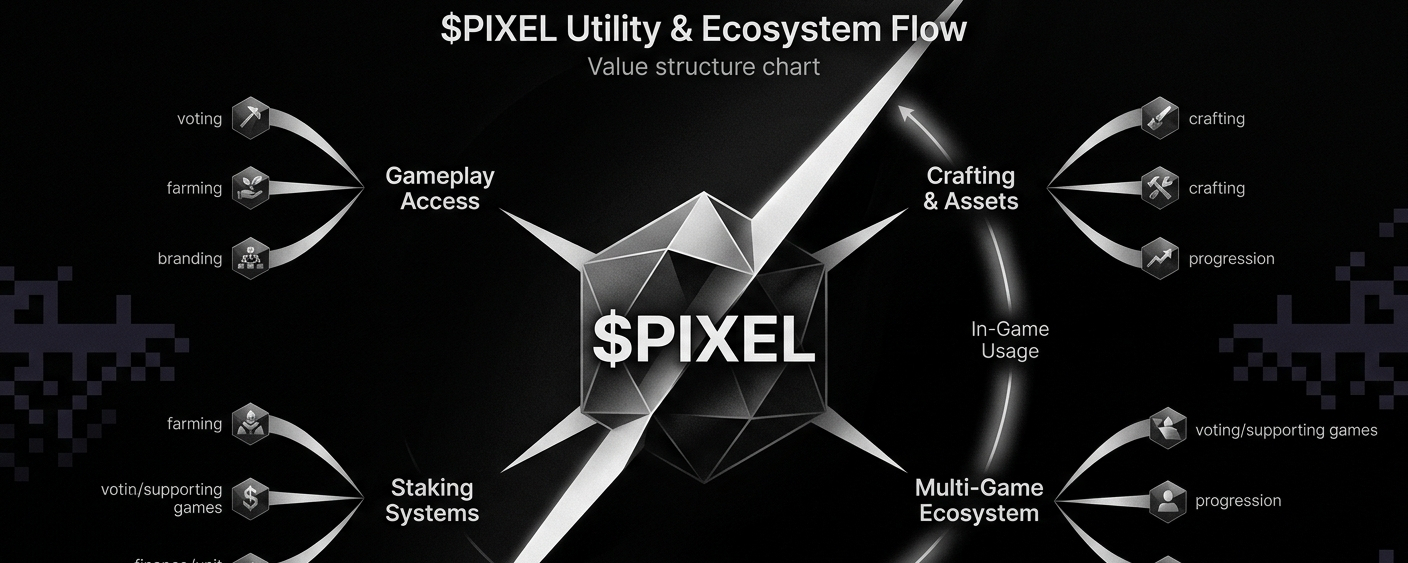
That’s where the thought shifts toward staking. Not as something you clearly see, but as something that may have already shaped the board before it reached you. If value was already directed somewhere earlier, then what you’re seeing now isn’t entirely new. It’s what remains after that direction has already taken place.
Then there’s RORS. You don’t see it directly, but you can feel it. Nothing ever seems to overflow. Nothing pushes beyond its limits. Everything feels contained, like it’s already been checked to make sure it can hold up. So the board stops feeling like a place where opportunities are created. It feels more like a place where only the ones that can survive are shown.
Trust Score adds another layer to that feeling. It doesn’t seem to control what you see at first, but it does affect what actually comes out of it. You might complete something and see a reward, but that doesn’t mean it passes through untouched. There’s still something deciding how much of that value really carries forward.
That’s what makes the whole experience hard to fully understand. You still play, you still choose, you still complete tasks. On the surface, it feels like you’re earning. But the more you sit with it, the more it feels like the important parts might already be happening somewhere else—before you act, and even after you finish.
And still, you’re part of it. That’s the strange balance. You’re not outside the system, but you’re not fully shaping it either. You’re moving inside something that already has its own limits, its own structure, its own flow.
Some days, the board feels solid. Like there’s real backing behind what you’re doing. Other days, it feels lighter. Not empty, just thinner—like whatever you’re seeing doesn’t carry much weight. The tasks are still there, the actions are the same, but the feeling shifts. And it’s hard to explain why.
It makes you wonder if the difference comes from what you’re doing, or from where you’ve ended up inside the system that day. Maybe the flow of value shifted. Maybe something changed earlier in the process. Or maybe you just landed in a different part of it.
The uncomfortable thought is that not everything you do is even meant to turn into value. Not because you did something wrong, but because it was never set up to matter in the first place. Some actions might just exist to keep things moving, not to produce anything meaningful.
That idea doesn’t sit easily.
Because it means what you see isn’t neutral. It’s already filtered. By the time a reward shows up, it might already be too late to change anything about it. The direction was set earlier, the limits were applied earlier, and you’re just the one interacting with it at the end.
From the inside, it still feels like control. It feels earned, because you were there, doing the work when it appeared.
But being there doesn’t necessarily mean you shaped it.
So the question shifts. It’s no longer just about doing more or getting better at tasks. It becomes about understanding where value actually exists in the first place. Are you improving what you do, or are you slowly learning how to move closer to the parts of the system that already carry weight?
And it’s not easy to tell.
Because inside the loop, everything feels earned the moment it appears. That feeling is strong. But it doesn’t explain how much of it was already decided before you got there.
In the end, Pixels doesn’t just feel like a place where you complete tasks. It feels like a place where value is already moving, already shaped, and you’re stepping into it somewhere along the way.
So when you open the board again tomorrow and it looks a little different, it leaves you with a quiet question—
are you really seeing a new opportunity,
or just another version of something that was already arranged before you arrived?