
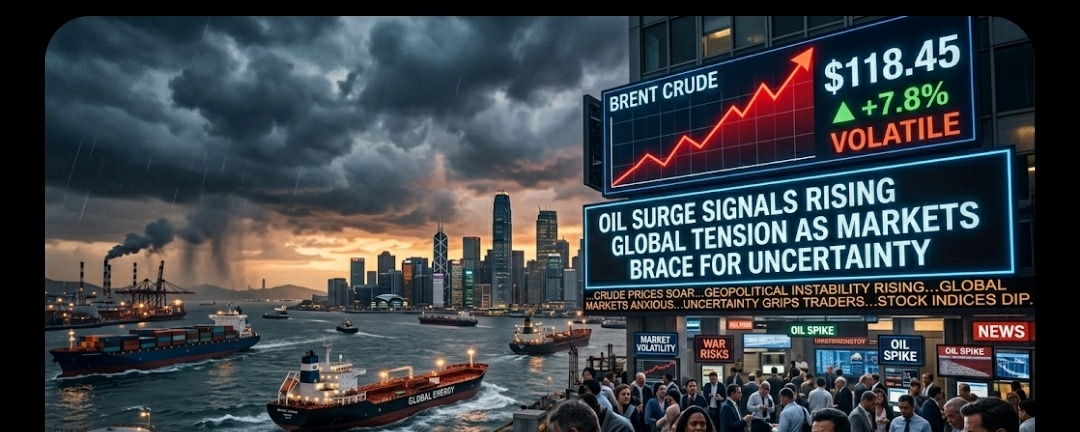
Global financial markets are entering a phase of heightened uncertainty as oil prices surge sharply amid escalating geopolitical tensions. Brent crude has climbed nearly 6%, breaking above the $100 per barrel mark for the first time since the onset of the blockade—an important psychological and economic threshold that signals growing concern among investors.
The surge comes at a critical moment, as diplomatic negotiations between the United States and Iran appear to be losing momentum. With a ceasefire deadline fast approaching, uncertainty around the outcome has intensified volatility across commodities and risk assets.
Donald Trump has taken a firm stance on the situation, signaling that he is not inclined to extend the current truce. He warned that if negotiations fail, the possibility of renewed military action remains on the table. Such remarks have further fueled market anxiety, as investors weigh the potential for escalation in an already fragile geopolitical environment.
At the same time, JD Vance is preparing to lead the next round of diplomatic talks in Islamabad. This move reflects a continued effort to reach a negotiated solution, though expectations remain mixed. The coming days are likely to be decisive in determining whether diplomacy prevails or tensions escalate further.
Interestingly, despite the sharp rise in oil prices, Trump has downplayed the significance of the move, describing it as relatively minor. He suggested that, given the current geopolitical climate, prices could have surged even higher. This perspective highlights the administration’s attempt to project confidence and avoid triggering panic in global markets.
While traditional markets react to geopolitical developments, the cryptocurrency sector has shown notable resilience. Bitcoin continues to trade steadily near the $78,000 level, indicating that investors are not rushing into or out of digital assets in response to the current situation. This stability suggests that crypto markets are, at least for now, taking a wait-and-see approach.
The divergence between oil and crypto markets underscores the complexity of today’s financial landscape. Oil, as a traditional geopolitical asset, is highly sensitive to supply disruptions and conflict risk. In contrast, Bitcoin $BTC and other digital assets are increasingly being viewed through a different lens—sometimes as risk assets, and at other times as potential hedges against global instability.
Looking ahead, the trajectory of both oil and crypto markets will largely depend on the outcome of ongoing diplomatic efforts. A breakthrough in negotiations could quickly ease tensions and stabilize prices, while a breakdown could trigger further spikes in oil and broader market volatility.
In this environment, investors are closely monitoring every development, knowing that even a single headline could shift market sentiment dramatically. The coming days will not only shape geopolitical dynamics but could also redefine short-term trends across global financial markets.
