

I’ve been around long enough to recognize a pattern when it comes to play-to-earn. Not outright negativity, just a kind of quiet skepticism that builds after seeing the same loop unfold again and again. A project launches, early users earn well, token momentum kicks in, and suddenly the crowd shifts from players to extractors. Rewards get thinner, systems get strained, and eventually the whole thing fades out.
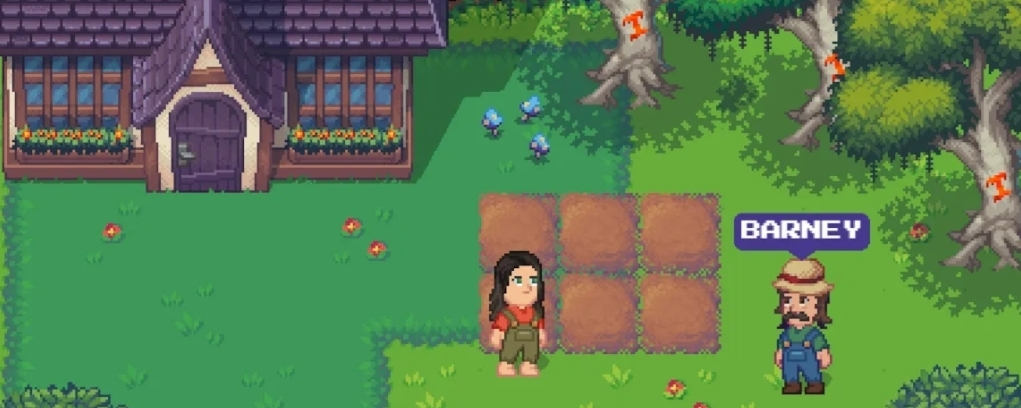
That cycle has played out so many times that new entries in the space rarely feel new at all. When Pixels started gaining traction, my initial reaction wasn’t excitement. It was observation. Another farming-style game, familiar comparisons, similar surface-level structure it all felt predictable at first glance.
Not marketing language, not investor-facing narratives, but the way the mechanics themselves were framed. The idea was simple: rewards should align with meaningful participation. It sounds obvious, almost basic. But in practice, most P2E systems never solved that.
The typical failure point is treating every participant the same. A player deeply engaged in the ecosystem and someone just clicking through for extraction both draw from the same reward pool. That symmetry doesn’t create fairness it creates imbalance. Extractors optimize faster, organize better, and care less about long-term health.
Pixels approached this differently. Instead of rewarding pure activity, it leans toward rewarding contribution. Farming, crafting, trading, and managing resources aren’t just tasks they’re signals. The system attempts to distinguish between shallow engagement and meaningful involvement.
It’s not flawless, but it’s intentional. And that alone separates it from many earlier designs that never tried to filter behavior at all.
What made this more convincing over time was how the economy behaved under pressure. Pixels introduced layers like land utility, production loops, and resource dependencies that made earning feel tied to participation rather than entitlement.
Land, in particular, isn’t decorative it’s functional. Owning and managing it effectively changes your role in the economy. In most competitive P2E environments, coordinated groups dominate silently, and casual players feel their rewards shrinking without understanding why. Pixels tries to surface and integrate that dynamic instead of ignoring it.

Guild participation, shared systems, and collaborative play all feed into how players progress and earn. It doesn’t eliminate exploitation, but it increases the effort required to game the system purely for extraction.
That said, none of this makes the system immune to pressure. There have been moments where token dynamics created uncertainty, and like any live economy, it depends heavily on active engagement. If participation drops, the model gets tested.
There are also external realities regulatory ambiguity, liquidity friction, and broader market cycles—that no game design can fully control. These aren’t theoretical risks; they’re ongoing constraints.
Where Pixels seems most aligned is with a specific type of user. Not passive earners, not short-term speculators, but players who actually engage with the system. People who treat earning as a result of participation, not the primary goal.
That might limit its appeal in the short term. But historically, systems built around genuine engagement tend to last longer than those optimized for rapid growth.
If someone wants to understand Pixels properly, reading about it isn’t enough. The only real test is interactionManage resources. Participate in the economy. See if the rewards feel connected to your decisions or just handed out arbitrarily.
That experience reveals more than any model or framework ever could.
At its core, the principle Pixels is working with isn’t new. Sustainable economies have always required a link between contribution and reward. What’s different here is that the system actually tries to enforce that connection through mechanics rather than just claiming it in theory.
Whether it holds up at scale is still unfolding. But compared to most of what came before, the foundation feels more deliberate and in this space, that alone makes it worth watching.