
 Man, I keep coming back to this one nagging thought about Pixels lately. The update that might actually matter the most isn’t some shiny new chapter, another reward tweak, or even a big gameplay shake-up.
It’s the metric.
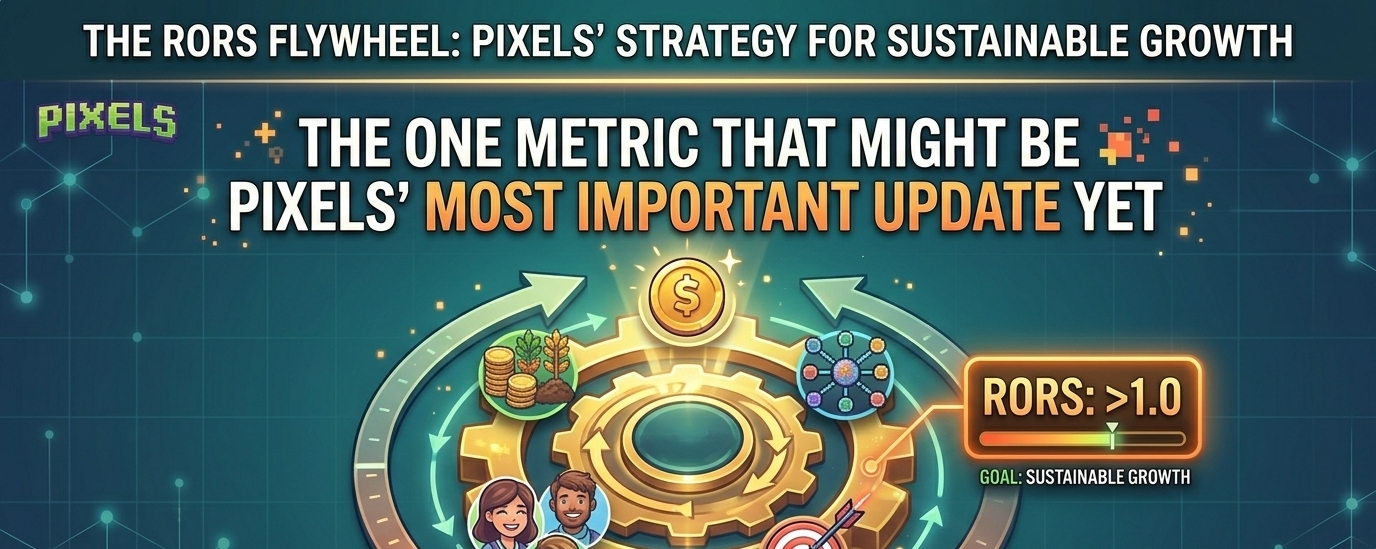
Metrics usually sound super dry, right? Like the kind of corporate stuff that makes your eyes glaze over. But sometimes the one number a team decides to obsess over tells you everything about where they’re really headed. For Pixels, that number is RORS—Return on Reward Spend.
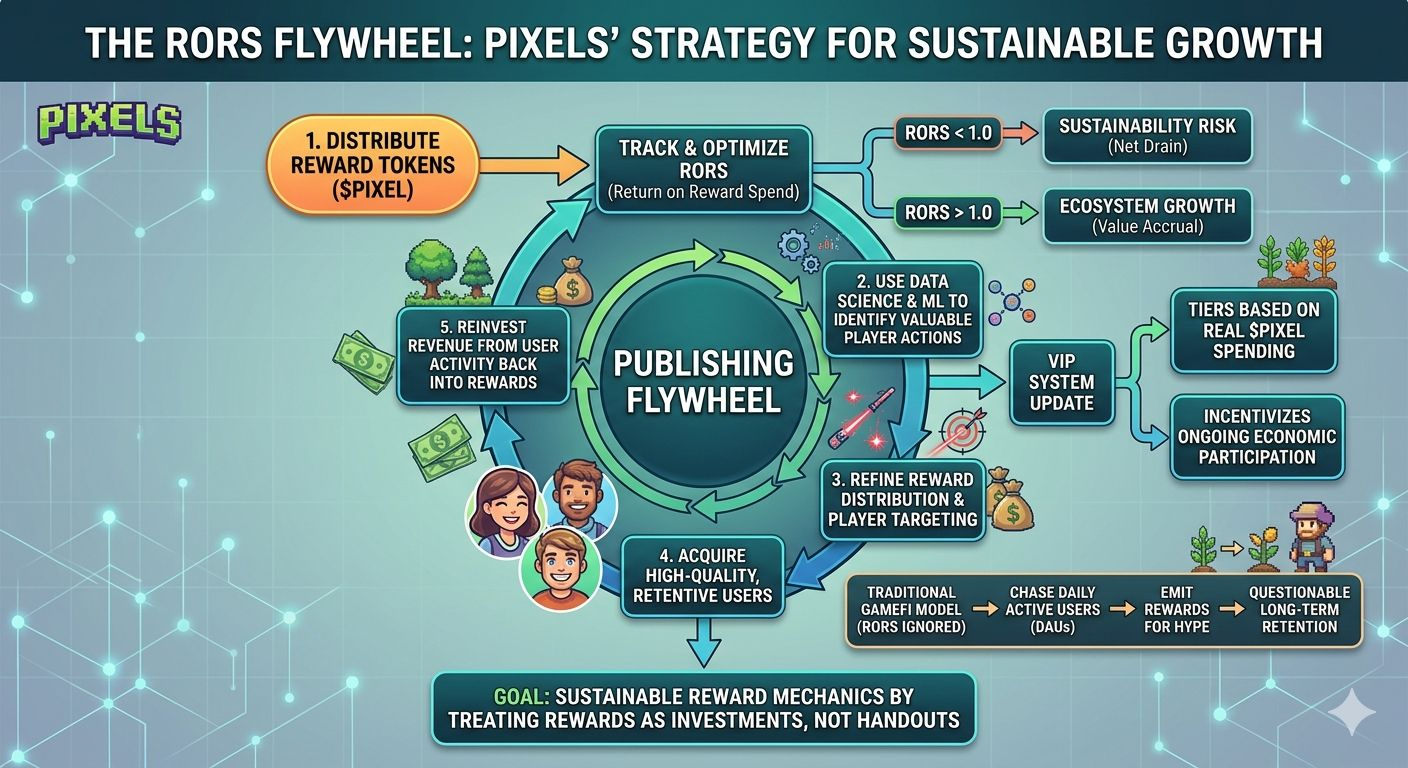
The whitepaper lays it out straight: it’s basically how much revenue the protocol makes in fees for every reward token they give out. They want to push it above 1.0, so every token spent actually grows the whole ecosystem instead of just draining it. When they wrote the paper it was sitting around 0.8. Sounds kinda boring at first, but it’s not.
What it really means is they’re flipping the whole script. Most GameFi projects still throw rewards around like free candy to chase growth and figure out the economics later. Pixels is doing the opposite—they’re treating every single reward like a real investment that has to pay for itself. That feels like such a grown-up move in a space that’s been riding hype for years.
And once you look at everything through that lens, so many recent changes just click into place.
They’re going deep on data science and machine learning, but not to fake bigger numbers. It’s to figure out which player actions actually stick around and create real value long-term. The whitepaper even talks about this “publishing flywheel”—better games give them richer data, that data helps them target smarter, and smarter targeting means cheaper, better players. That’s not the talk of a team chasing daily active users anymore. It’s the talk of a team building something that can actually last when the easy token handouts slow down.
Even the updated VIP system feels like part of the same vibe. Your tier jumps right away based on real $PIXEL spending, and it slowly fades if you dip out. They’re not just rewarding “hey, you showed up.” They’re rewarding the kind of ongoing play that actually keeps the economy humming.
That’s why I think this quiet north-star shift is bigger than it looks on paper.
Most crypto games still dodge the uncomfortable question: once the reward is gone, did that player actually make the ecosystem stronger? You can game DAUs, farm transactions, and prop up retention all day with big emissions. But RORS forces a harsher, clearer look—did we build something real and lasting, or did we just rent a bunch of temporary hype?
The only thing that makes me pause is the flip side. When you get really good at measuring return like this, it can start feeling a little cold. Everything gets filtered through “does this pay off?” and suddenly the weird experiments, the slow-burn fun, and the random friction that sometimes creates the best memories might get squeezed out. Pixels keeps saying “fun first,” and honestly, that line feels more important now than ever.
Still, if I had to pick the single most meaningful thing happening in the project right now, I’d pick this one.
Not because anyone’s waking up excited about a metric.
But because it shows a team that’s ready to grind on the hard, lasting stuff once the easy growth phase is over. And in Web3 gaming, that kind of quiet maturity feels like the rarest upgrade you can get.@Pixels #pixel $PIXEL
