
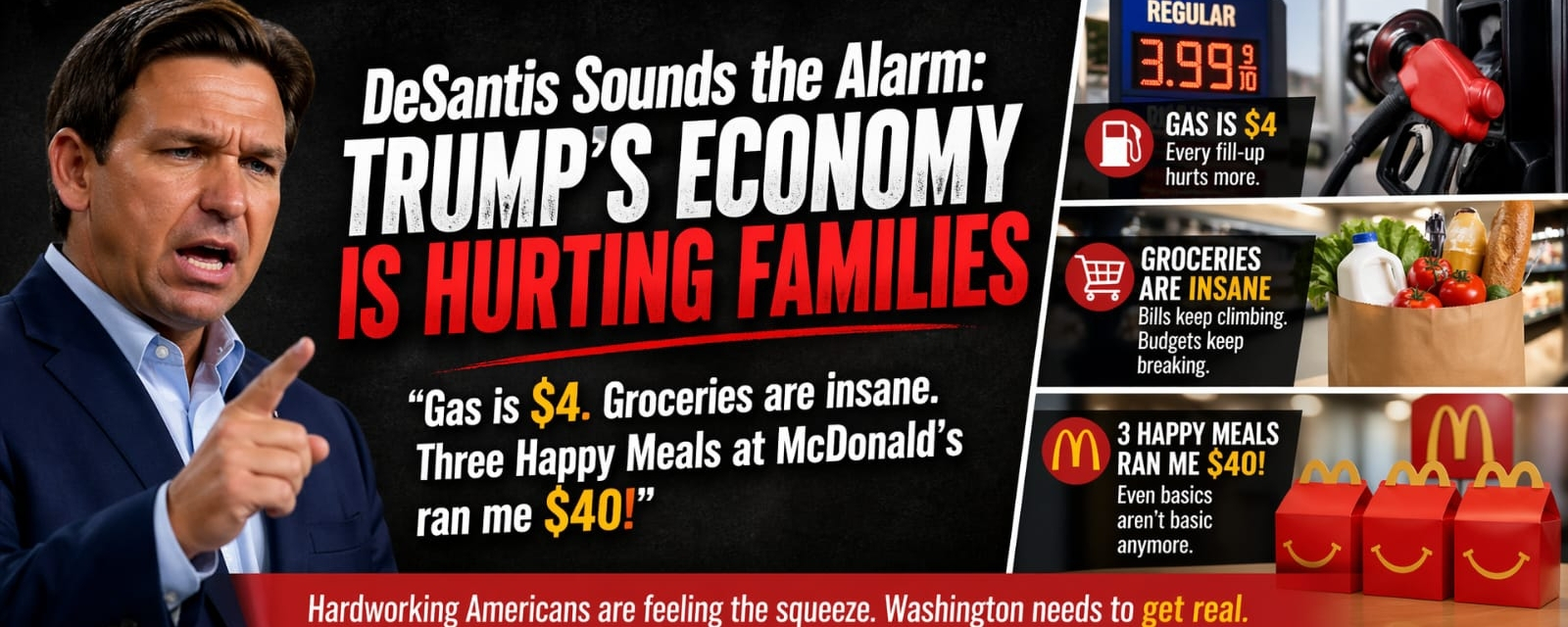

Over the past few hours, I’ve been watching a statement that taps directly into what a lot of people are feeling on the ground. Ron DeSantis openly criticized the current economic situation, pointing to $4 gas, rising grocery prices, and even saying three Happy Meals at McDonald's cost him around $40. From my perspective, this isn’t just political messaging—it’s reflecting real pressure people are experiencing daily.
What stands out to me is how relatable the examples are. Instead of talking in abstract economic terms, this focuses on everyday expenses—fuel, food, basic spending. That’s where inflation is felt the most, and it’s often where frustration builds the fastest.
From where I’m standing, this highlights the disconnect between macro data and personal experience. On paper, the economy might show stability or growth in certain areas. But if daily costs keep rising, that’s what shapes public perception. People don’t measure the economy by charts—they measure it by what they pay at the pump or at the checkout line.
Another thing I’m noticing is how this feeds into a broader narrative around economic leadership. Criticism like this isn’t just about prices—it’s about accountability. When costs rise, political pressure tends to follow, and these kinds of statements are part of that cycle.
At the same time, I think it’s important to keep perspective. Prices are influenced by multiple factors—global supply chains, energy markets, policy decisions, and more. No single factor explains everything, but the impact still lands on consumers the same way.
From my perspective, the key takeaway is simple:
This is about cost of living, not just economic theory.
And when everyday expenses start becoming headline-worthy,
it means the pressure is real.
Right now, this isn’t just a political argument—
It’s a reflection of how people are experiencing the economy in real time.
And when that experience shifts,
it often shapes the direction of the bigger conversation moving forward.