
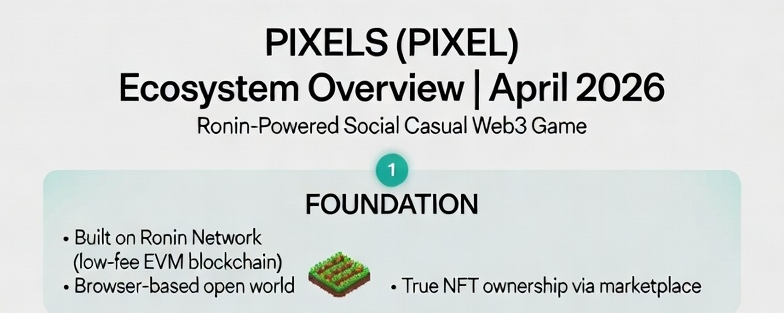
I’ve been checking in on Pixels regularly this year, and the more time I spend in its colorful open world on the Ronin network, the more I appreciate how the team is evolving the role of its $PIXEL token. What started as a charming farming and exploration game has quietly developed into something more cohesive, where token utility feels increasingly tied to the actual experience of playing, creating, and connecting with others.
The core loop remains delightful—planting crops, raising animals, leveling up skills like cooking and crafting, and exploring the vibrant map with friends. But recent developments around staking and vPIXEL have added layers that make holding and using Pixel feel more meaningful within that loop. Staking lets you allocate your tokens across different games in the ecosystem, including the main Pixels title and others like Pixel Dungeons. Your stake helps determine how ecosystem rewards flow back to those projects, essentially letting you support the parts of the world you enjoy most while earning a share of the activity they generate.
vPIXEL complements this nicely as a 1:1 backed token designed purely for spending inside the games. It removes some of the usual fees that come with direct $PIXEL transactions—specifically the Farmer Fee that can range from 20-50% on withdrawals and gets redistributed to stakers—making it smoother to upgrade your farm, acquire pets, or participate in new crafting industries without immediately pressuring the main token. Together, these features create a system where active players and long-term holders both have clearer paths to participate in the ecosystem’s growth.
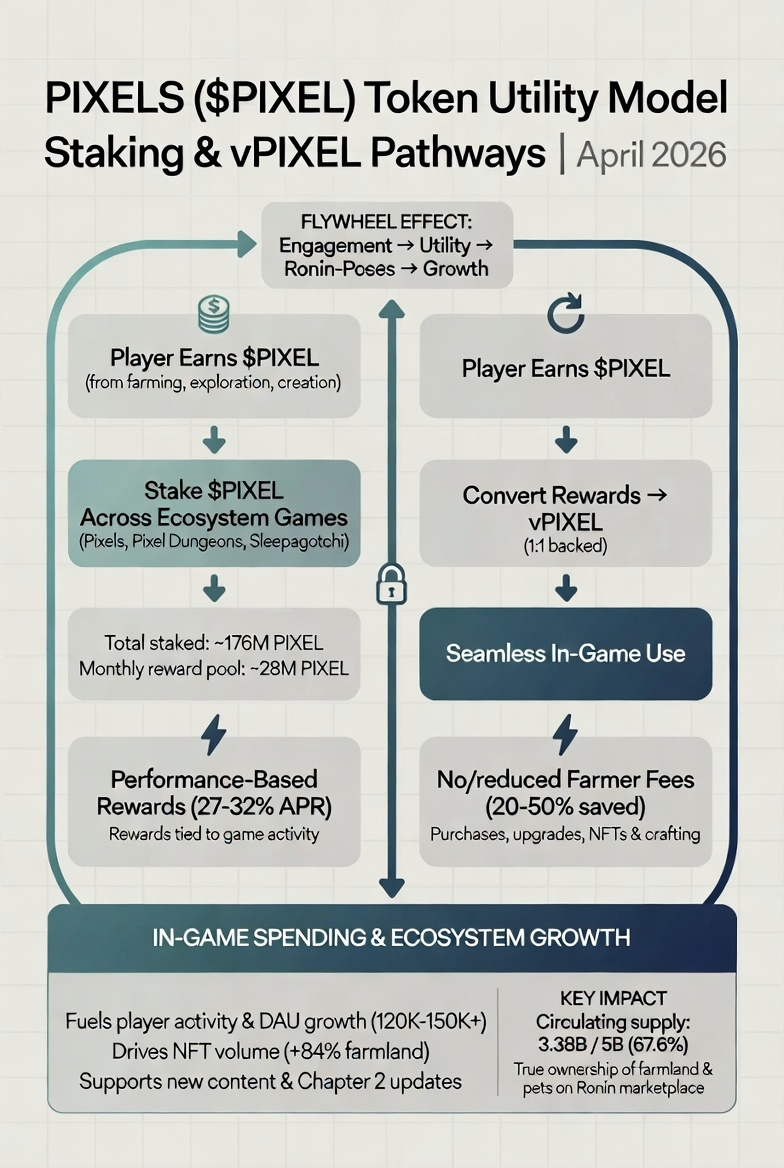
Looking at the numbers, several trends stand out. Daily active users have climbed substantially, moving from around 45,000 earlier in the year toward sustained levels above 150,000 recently. This uptick matters because more consistent players naturally drive higher in-game spending on upgrades, guilds, and social features, which feeds directly back into Pixel utility. It could imply steadier demand as the farming and creation loops keep drawing people back.
Another notable shift is the circulating supply now sitting at approximately 3.38 billion out of the 5 billion total maximum. Reaching about 67.6% circulating reduces some of the earlier concerns around heavy future unlocks and shifts focus toward actual usage and staking participation more clearly over time. This could imply the token’s value will increasingly reflect real ecosystem activity rather than dilution pressure.
On the asset side, Pixels farmland NFTs saw trading volume rise by 84% over a recent 30-day window. Since owning land provides production bonuses and enhances staking power (up to 10% boost per plot, with caps), this increase points to growing interest in committed, long-term participation rather than purely speculative flips. It could imply stronger alignment between NFT ownership and ongoing Pixel utility in the open-world experience.
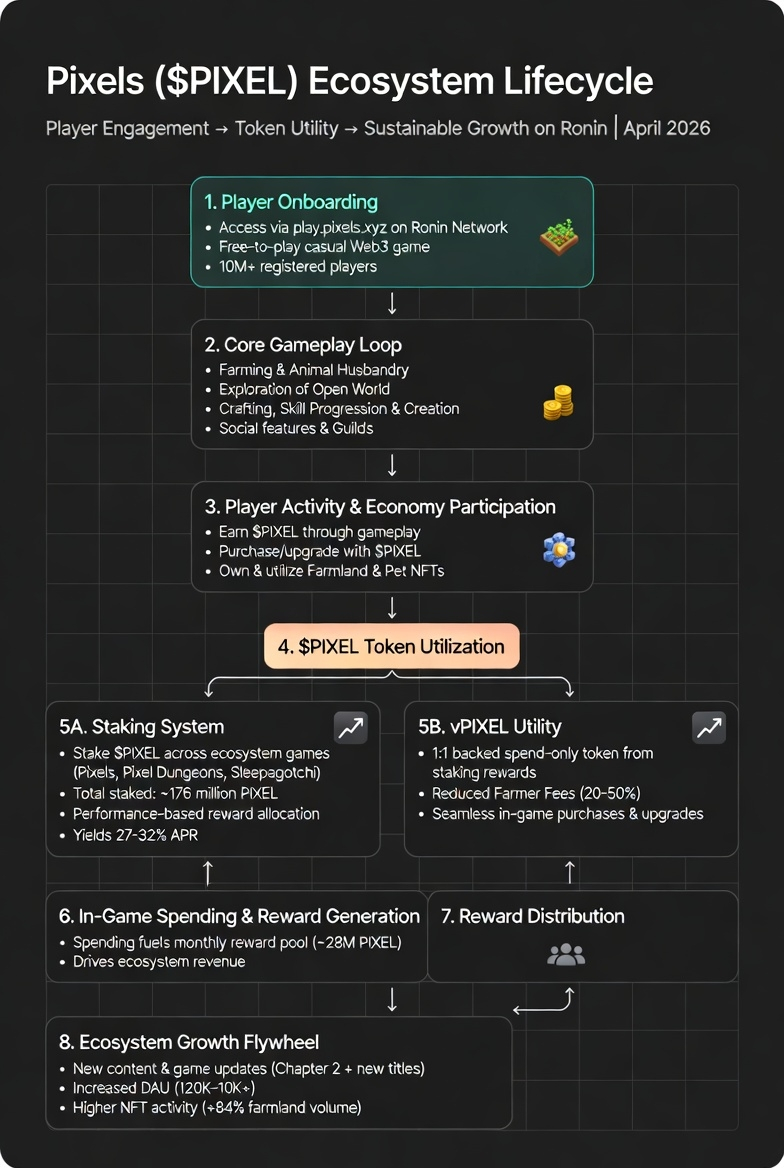
The multi-game staking system itself has matured, with total staked Pixel surpassing 176 million tokens across active pools. This represents meaningful commitment from players who believe in the long-term direction, directly supporting reward pools for the farming and social features they enjoy. It could imply broader participation as more titles join and staking becomes a natural part of the player journey.
Finally, the ecosystem maintains a structured monthly reward pool of around 28 million $PIXEL, distributed based on how much support each title attracts from stakers. This performance-linked approach encourages healthy competition between games while giving Pixel holders a real voice in where ecosystem resources flow next. It could imply more dynamic content development tied directly to player and holder preferences.
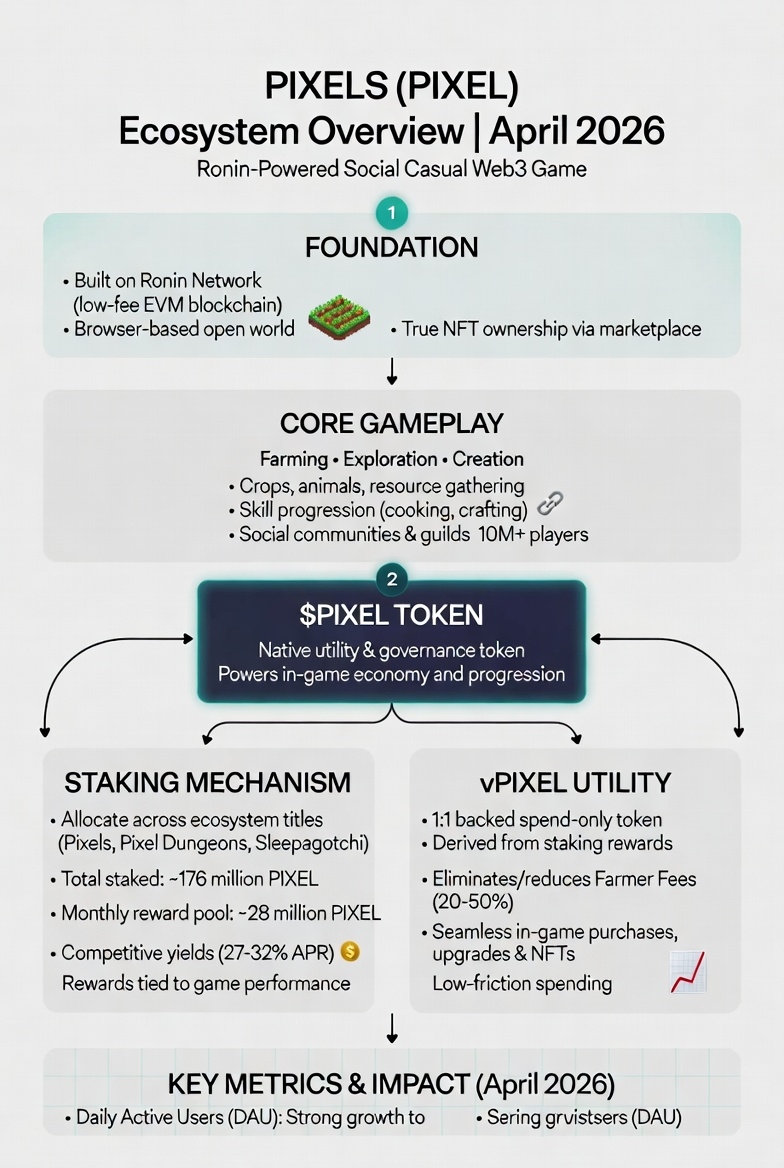
My overall take is that Pixels is building a practical model where Pixel functions as more than just a reward currency. By linking staking rewards to game performance and offering vPIXEL as a low-friction spending tool, the protocol is fostering better alignment between player enjoyment, content creation, and token economics. Of course, Web3 gaming remains competitive, and sustained success will depend on continuing to deliver engaging updates and attracting new players alongside retaining the current community. Broader market conditions can also influence participation levels.
Still, the direction feels thoughtful. As the ecosystem expands across multiple titles on Ronin, Pixel appears positioned to benefit from genuine activity rather than hype alone.
In the end, Pixels stands out as one of the more grounded efforts in casual Web3 gaming right now. The focus on making token features serve the farming, exploration, and social experience—rather than the other way around—gives it a solid foundation for whatever comes next in 2026 and beyond.
