


Layer 2 networks exist to make blockchain transactions fast and cheap. They achieve this by moving the heavy computational work away from the main Ethereum network. They process thousands of transactions in their own isolated environment and then send the final results back to the main chain for permanent storage.
This creates a fundamental security question. How does the main Ethereum network know the results are accurate? The main chain does not re-run every single transaction to check the math. If it did, the entire cost-saving benefit of a Layer 2 would vanish.
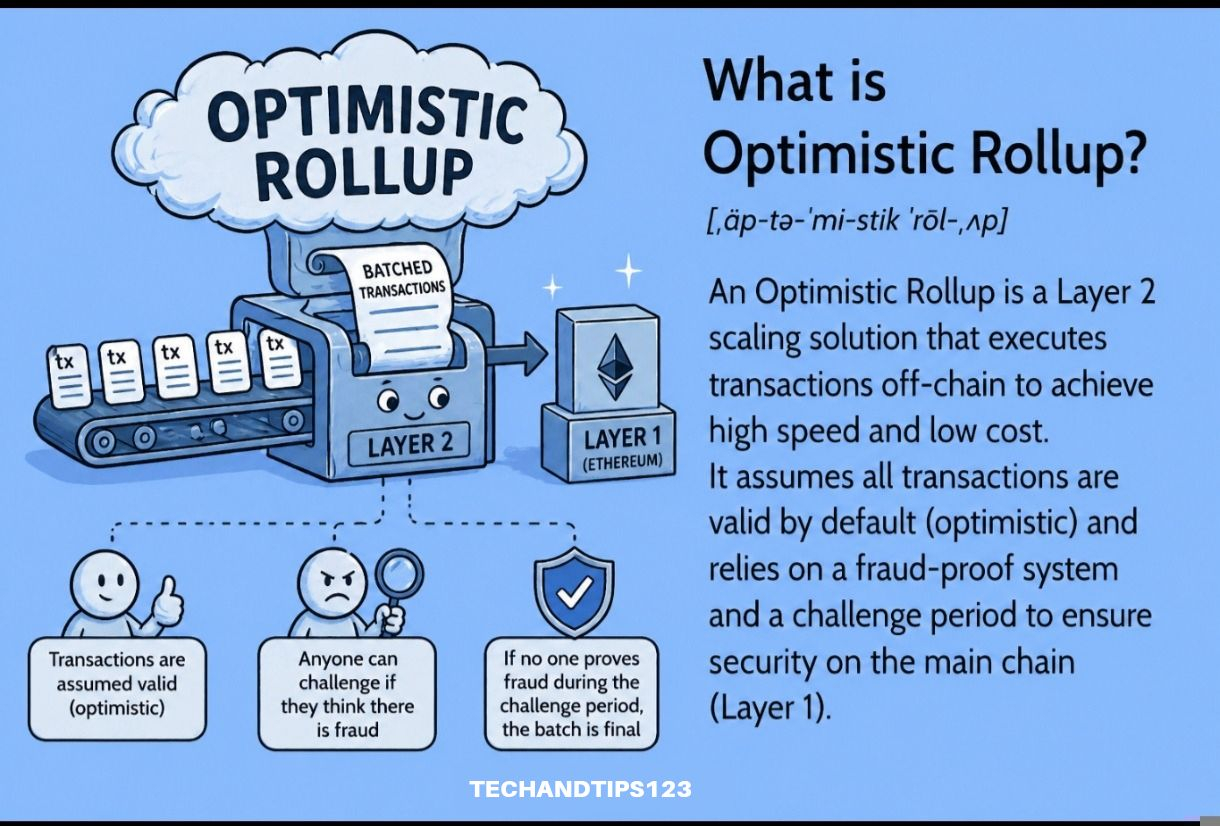
Instead, the network relies on an assumption. It assumes that the computers processing the Layer 2 transactions are telling the truth. This is why these systems are called "optimistic" rollups. They operate on an honor system. However, a multi-billion dollar financial network cannot survive on blind trust alone. That optimism requires a strict, uncompromising safety net. That safety net is the fraud proof.
II. The Restaurant Bar Tab Analogy
Think of an optimistic rollup as a busy restaurant with a large group of people ordering drinks.
The main Ethereum blockchain is the bank. The Layer 2 network is the waiter. Instead of swiping a credit card and paying a banking fee for every single drink, the waiter simply keeps a running tab on a piece of paper. This saves everyone time and money.
At the end of the night, the waiter hands the final total to the bank. The bank does not review every single drink order on the receipt. The bank just processes the final total and deducts the money from the customers. It acts optimistically. It assumes the waiter calculated the tab correctly.
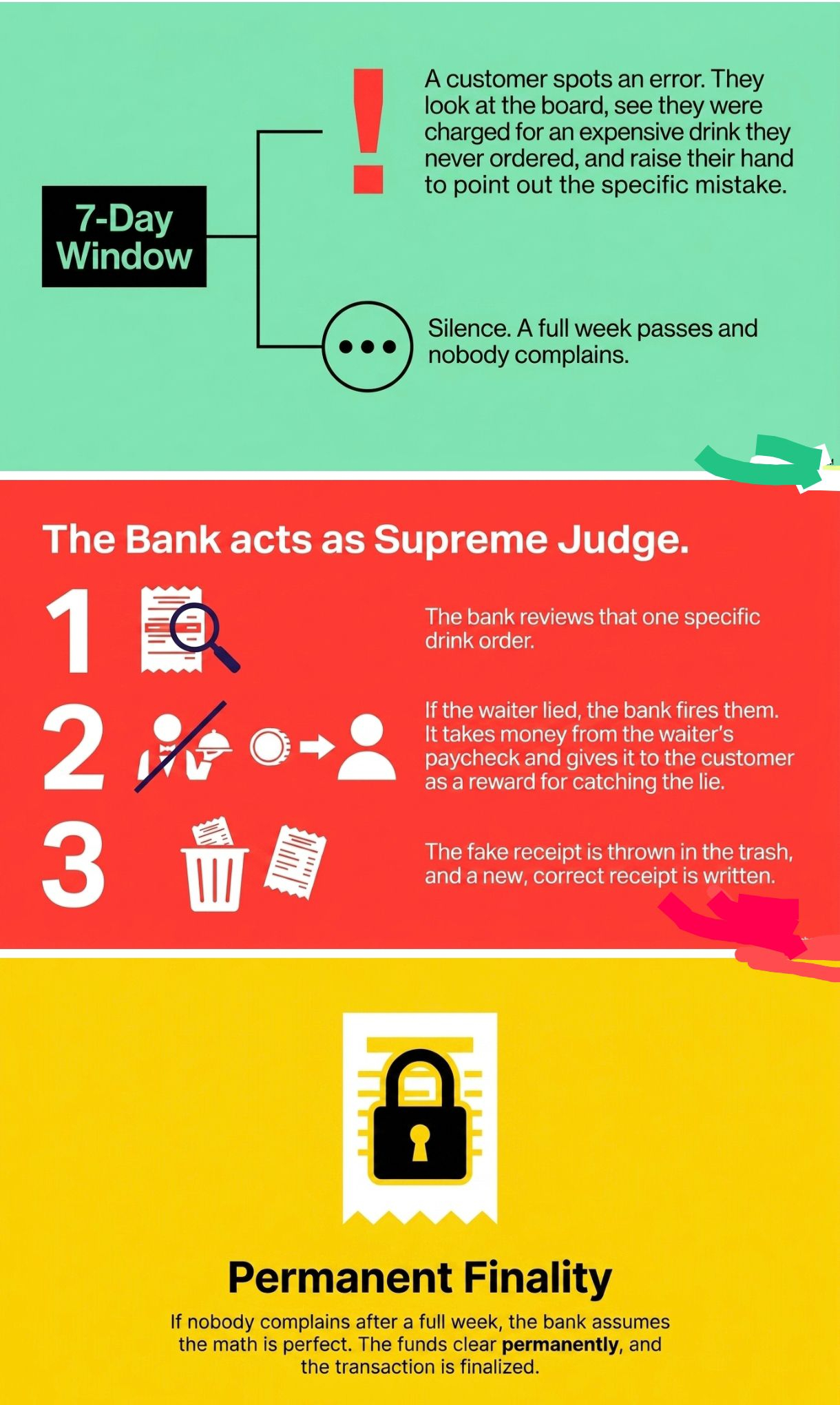
However, there is a catch. The bank does not clear the funds immediately. The receipt sits on a public bulletin board for a full week. During that week, anyone can review the math.
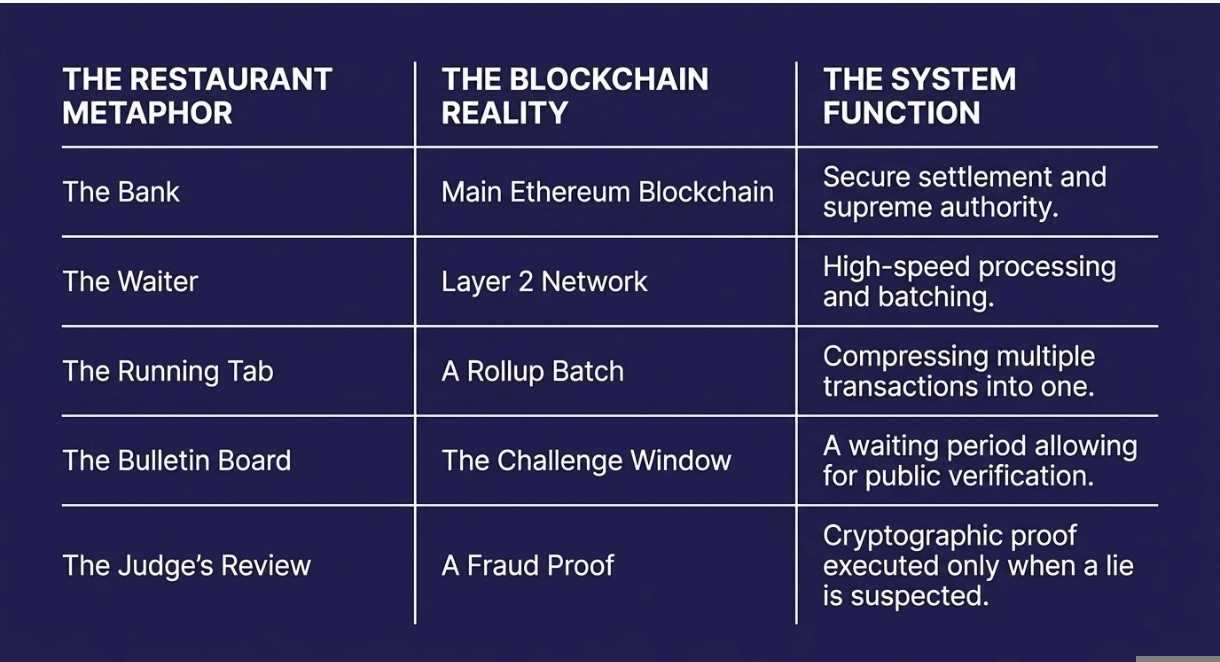
If a customer looks at the board and sees they were charged for an expensive drink they never ordered, they can raise their hand and point out the specific error. The bank then steps in as the supreme judge. The bank reviews that one specific drink order. If the bank finds that the waiter lied, the bank fires the waiter. The bank also takes money out of the waiter's paycheck and gives it to the customer as a reward for catching the lie. The fake receipt is thrown in the trash, and a new, correct receipt is written.
If nobody complains after a full week, the bank assumes the math is perfect. The funds clear permanently, and the transaction is finalized.
III. The Mechanical Reality of Optimism
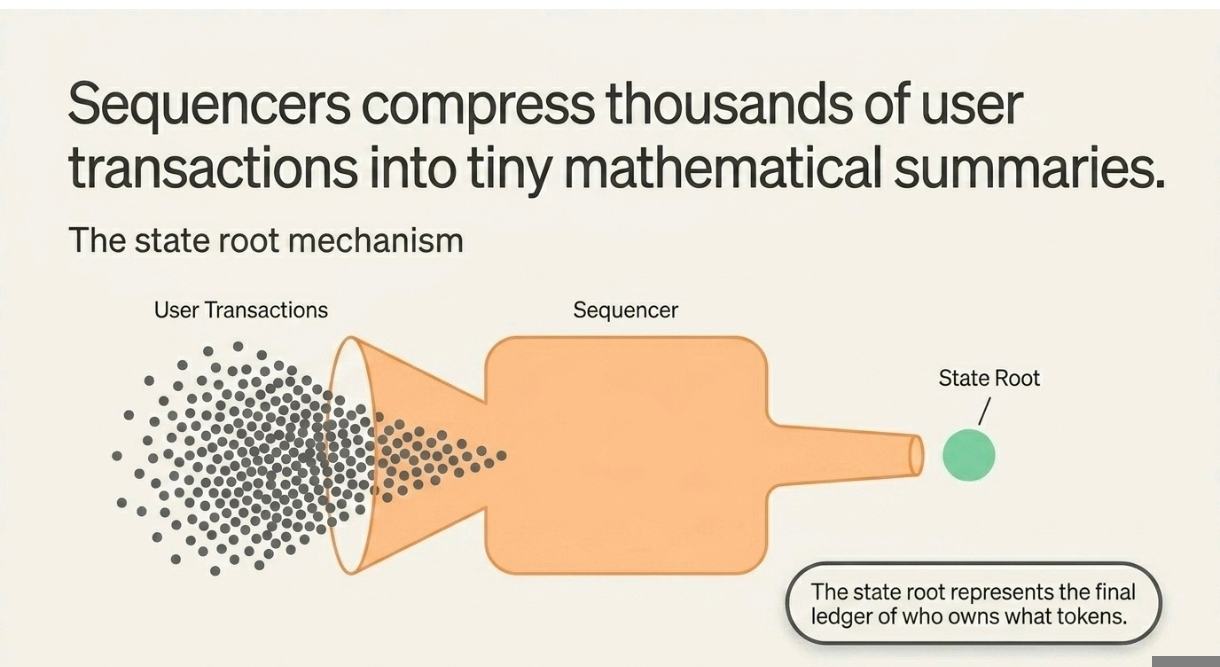
In a real blockchain environment, the waiter is a specialized computer called a sequencer. The sequencer has a very specific job. It gathers thousands of user transactions, puts them in a specific order, and calculates the new state of the network. The "state" is simply the current ledger of who owns what tokens.
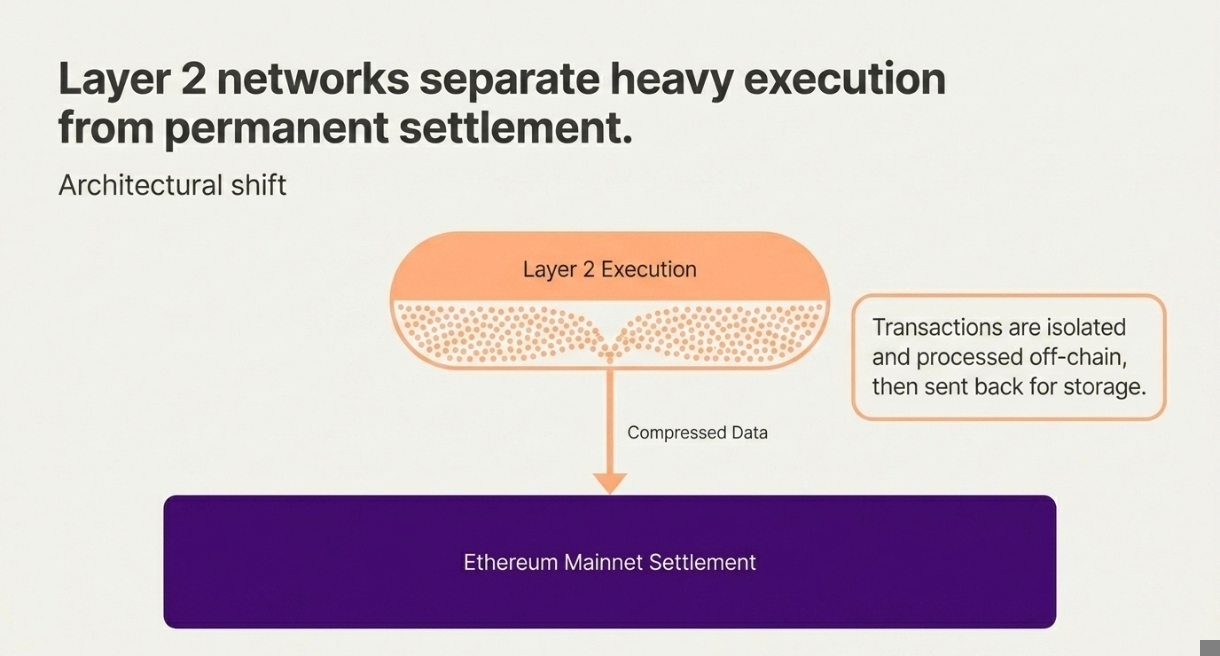
Every few minutes, the sequencer takes all the transaction data and compresses it. It posts this compressed data to a smart contract on the main Ethereum chain. Along with the data, the sequencer posts a "state root." A state root is a tiny mathematical summary of the final balances after all the transactions are processed.
The main Ethereum chain accepts this state root blindly. It stores the data, but it does not execute the computations to verify if the state root is true. This deliberate ignorance is the secret to scaling. Computation on Ethereum is incredibly expensive. Data storage is relatively cheap. By skipping the computation, the network saves millions of dollars in gas fees for its users.
IV. The Role of the Verifier
If Ethereum is not checking the math, someone else must do it. This responsibility falls to independent network participants operating computers called verifiers.
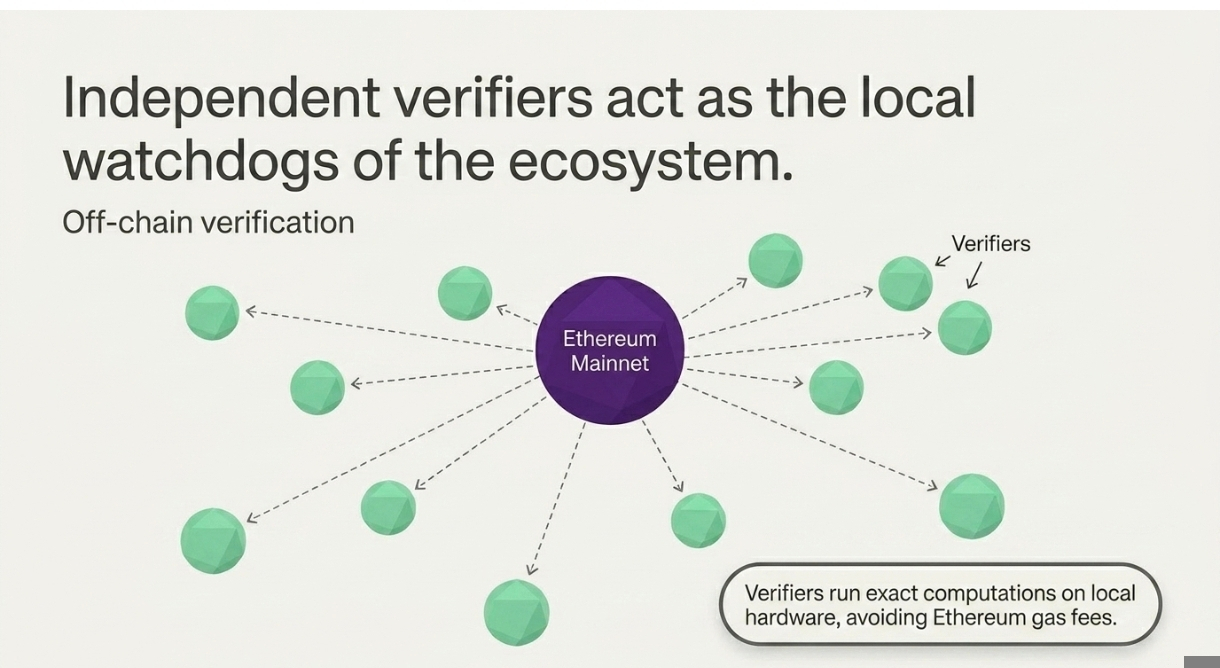
Verifiers are the watchdogs of the ecosystem. They constantly download the compressed transaction data that the sequencer posts to the main chain. The verifiers then run the exact same computations as the sequencer on their own local hardware. Because they are running the data on their own machines, they do not have to pay Ethereum gas fees to do the math.
The verifier calculates its own state root and compares it to the state root the sequencer posted on the main chain.
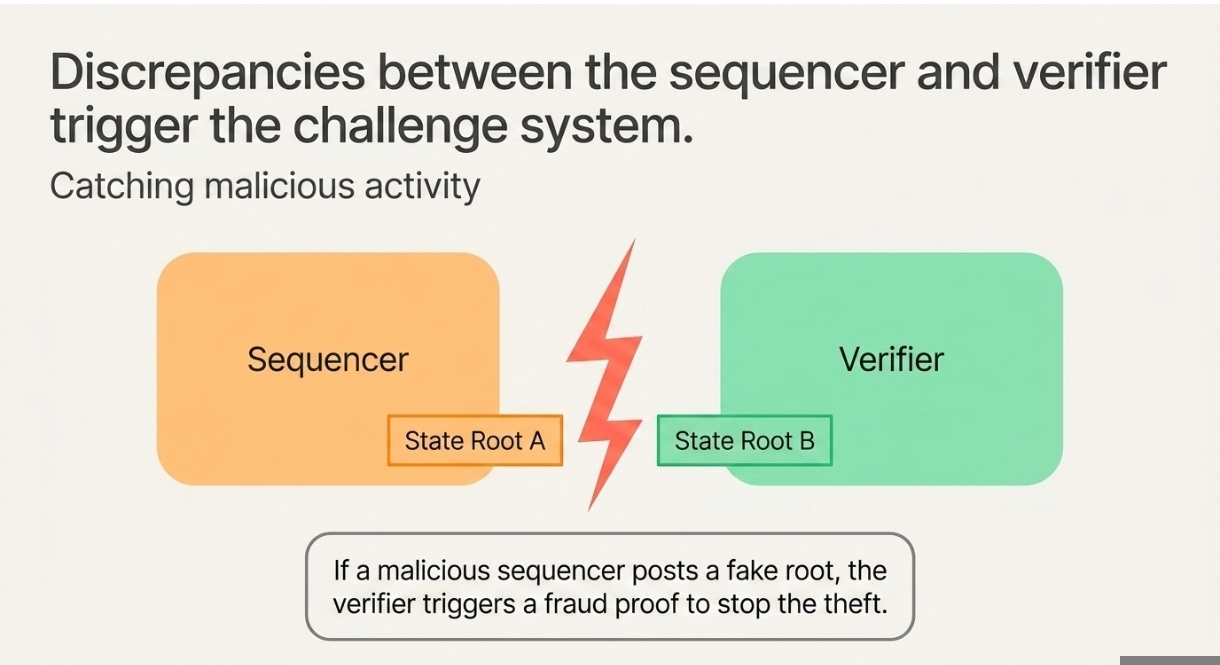
Under normal conditions, the answers match perfectly. The sequencer is honest, the verifier agrees, and the system runs smoothly. But if a malicious sequencer tries to steal funds and posts a fake state root, the verifier will get a different answer. The verifier has found a discrepancy. The verifier must now trigger the fraud proof mechanism to stop the theft.
V. The Step-by-Step Challenge Flow
When a verifier catches a lie, it cannot simply tell Ethereum that the sequencer is wrong. It must prove it mathematically through a highly structured dispute resolution process.
The Dispute: The verifier submits a formal challenge to the rollup smart contract on the main Ethereum chain.
The Financial Stake: Talk is cheap, so the system requires collateral. Both the sequencer and the verifier must lock up a large deposit of Ethereum. This prevents malicious actors from spamming the network with fake challenges just to cause delays. You must put your own money on the line to participate in a dispute.
The Interrogation Game: The main Ethereum chain cannot re-run the entire block of thousands of transactions. It would cost too much gas. Instead, the smart contract forces the sequencer and the verifier to play a mathematical game of twenty questions. This is called an interactive bisection protocol.
The Narrowing Process: The smart contract asks both parties to compare their math at the exact halfway point of the transaction block. If their answers match at the halfway mark, the error must exist in the second half. The contract then splits the remaining half again. It repeats this division over and over. Within a few steps, it narrows a block of ten thousand transactions down to one single, isolated computer instruction where the two parties disagree.
The Supreme Judge: Once the dispute is narrowed down to a single instruction, the main Ethereum chain steps in. The Ethereum network executes that one specific instruction on-chain. Because it is only executing a tiny fragment of code, the gas cost is practically zero.
The Penalty: The Ethereum execution reveals the true mathematical answer. The smart contract compares this true answer against the claims of the sequencer and the verifier. The party that lied loses their deposited Ethereum. This financial punishment is called slashing.
The Resolution: A portion of the slashed funds is given to the honest party as a financial reward. The fake state root is permanently deleted from the record. The rollup network rolls back to the last known honest state and resumes normal operations.
VI. The Time Delay Trade-Off
The fraud proof system is brilliant, but it introduces a massive usability problem. It requires time.
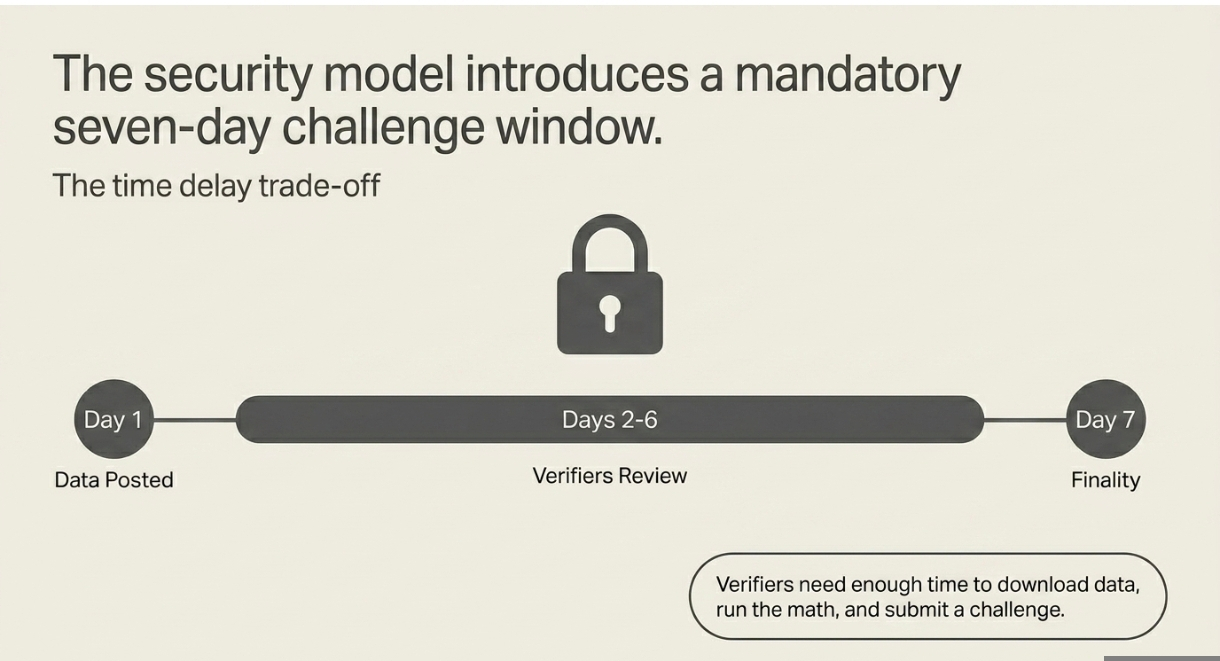
Because the network relies on independent watchdogs to catch fraud, it must give those watchdogs enough time to download the data, run the math, and submit a challenge. If the network finalized transactions immediately, a malicious sequencer could steal funds before the verifiers even had a chance to check the numbers.
This is why optimistic rollups enforce a mandatory challenge window. Most major networks, like Arbitrum and Optimism, use a seven-day waiting period.
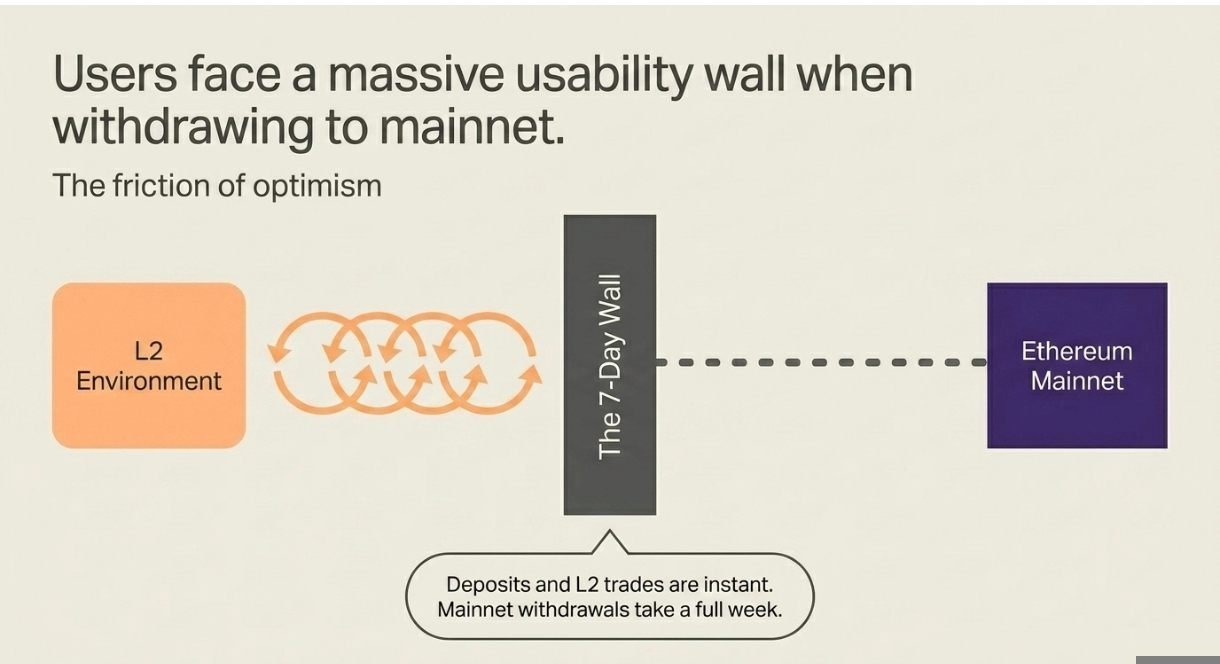
When you deposit money into an optimistic rollup, the transfer is instant. When you trade or send tokens inside the rollup environment, the execution feels instant. But when you want to withdraw your funds from the Layer 2 network back to the main Ethereum chain, you hit a wall. You must wait seven days.
The main Ethereum smart contract simply refuses to release your funds until the challenge window expires. Once the seven days pass without any verifier submitting a fraud proof, the state root is considered permanently valid, and your withdrawal clears. This severe friction is a direct and unavoidable consequence of the optimistic security model.
VII. The Third-Party Bridge Solution
Waiting a full week to access your own money is a terrible user experience. The free market quickly recognized this problem and built a solution. This created the massive industry of fast cross-chain bridges.
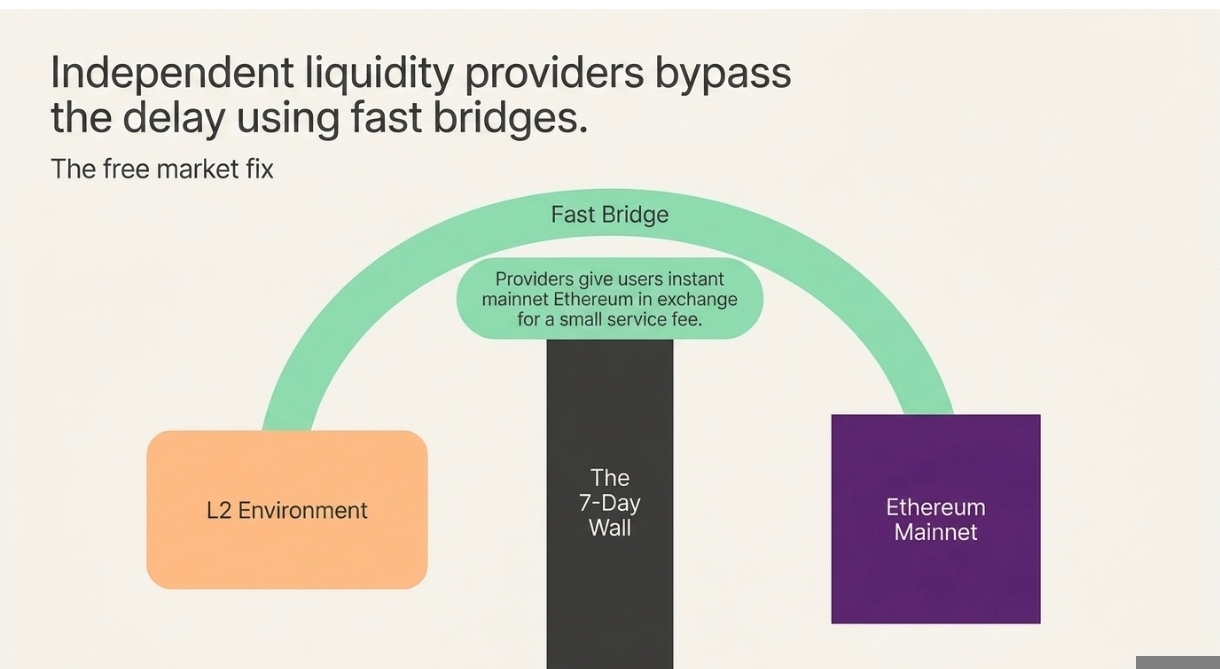
Independent liquidity providers created dedicated smart contracts to bypass the waiting period. If you want to withdraw one Ethereum from Arbitrum to the main chain, you do not use the official withdrawal bridge. Instead, you send your Arbitrum Ethereum to a fast bridge provider.
The fast bridge provider gives you one Ethereum on the main chain immediately, minus a small service fee. The provider takes your Arbitrum Ethereum and waits the seven days themselves.
They are willing to take this risk because they are running their own verifier nodes. When you ask for a fast withdrawal, their computers instantly check the math on the Arbitrum network. Because they verify the math locally, they know with absolute certainty that the transaction is legitimate and that the funds will eventually clear. They use their own capital to provide you with instant liquidity, and they collect the service fee as profit. This solves the user experience delay without breaking the underlying security architecture of the rollup.
VIII. FIN
To truly grasp how optimistic rollups function, you must stop viewing blockchain security purely as cryptographic walls and start viewing it as an economic incentive game.
The network assumes innocence by default to maximize transaction speed and eliminate unnecessary computation costs.
The network relies heavily on financial bounties to encourage independent actors to act as relentless watchdogs.
The network strictly limits the role of the main Ethereum blockchain, using it only as a judge of last resort for highly specific disputes.
Optimistic rollups do not prevent fraud by making it mathematically impossible. They prevent fraud by making it financially ruinous to attempt, and highly profitable to expose.