

Something has been shifting quietly in how people play Pixels. Not in the updates or announcements, but in the way outcomes feel less predictable. The same actions don’t always lead to the same rewards anymore. And no one really explains why. You just notice it.
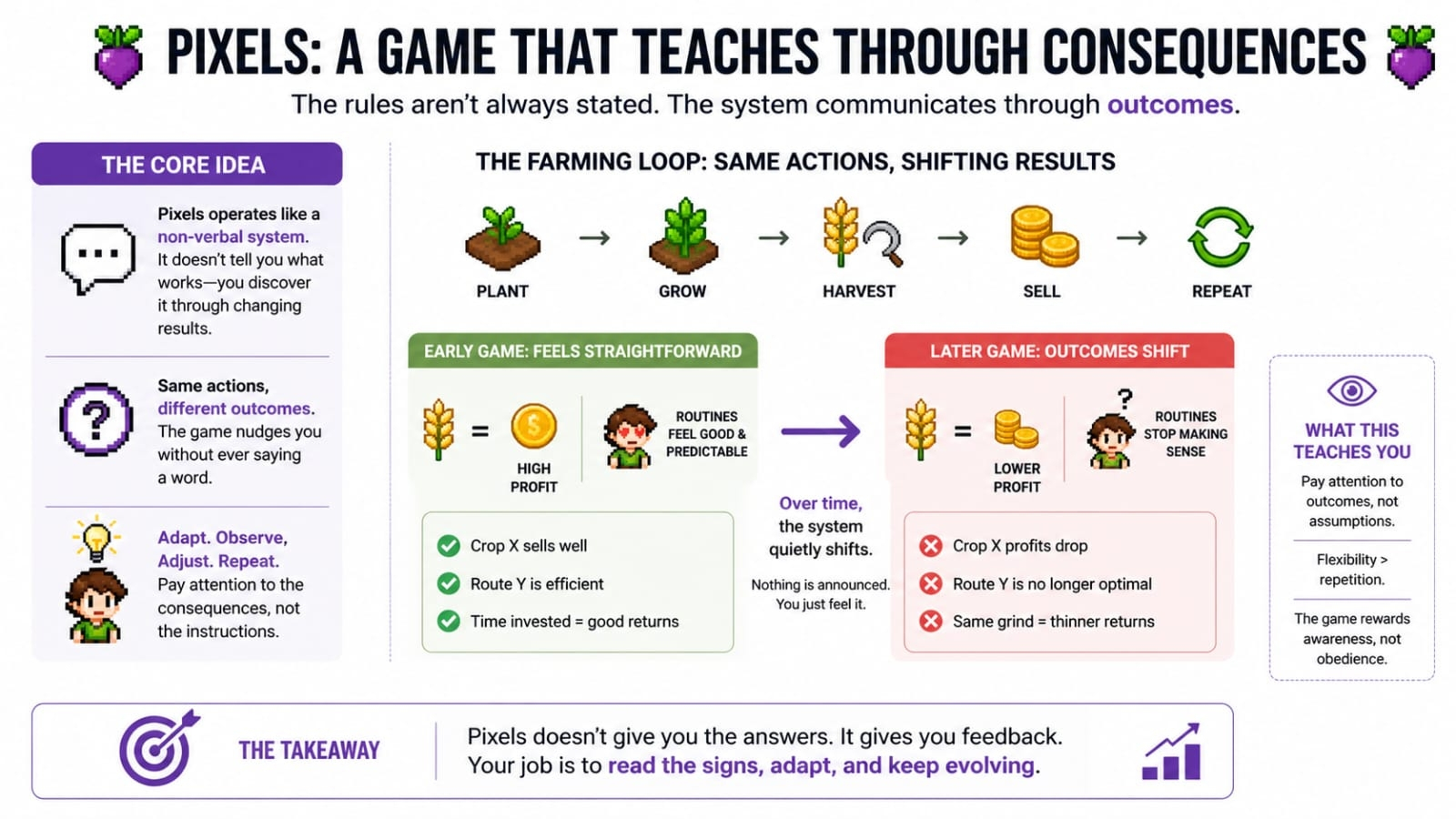
I started to feel like the game wasn’t teaching me through instructions, but through consequences. Plant the same crops follow the same route optimize like before and suddenly the returns feel thinner. Not broken just different. Like the system is nudging you without ever saying a word.
That’s when it clicked for me. @Pixels doesn’t operate on clear, stated rules anymore. It behaves more like a non verbal system. The real logic sits beneath the surface revealed only through changing results. You’re not told what works you’re expected to figure it out.
In the farming loop, this becomes obvious. Early on, it feels straightforward. Grow, harvest, sell, repeat. But over time, the efficiency shifts. Some crops lose their edge. Some routines stop making sense. The game never announces these changes clearly. You just feel them through your wallet.
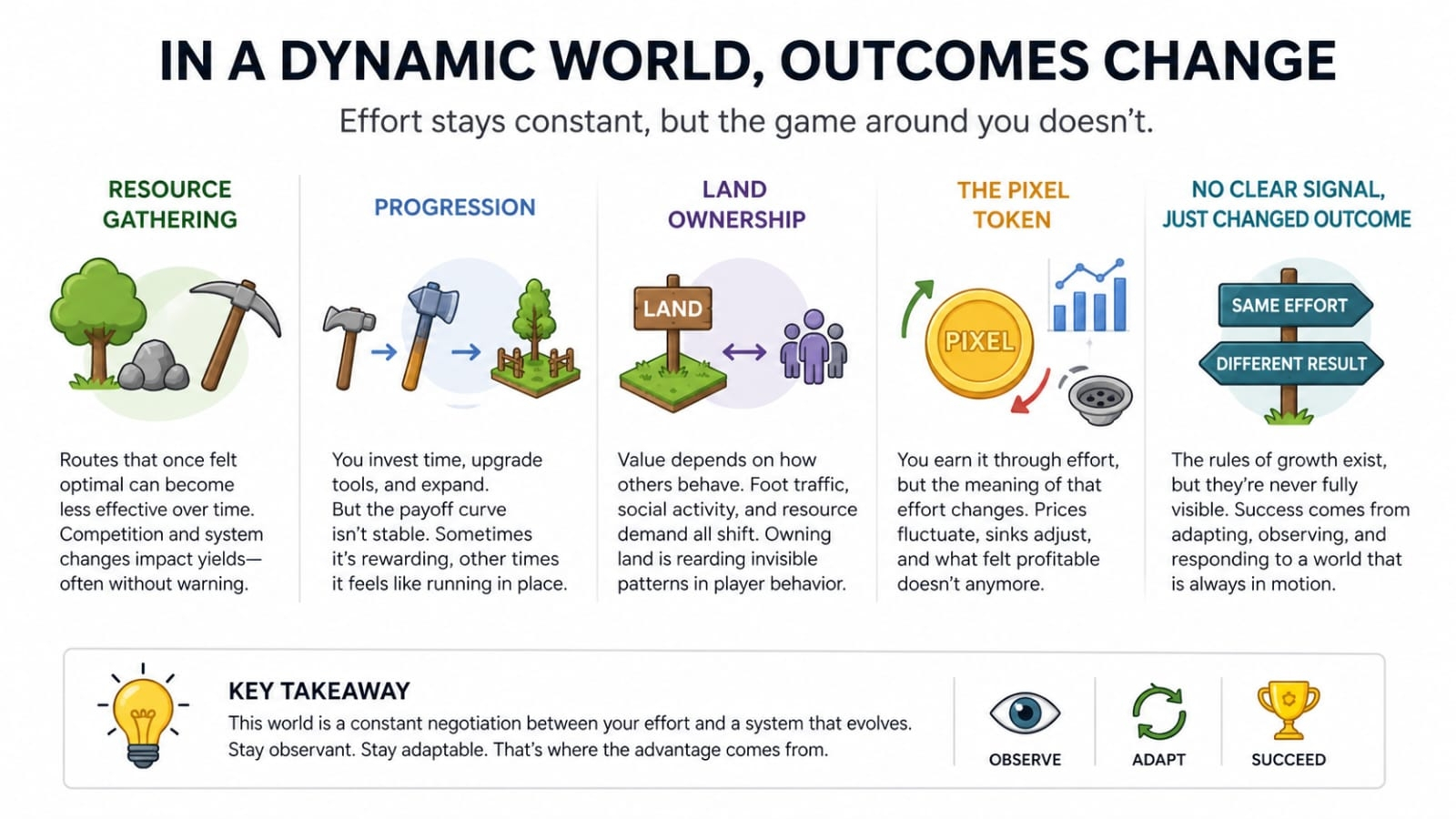
Resource gathering works the same way. I remember when certain routes felt optimal. Then slowly without warning they weren’t. Either competition increased, or yields felt off. It’s hard to tell if it’s the system adjusting or just more players optimizing. Probably both. But again, no clear signal just a changed outcome.
Even progression feels like this quiet negotiation. You invest time upgrade tools expand land. But the payoff curve isn’t stable. Sometimes it feels rewarding. Other times it feels like you’re running in place. The rules of growth exist, but they’re never fully visible.
Land ownership adds another layer to this. On paper, it’s about utility and passive value. But in practice, the value depends on how others behave. Foot traffic, social activity, resource demand all of it shifts. Owning land isn’t just strategy. It’s reading invisible patterns in player behavior.
The $PIXEL token sits right in the middle of this uncertainty. You earn it through effort, but the meaning of that effort changes. Prices fluctuate, sinks adjust and suddenly what felt profitable doesn’t anymore. The token isn’t just a reward. It’s feedback. A signal that something in the system has shifted.
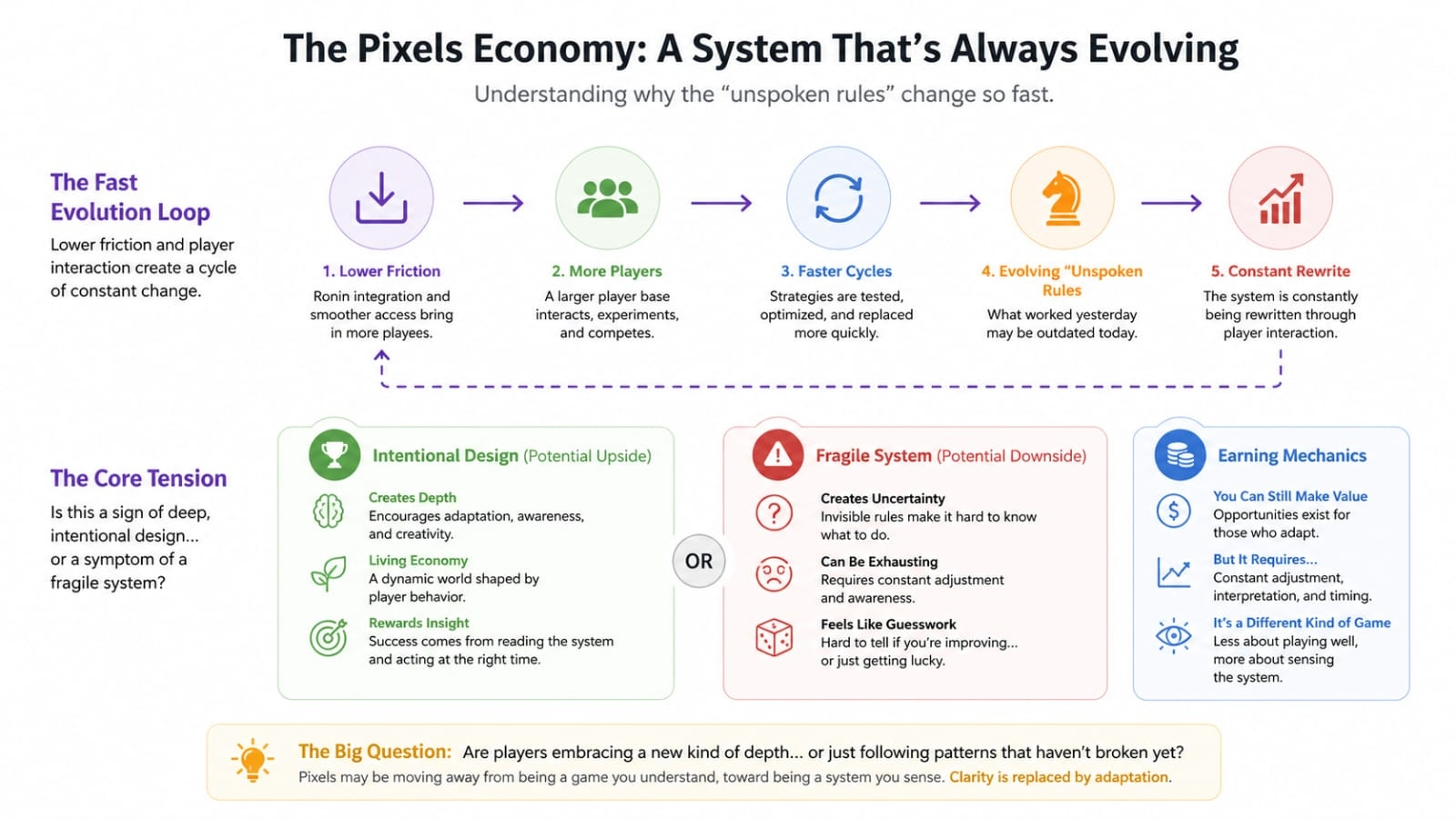
I think the Ronin integration made this even more pronounced. Lower friction brought in more players. More players meant faster optimization cycles. And faster cycles mean the unspoken rules evolve quicker. What worked last week feels outdated today.
Social gameplay amplifies this effect. You watch others. You copy, adapt, experiment. But everyone is doing the same. So strategies decay fast. There’s no stable meta because the system doesn’t allow one to exist for long. It’s constantly being rewritten through player interaction.
And that’s where I start to question things. Is this intentional design, or just a side effect of a fragile economy? Because a system that never explains itself can feel engaging but it can also feel exhausting. Especially when rewards depend on reading signals that aren’t clearly there.
The earning mechanics highlight this tension. You can still make value. But it requires constant adjustment. Constant awareness. It’s less about playing well, and more about interpreting the system correctly at the right moment. That’s a different kind of game.
Sometimes I wonder if this creates depth, or just uncertainty. Because when rules are invisible, it’s hard to tell if you’re improving or just guessing better than before.
Pixels feels like it’s moving away from being a game you understand, toward being a system you sense. And maybe that’s the point. A kind of living economy where clarity is replaced by adaptation.
But I’m not sure if most players actually want that. Or if they’re just following patterns that haven’t broken yet.
And that leaves me thinking...
Is Pixels teaching players a new way to play, or quietly testing how long they’ll keep playing without ever fully knowing the rules.