
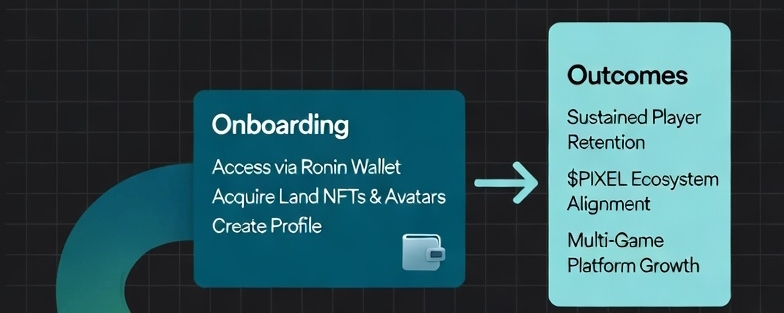
I’ve been keeping an eye on Pixels for a while now, drawn in by its charming pixel-art world of farming, exploration, and community building on the Ronin Network. What started as a relaxing social casual game has quietly matured into something more substantial—a platform supporting multiple titles where $PIXEL serves as the connective tissue. It feels refreshing in a space often dominated by hype cycles, as the team focuses on practical mechanics that encourage ongoing participation rather than short bursts of activity.
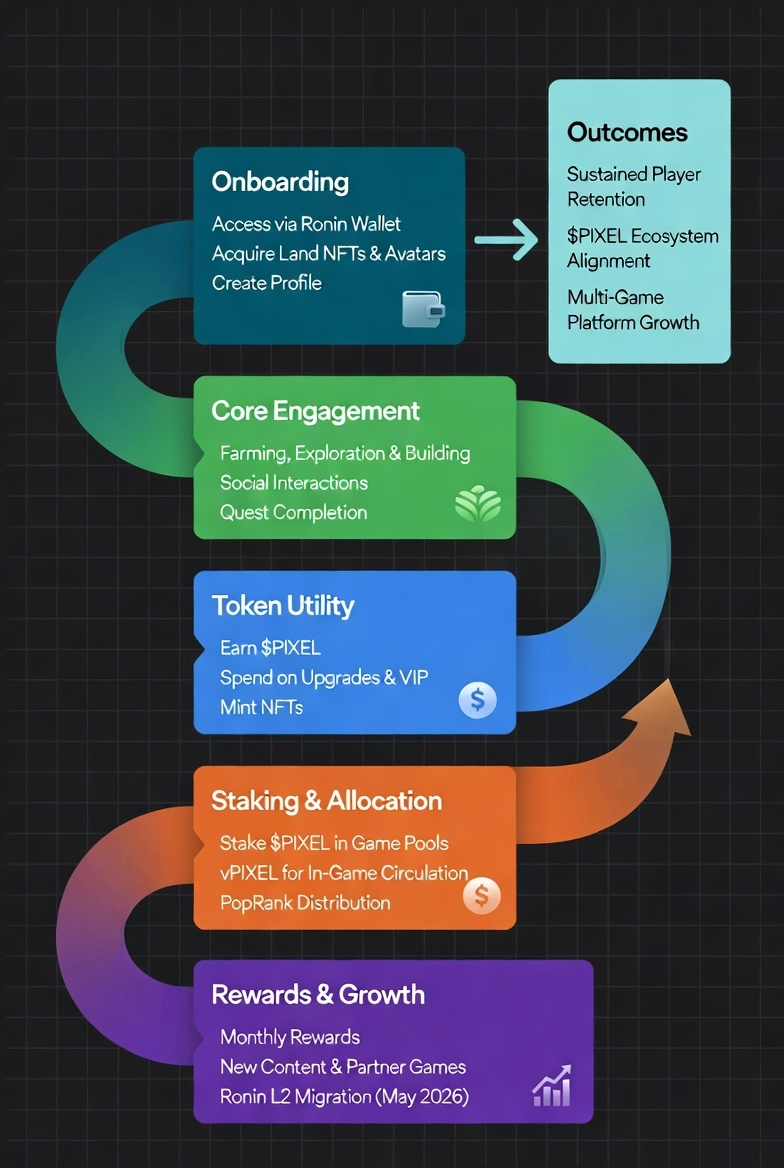
What stands out is how thoughtfully the ecosystem is structured around real player habits. You tend your land, interact with others, raise animals, and create experiences, all while owning assets as NFTs. Recent Chapter updates have expanded this into broader social and creative features, making the world feel alive and interconnected.
One element I appreciate is the staking system. Players can allocate Pixel across different games in the ecosystem—starting with core Pixels, Pixel Dungeons, and Forgotten Runiverse. This directs a share of the monthly reward pool toward the titles that attract the most commitment from holders. It creates a natural alignment: stronger games get more resources, which in turn can draw more players and activity back to $PIXEL. Early results showed over 73 million tokens staked shortly after launch, reflecting genuine interest from the community.
Then there’s vPIXEL, the upcoming 1:1 backed token designed purely for seamless in-game spending. By using vPIXEL, players avoid certain fees that would otherwise apply when directly spending or withdrawing Pixel (with those fees often flowing back to stakers). It’s a smart way to keep value circulating inside the ecosystem while giving players convenient options. Combined with interoperability across partner games, it reduces friction and supports the vision of a multi-title platform.
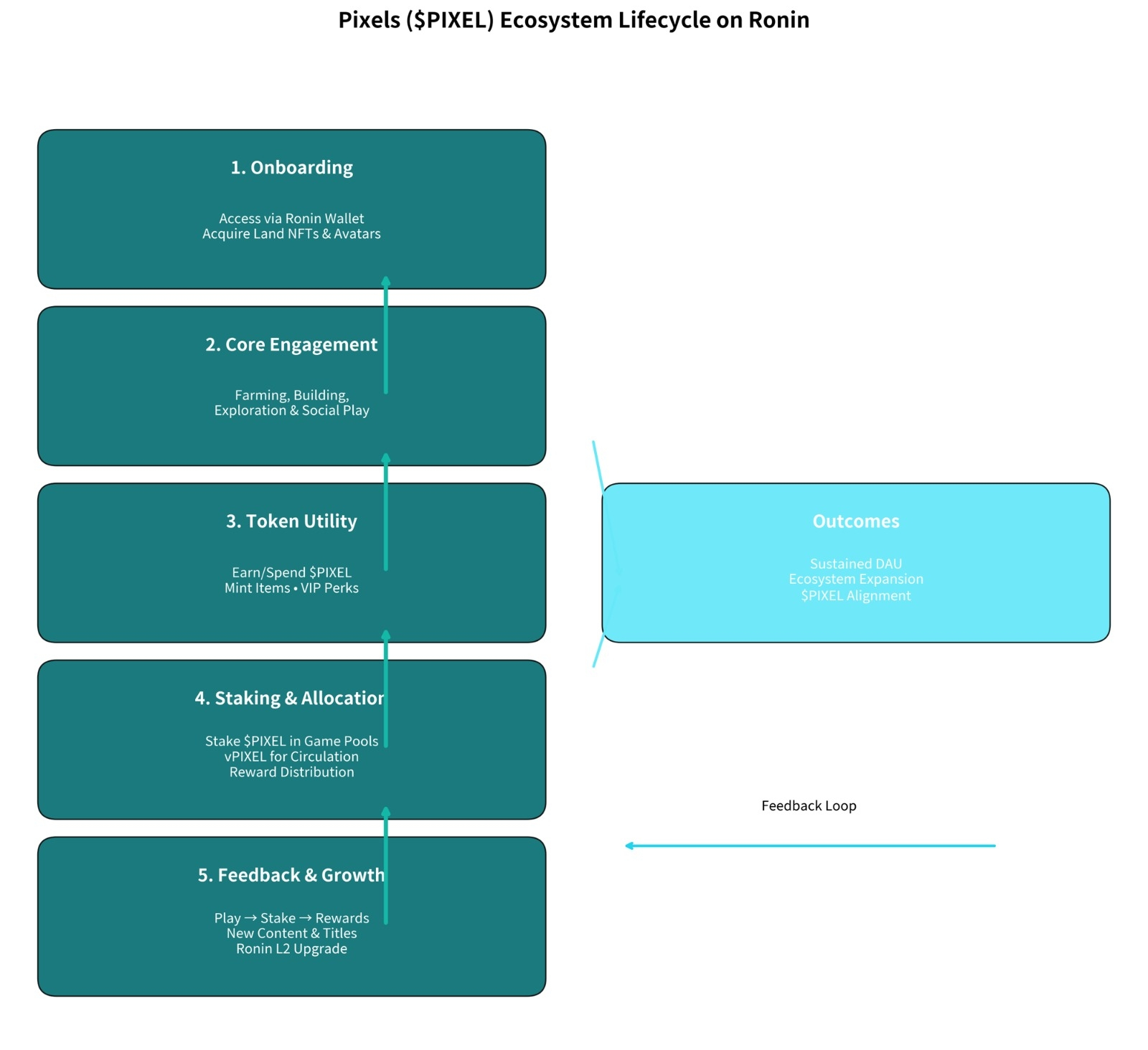
Ronin’s upcoming migration to an Ethereum Layer 2 using the OP Stack around mid-May adds another layer of potential. This move aims to enhance scalability and security while maintaining the low-fee environment that suits frequent gameplay actions.
Here are some specific observations that caught my attention when reviewing recent ecosystem data:
Daily Active Users grew significantly from around 45,000 in January 2026 to over 120,000 by early March, with reports suggesting even higher levels near 150,000+ in recent periods. This uptrend signals stronger retention and broader appeal, which directly supports demand for $PIXEL through in-game utilities like upgrades, access, and social features. It points toward sustained engagement if new content continues to land well.
Staking participation reached over 73 million Pixel across initial pools within weeks of rollout. The clear upward movement shows holders actively committing capital to back specific games. This matters for incentive alignment and could lead to more dynamic reward distribution as the system evolves toward stake-weighted pools.
Circulating supply now sits at roughly 67-68% of the 5 billion total, with smaller, more predictable unlocks ahead (such as around 91 million tokens in recent April/May windows). The shift reduces heavy dilution pressure compared to earlier phases, allowing usage metrics to play a bigger role in $PIXEL’s behavior.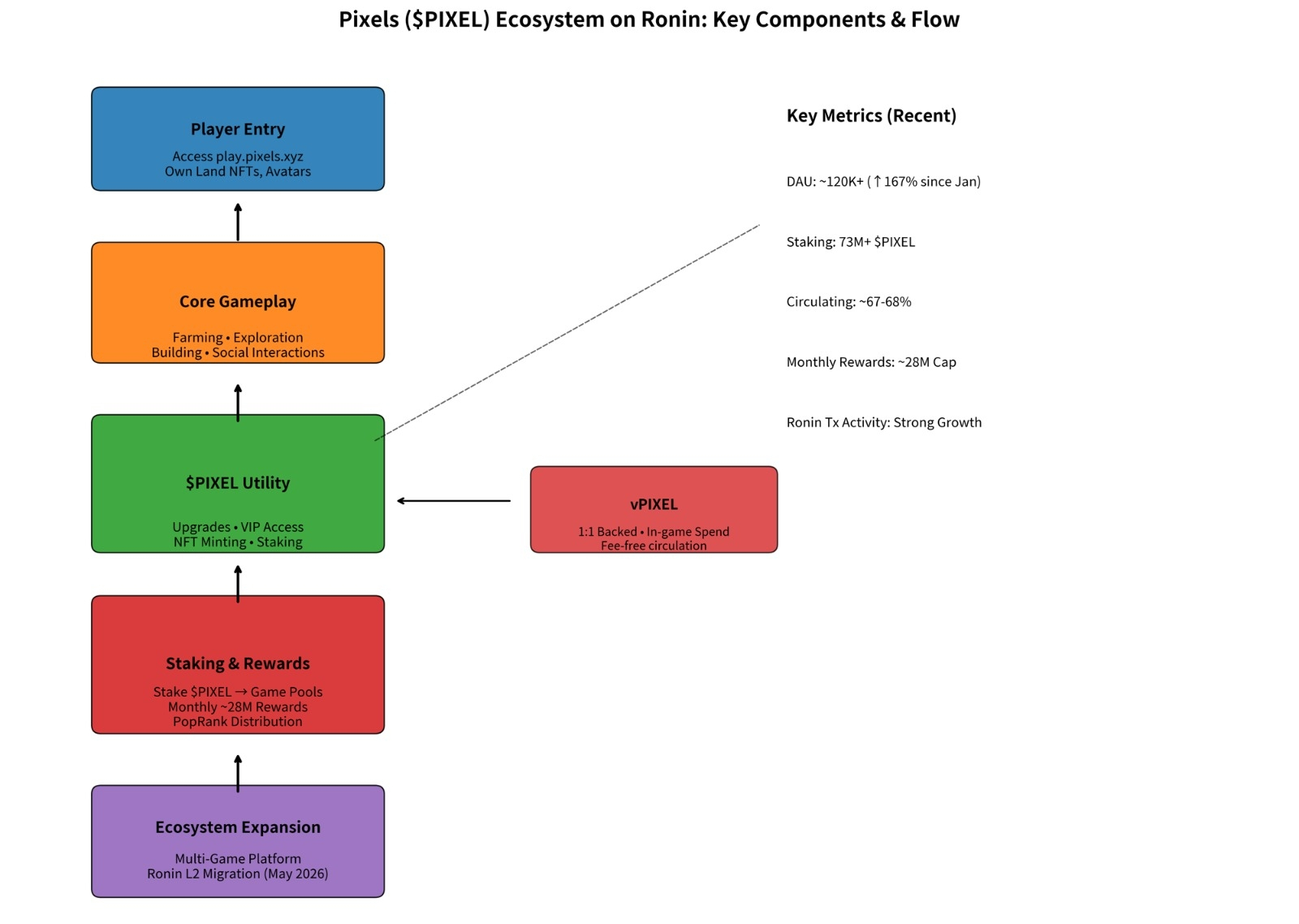
Ronin gaming transaction activity showed notable increases tied to Pixels, contributing to the network’s strong Q1 volume. Low-friction infrastructure keeps interactions smooth, which could support further growth as more titles integrate and the L2 upgrade takes effect.
Monthly ecosystem rewards remain capped around 28 million $PIXEL, paired with tools focused on meaningful retention. This controlled approach brings predictability, potentially fostering steadier internal circulation and reducing erratic sell pressure over time.
My overall take is that $PIXEL is functioning as a practical alignment mechanism, channeling player energy and holder commitment into ecosystem development. The combination of staking, vPIXEL mechanics, and platform expansion creates feedback loops that tie token utility more closely to actual gameplay and cross-game participation. Of course, success will depend on consistent delivery of engaging updates and the broader adoption of new titles, but the foundation appears measured and player-oriented rather than purely speculative.
In the end, Pixels offers an interesting example of how Web3 gaming can evolve beyond basic play-to-earn models. By focusing on ownership, social elements, and structured incentives around $PIXEL, it’s building something that feels approachable yet substantive. As Ronin strengthens its position and the ecosystem expands, it will be worth watching how these pieces come together to support long-term engagement. What are your thoughts if you’ve been playing or following along?
