
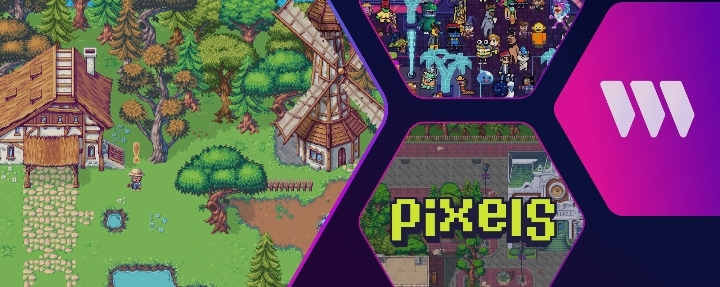
When people hear about Web3 games, they often imagine simple mechanics combined with token rewards. However, @Pixels offers something slightly different. Instead of feeling like a traditional game with added blockchain features, it feels more like a growing digital world where players can exist, interact, and build over time.
One of the reasons for this is the design philosophy behind Pixels. The game is not rushed or overloaded with unnecessary complexity. Instead, it focuses on creating an environment where players can naturally spend time. Farming, exploring, and interacting with others may sound basic, but when combined, they create a sense of presence that many Web3 games fail to achieve.
The role of $PIXEL within this environment is also worth discussing. It acts as a connector between activities, ensuring that every action has some level of value. However, it does not overpower the experience. The gameplay remains the focus, which is important for long-term engagement.
Another interesting aspect is how the world evolves. As more players join and participate, the ecosystem becomes more active. This organic growth adds depth and makes the environment feel alive rather than static.
From my point of view, this “world-like” experience is what could set Pixels apart. Many projects focus only on mechanics, but Pixels focuses on experience. That difference might not seem huge at first, but over time, it becomes very important.
In my opinion, projects that successfully create a living digital environment will have a stronger chance of long-term success. Pixels seems to be moving in that direction, which is why it continues to attract attention.