
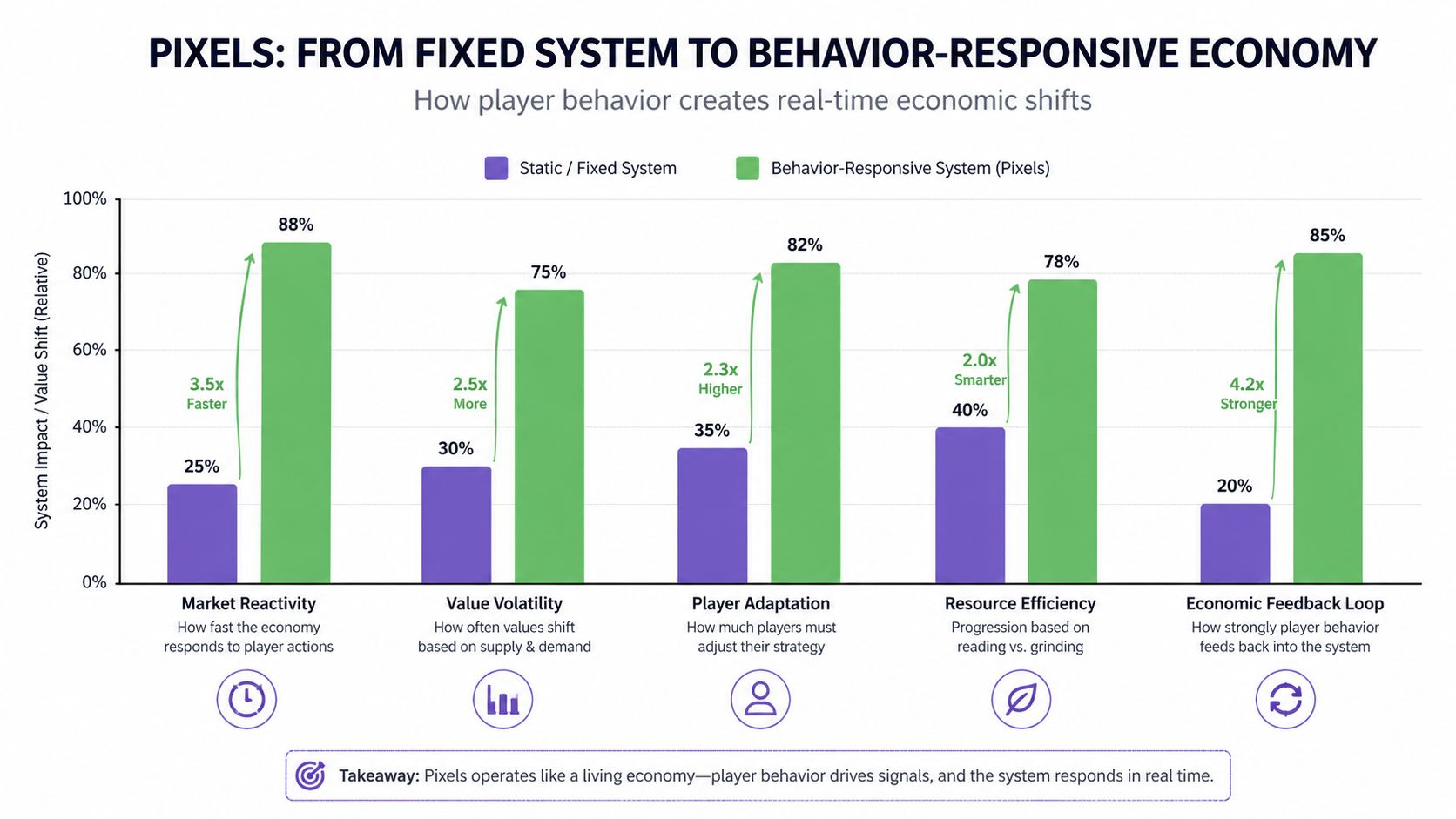
Something feels different in how value moves inside Pixels lately. Not bigger not louder just quicker to react. You try something that worked yesterday and today it barely holds. It’s like the system isn’t waiting anymore. It’s watching, adjusting and answering back almost instantly.
I don’t think this is accidental. The game feels less like a fixed design and more like a loop that listens. Player behavior goes in small economic shifts come out. And over time, you start noticing that you’re not just optimizing the game you’re responding to it, almost the same way it responds to you.
That’s where Pixels starts to feel less like a game and more like a behavior responsive system. Not in a technical sense but in how it actually feels to play. The farming loop is still there. You plant, harvest, craft, sell. But the meaning of each action keeps shifting depending on what the system seems to need at that moment.
I’ve had days where one crop felt like the obvious choice. Then suddenly margins disappear. Something else becomes more valuable. No announcement no clear signal just a quiet change that pushes you to adapt. It’s subtle, but it builds this habit of constant recalibration.
Resource gathering and progression follow the same pattern. Early on it feels linear. You unlock tools, expand land, increase output. But later, progression starts to depend less on grinding and more on reading the system. What’s scarce? What’s being over produced? Where is the gap right now?
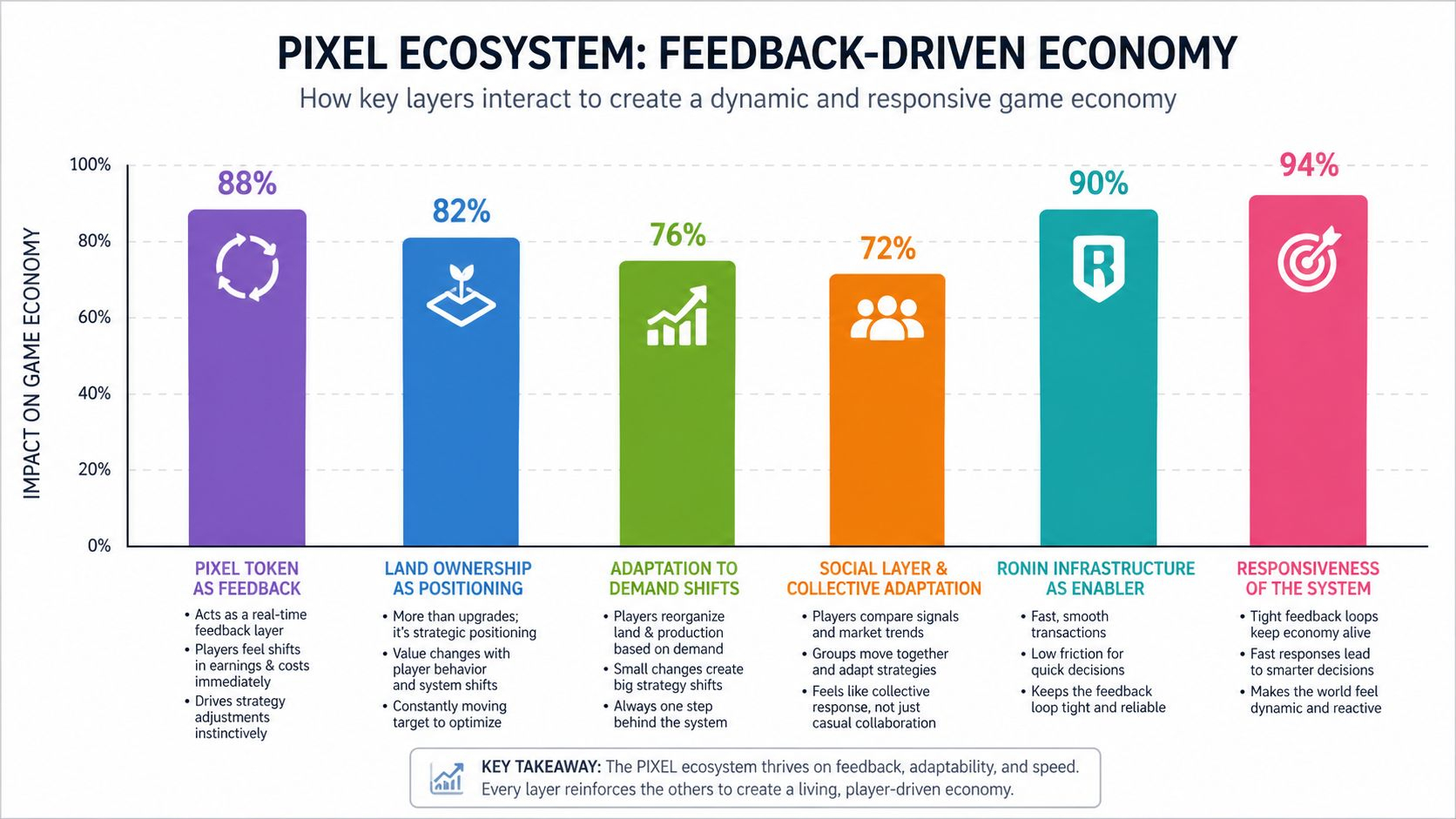
That’s where the $PIXEL token plays a strange role. It’s not just something you earn. It behaves more like a feedback layer. When earning slows down or costs shift, you feel it immediately. Your strategy changes without you even thinking too hard about it. It’s less about rewards and more about signals.
Land ownership adds another dimension to this. At first, it looks like a simple upgrade path. More land, more production. But over time land feels like positioning inside a moving economy. The value of what you grow or produce on that land changes depending on how the system reacts to overall player behavior.
I’ve seen players completely reorganize their land setups overnight. Not because of updates but because of small shifts in demand. It creates this feeling that you’re always slightly behind the system, trying to catch up to where it’s heading next.
The social layer makes this even more interesting. Players don’t just share tips they compare signals. What’s selling faster? What’s dropping in value? Small groups start moving together adjusting strategies almost like coordinated responses. It doesn’t feel like casual collaboration. It feels like collective adaptation.
And Ronin plays a quiet but important role here. Everything moves faster. Transactions are smooth. There’s very little friction when you want to act on a decision. That speed matters because a slow system wouldn’t feel responsive. Here, the feedback loop stays tight.
But this kind of design brings its own tension.
When a system reacts this quickly it starts relying on constant player input. The economy needs activity to stay balanced. If players slow down, does the system lose its rhythm? Or does it overcorrect in ways that push people out?
I also keep thinking about who the system is really optimizing for. Players who stay and build long term? Or players who are just good at reading signals and extracting value quickly? Because if both behaviors feed the same feedback loop the system might unintentionally favor the faster, more opportunistic side.
There’s also a limit to how much adaptation feels good. At some point, constant change can start feeling unstable. Like you’re not building toward something just reacting to whatever comes next. And not every player wants that kind of experience.
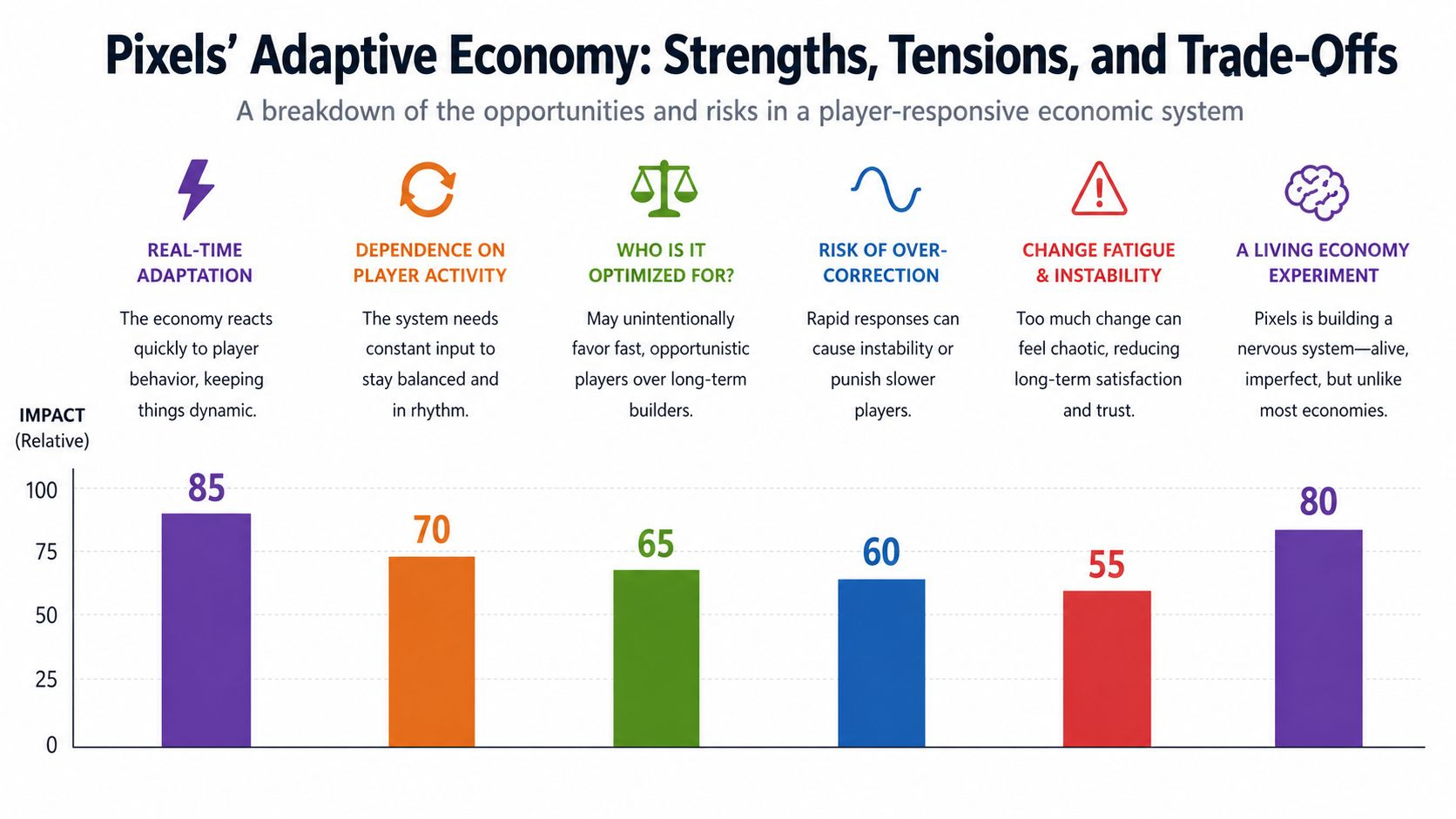
Still, I can’t ignore what @Pixels is experimenting with here. It’s not trying to lock players into a fixed economy. It’s letting the economy move, and then shaping itself around how players behave inside it.
That’s what makes it feel like a nervous system. Not perfect, not always balanced but alive in a way most game economies aren’t.
I just don’t know if players are fully ready for a system that watches them this closely and responds this quickly.