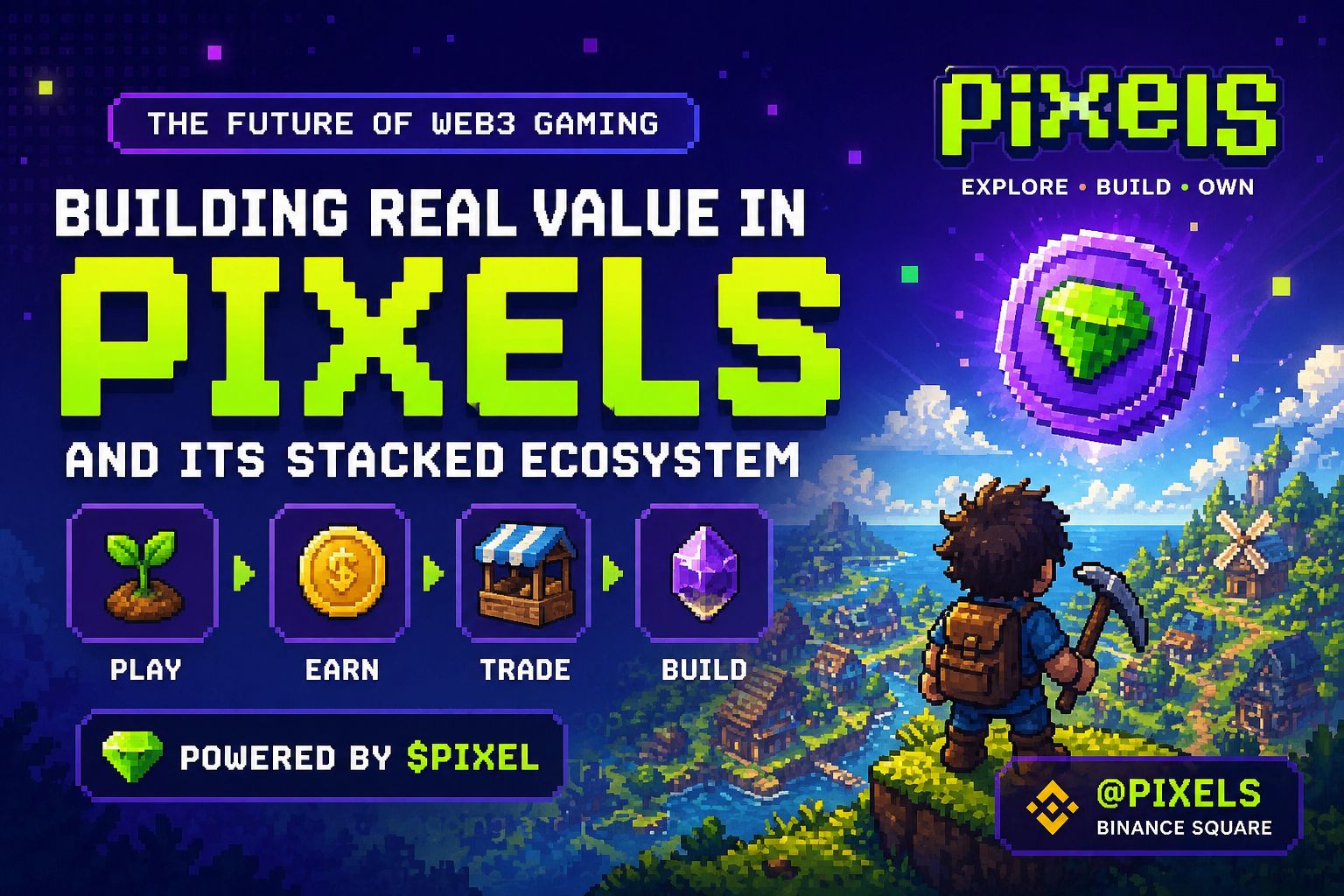
The evolution of Web3 gaming is no longer just about play-to-earn hype — it’s about building sustainable digital economies. This is where @Pixels stands out as a leading example in the space.
Unlike many short-lived GameFi projects, Pixels has focused on creating a stacked ecosystem where every layer connects: gameplay, resource management, trading, and token utility. This structure allows players to not only enjoy the game but also participate in a real, functioning economy powered by $PIXEL.
What makes this ecosystem powerful is how value flows through it. Players gather resources, trade with others, and reinvest into the game, creating continuous economic activity rather than one-time rewards. This reduces dependency on constant new users and instead builds a loop where existing users sustain the system.
$PIXEL plays a key role here, acting as the backbone of transactions, incentives, and growth. As more users join and engage, demand for utility naturally increases — something many projects struggle to achieve.
In my view, projects like @Pixels are showing the direction Web3 gaming needs to go: less speculation, more utility, and stronger ecosystems. If this model continues to develop, it could redefine how we see gaming and digital ownership in the blockchain space.