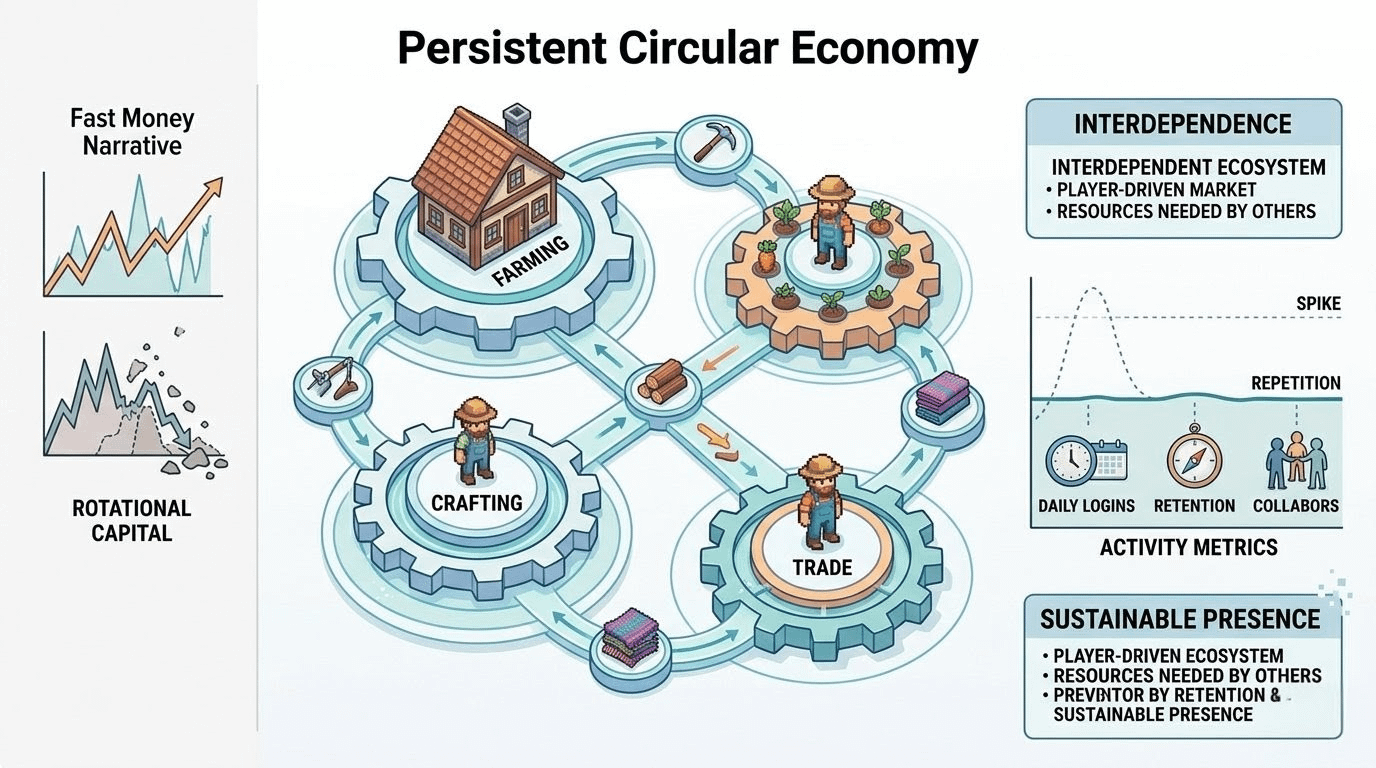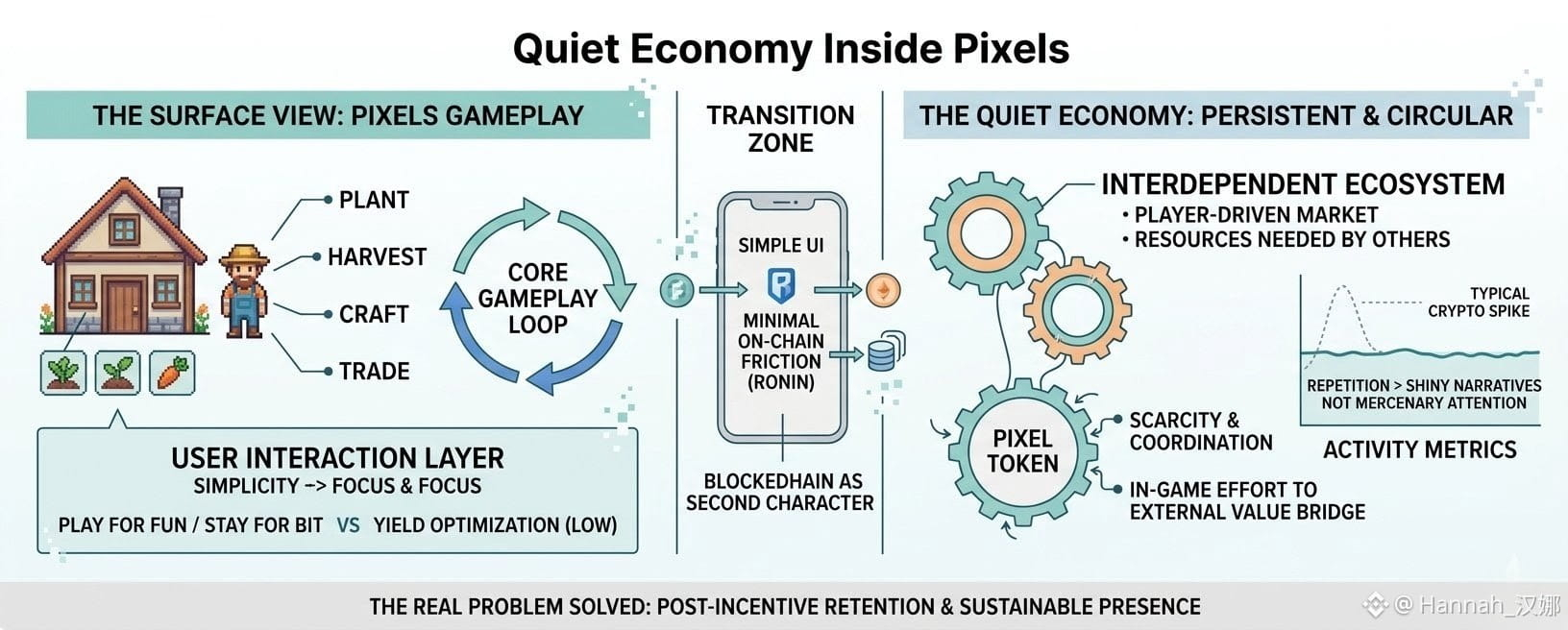

I wasn’t even thinking about games when Pixels showed up on my radar. I was digging through wallet activity on Ronin, trying to understand why it wasn’t fading the way most single-ecosystem chains do after their narrative peak. Usually you see the spike, the attention, then the slow bleed as liquidity rotates somewhere shinier. But this time the activity wasn’t dropping off cleanly. It was circulating.
Not explosive. Not speculative. Just persistent.
That’s what led me to Pixels.
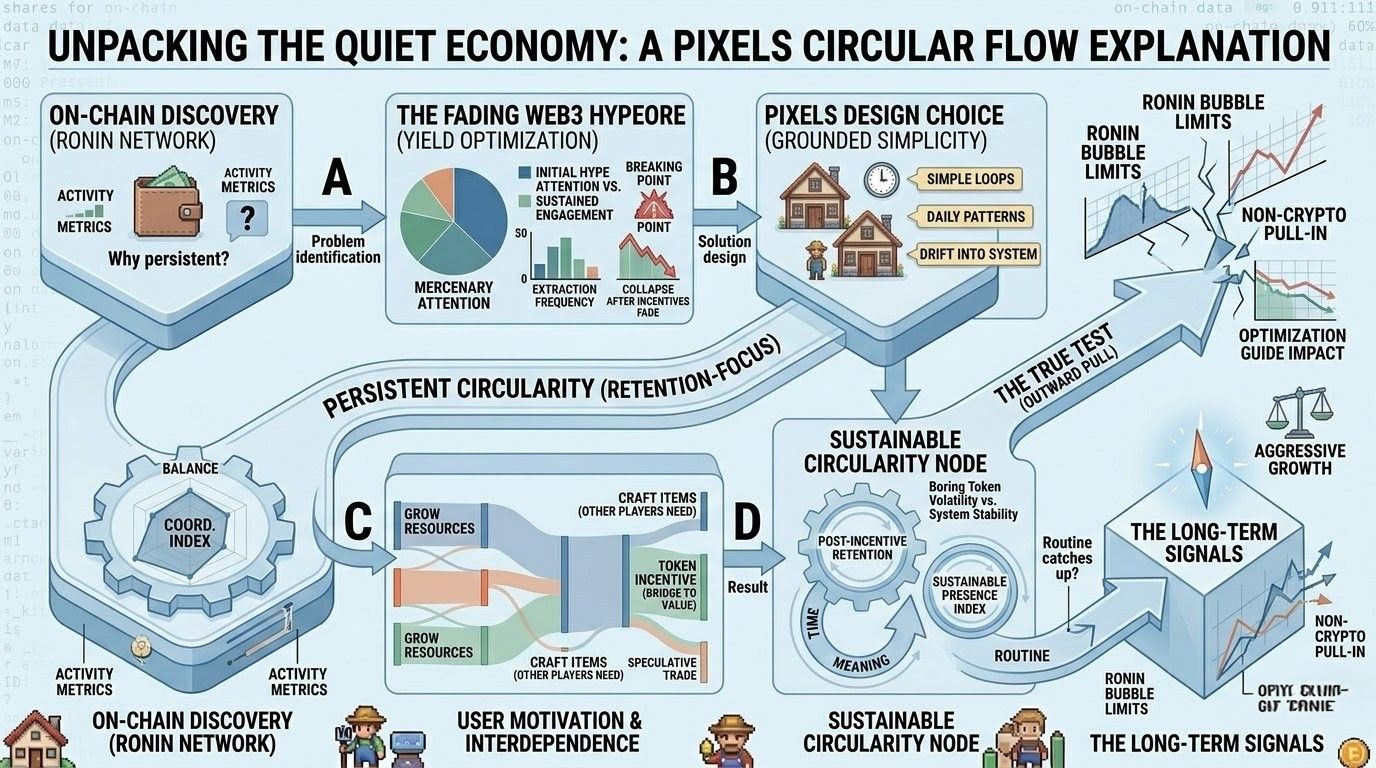
Right now the broader market feels like it’s running on two very different clocks. On one side, capital is sprinting through narratives AI agents, restaking loops, RWAs trying to look like yield-bearing Treasuries. Fast money. Rotational. Always searching. On the other side, there’s this slower layer where people are actually using things. Not because they expect immediate upside, but because they’ve decided to stay for a bit.
Pixels sits somewhere in that second lane, which is unusual for anything with a token attached to it.
At face value, it doesn’t try to impress you. It’s a farming game. Pixel graphics. You plant, harvest, craft, trade. The kind of loop that sounds almost too simple to matter in a market obsessed with technical breakthroughs and financial engineering.
But that simplicity is kind of the point.
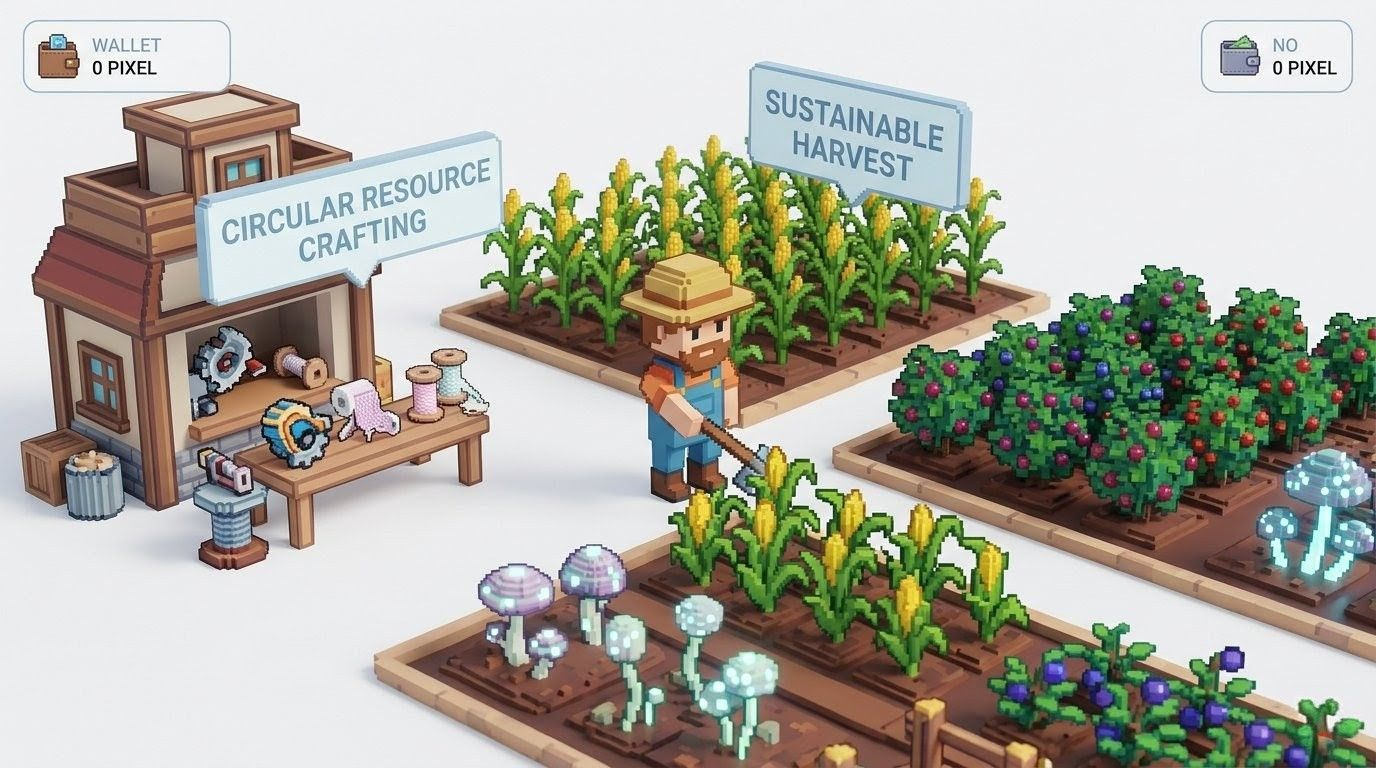
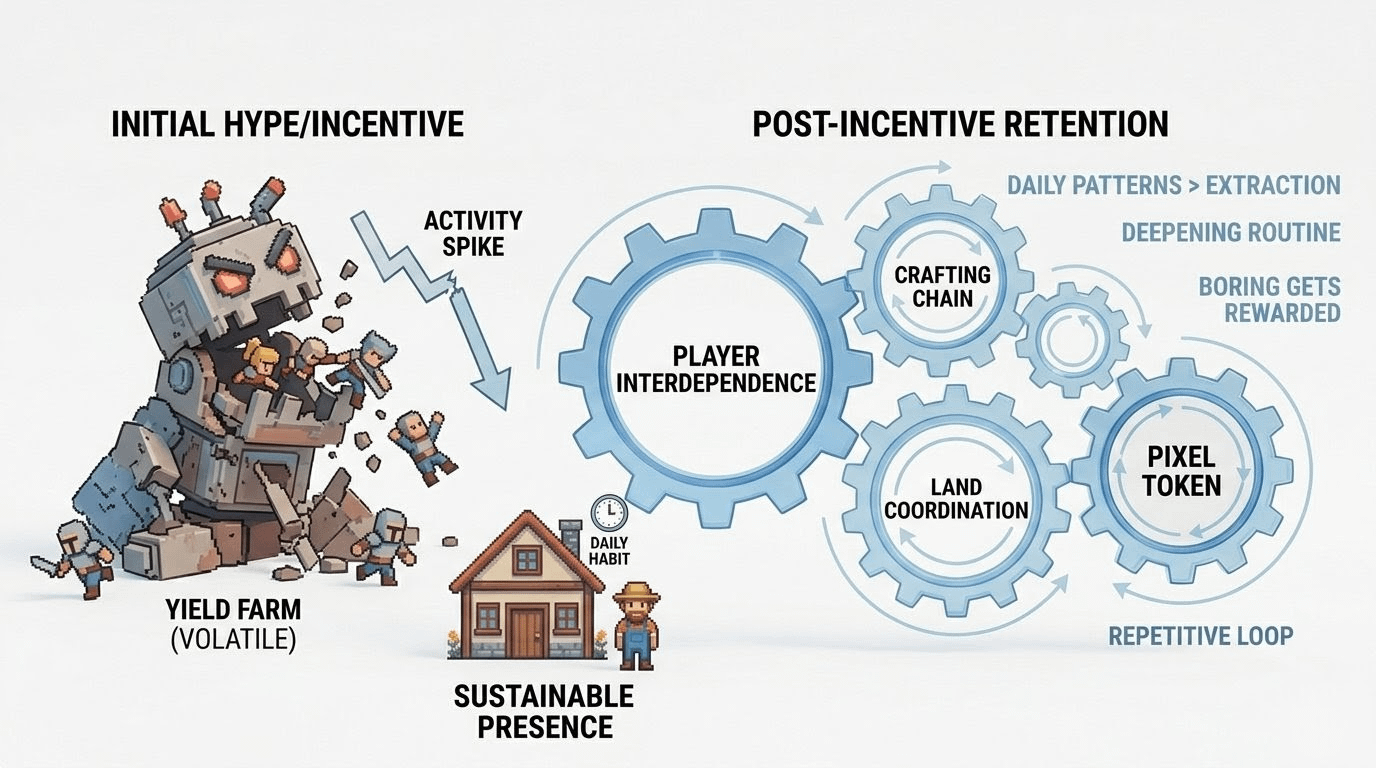
The real problem Pixels is trying to solve isn’t “how do we build a better game.” It’s “how do we keep people here after the initial incentive fades.” That’s been the unsolved problem in crypto gaming for years. We’ve built economies before we’ve built reasons to exist inside them.
Most Web3 games never escape that gravity. They attract users who are optimizing for yield, not experience. So the second the yield compresses, the system empties out. You’re left with a shell of what looked like traction.
Pixels feels like it’s trying to reverse that order, or at least soften it.
The tech itself isn’t complicated, and that’s probably intentional. It runs on Ronin, so transactions are cheap and fast enough that you don’t think about them. Assets exist on-chain, but you’re not constantly reminded of it. You’re not signing something every few seconds like it’s a chore. The blockchain layer is there, but it’s not the main character.
That’s a design choice most teams still get wrong.
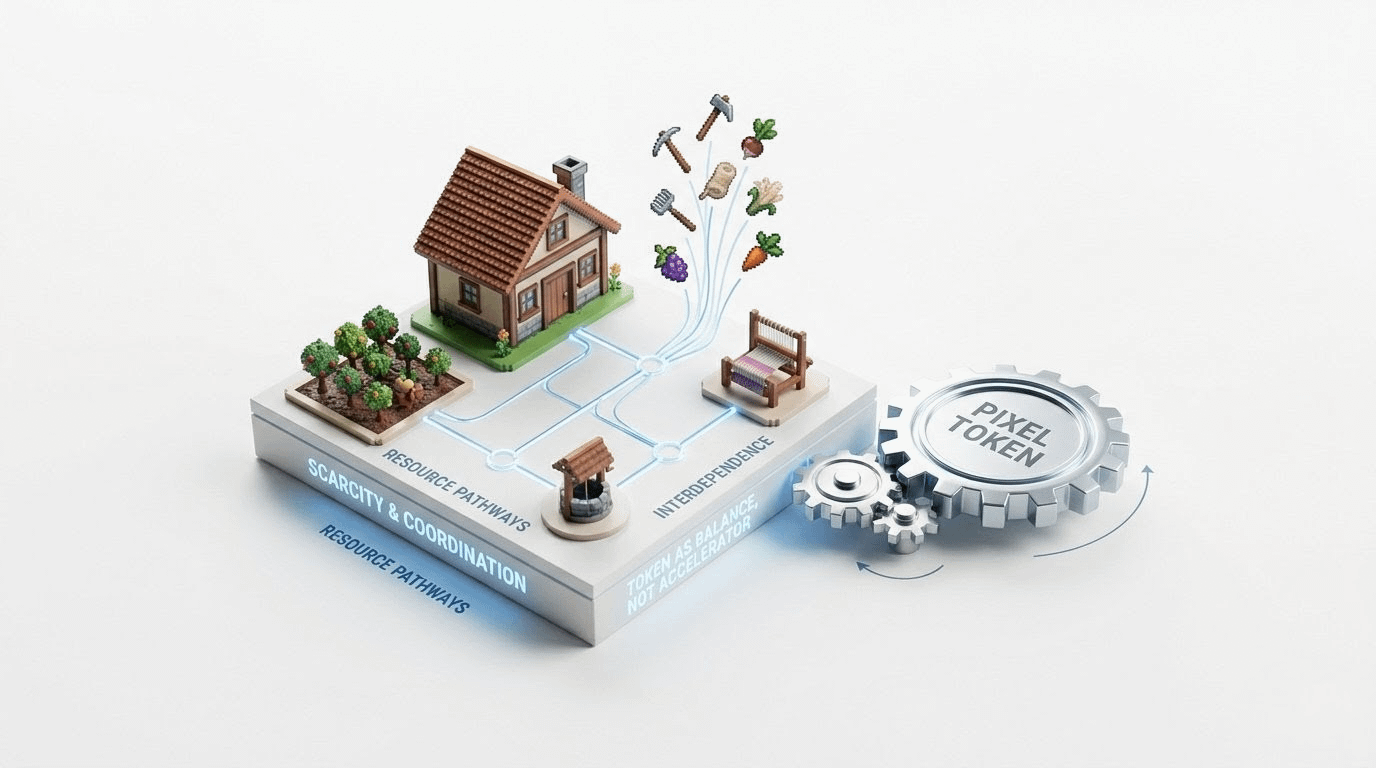
Inside the game, the economy is built around interdependence. You grow resources that other players need. You craft items that feed into someone else’s loop. Land ownership adds another layer of scarcity and coordination. Then there’s the PIXEL token, which acts as both an incentive and a bridge between in-game effort and external value.
Nothing about this is groundbreaking in isolation. We’ve seen player-driven economies before. We’ve seen tokens tied to gameplay. But what feels slightly different here is the pacing. The system doesn’t scream at you to optimize immediately. It lets you drift into it.
And that changes behavior.
When I look at activity, I’m not just seeing spikes around events or reward distributions. I’m seeing repetition. Daily patterns. Users coming back without a clear external trigger. That’s rare in crypto, where attention is usually tied to some form of extraction.
It suggests that at least a portion of the player base isn’t purely mercenary.
Still, it’s hard to ignore how fragile that balance is.
Because once a token becomes liquid enough, everything starts bending toward it. Strategies form. Optimization guides pop up. People figure out the fastest way to turn time into money, and suddenly the experience compresses into efficiency. What felt like a game starts feeling like a job.
Pixels hasn’t fully crossed that line yet, but you can see how easily it could.
There’s also the question of how deep the gameplay really goes. Farming loops can hold attention for a while, especially when layered with social elements and progression. But eventually, repetition catches up. The system needs to evolve into something richer, or it risks flattening into routine.
And routine, without meaning, doesn’t last.
Compared to earlier Web3 games, Pixels definitely feels more grounded. Less obsessed with token velocity. More focused on creating a place people might actually spend time in. That alone gives it an edge in a market that’s become increasingly skeptical of anything that looks like a disguised yield farm.
But I’m not sure that’s enough.
Because the competition isn’t just other crypto games. It’s every other way people can spend their time online. And most of those don’t require you to think about tokens, wallets, or market conditions at all.
That’s a higher bar than we usually admit.
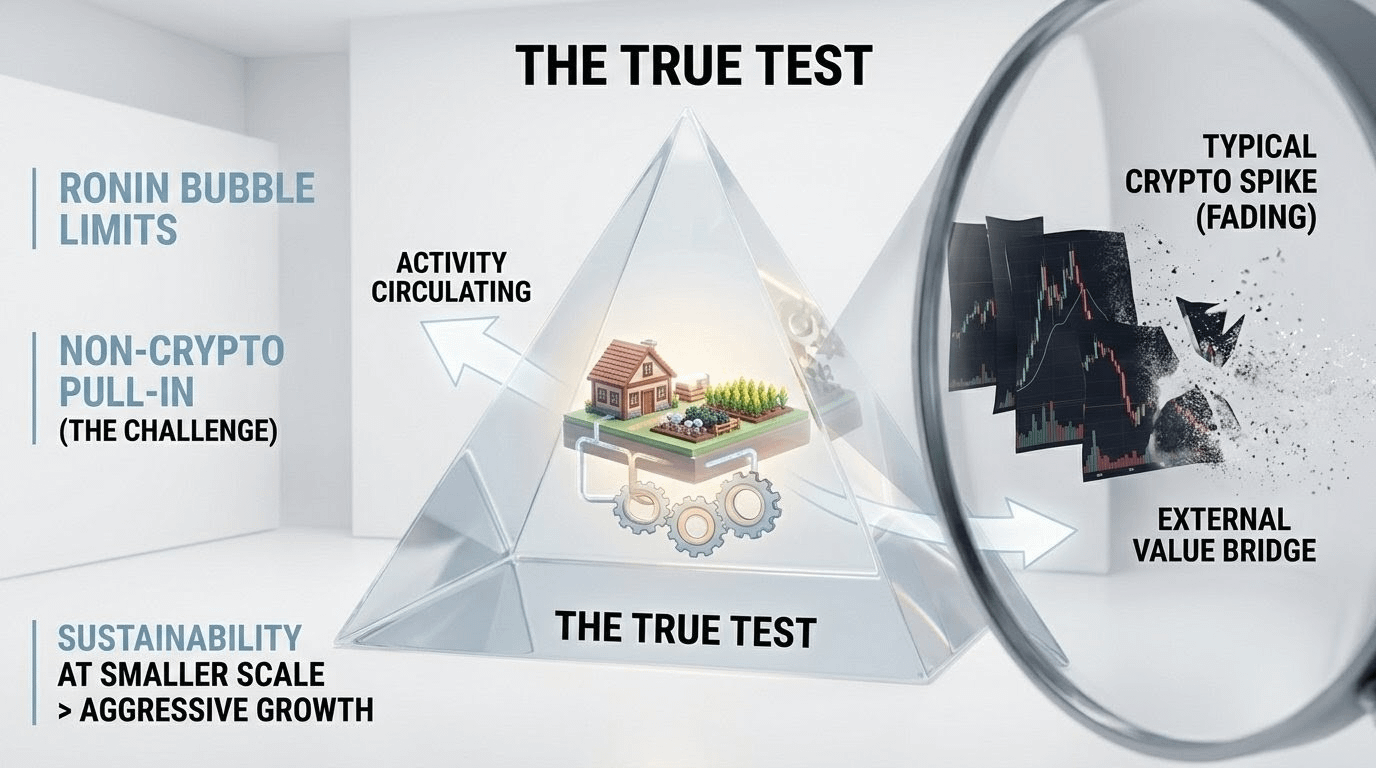
One thing I keep coming back to is how much Pixels benefits from being on Ronin. There’s a built-in audience. Users who are already familiar with the idea of blockchain games. That reduces friction, but it also creates a kind of bubble. Activity inside that ecosystem doesn’t always translate outward.
So the real test might not be how well Pixels performs within Ronin, but whether it can pull in people who don’t already care about crypto.
That’s where most projects stall.
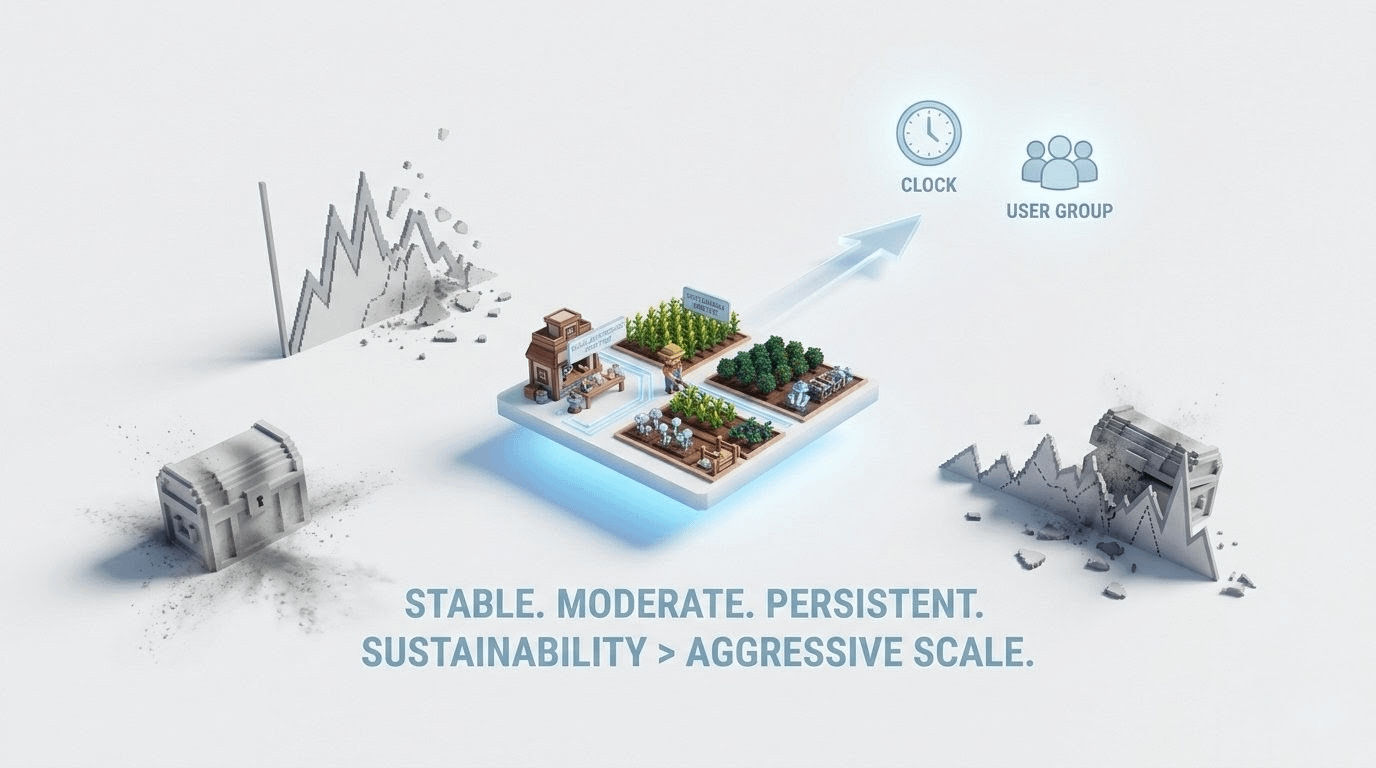
What’s interesting, though and this is something I don’t see talked about much is that Pixels might not need to become a massive breakout to matter. If it can maintain a stable, moderately sized user base that actually engages over time, that alone challenges a core assumption in this space.
That everything needs to scale aggressively to survive.
Maybe sustainability at a smaller scale is the real unlock. Not explosive growth, but consistent presence. A system that doesn’t collapse the moment incentives shift.
That’s less exciting. But maybe more real.
I’m still unsure how the PIXEL token behaves long term in that kind of environment. If the economy inside the game stays relatively balanced, the token might not see the kind of volatility traders look for. And ironically, that could make it less attractive to the very capital that usually amplifies these ecosystems.
Which creates a strange tension.
For the game to stay healthy, the token might need to stay somewhat boring.
And in crypto, boring rarely gets rewarded.
So I keep watching it, not as a clear bet, but as a signal. Something slightly out of sync with the usual cycle. A place where behavior feels a bit more grounded, at least for now.
But I can’t tell yet if that’s because Pixels has figured something out or because the market just hasn’t fully noticed it.
And when it does, does that make it stronger or does that change the very thing that made it work in the first place?