
A few months ago, a developer building a wallet on TON ran into a familiar problem. Users wanted fast swaps, better pricing, and access to assets like Bitcoin without leaving the TON ecosystem. The challenge was not creating the interface. The real difficulty was building the infrastructure behind it.
Routing trades across different liquidity sources, finding the best prices in real time, reducing slippage on larger swaps, and maintaining smooth execution can quickly become complicated. For many teams, this means spending weeks building systems that users never actually see.
This is where Omniston enters the picture.
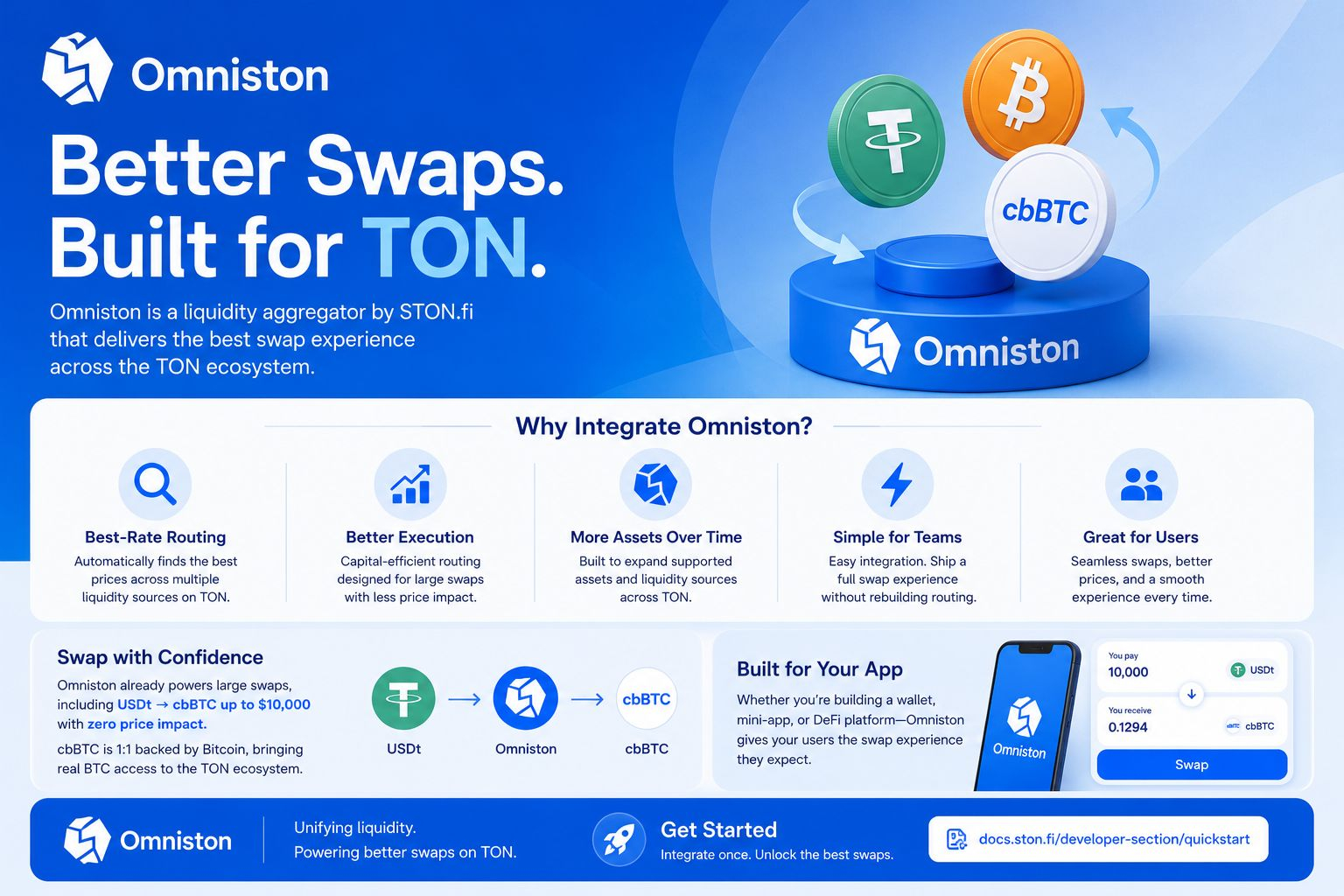
Built by STON.fi, Omniston is a liquidity aggregation protocol designed specifically for the TON ecosystem. Instead of forcing developers to integrate multiple liquidity sources separately, it provides one integration layer that automatically handles routing and price optimization for swaps across TON based liquidity venues.
One of the most interesting examples of this is its support for cbBTC swaps.
What Is cbBTC on TON?
cbBTC, short for Coinbase Wrapped Bitcoin, is a tokenized representation of Bitcoin backed 1:1 by BTC reserves. On TON, it allows users to gain Bitcoin exposure while staying inside the TON ecosystem rather than moving funds across multiple chains manually.
This means users can access Bitcoin related liquidity directly from TON based wallets, mini apps, and DeFi platforms without relying on centralized transfers during the process.
According to information shared around the Omniston ecosystem, the protocol already supports large USDt to cbBTC swaps, including transactions up to around $10,000 with minimal or no visible price impact during execution.
For developers building consumer facing applications, this matters because swap quality directly affects user experience. Poor routing and fragmented liquidity often lead to worse execution prices and higher slippage, especially during larger trades.
Why Liquidity Aggregation Matters on TON
As the TON ecosystem grows, liquidity becomes spread across multiple decentralized exchanges and protocols. Without aggregation, users may receive different swap prices depending on where the transaction is executed.
Omniston solves this by scanning multiple liquidity sources and selecting the most efficient route available at the time of the trade.
Its routing system is designed to help with:
-Better swap pricing across available liquidity pools
-Reduced slippage during larger transactions
-Faster access to liquidity without manually comparing platforms
-Simpler user experiences for wallets and DeFi apps
Instead of developers building separate integrations for every DEX or liquidity provider on TON, Omniston acts as a unified infrastructure layer.
Built for Wallets, Mini Apps, and DeFi Platforms
One of the biggest advantages of Omniston is that it removes much of the complexity from building swap functionality into an application.
A team creating a wallet or Telegram mini app does not need to build its own routing engine from scratch. Omniston already handles liquidity discovery, route optimization, and execution flow behind the scenes.
For users, the process feels simple. They choose the assets they want to swap, and the protocol automatically searches for the best available execution path.
For developers, this can significantly reduce integration work and maintenance overhead. Early reports around the project suggested some integration partners reduced onboarding time from several weeks to just days after adopting the protocol.
More Than Just One Asset
Although cbBTC has become one of the major examples demonstrating Omniston’s capabilities, the protocol was designed with broader liquidity expansion in mind.
Documentation from the project describes support for multiple liquidity models, including decentralized exchanges, market makers, and future cross chain integrations.
This means developers integrating Omniston today are not only adding a swap engine for current assets, but also preparing their applications for a larger liquidity network as TON DeFi continues to evolve.
The long term goal appears to be creating a unified liquidity layer where TON applications can access deep liquidity through a single connection instead of fragmented integrations across separate protocols.
Omniston and the Future of TON DeFi
TON has been growing steadily as more wallets, mini apps, and decentralized products enter the ecosystem. As usage increases, infrastructure becomes just as important as user interfaces.
Users expect fast execution, reliable pricing, and access to major assets without complicated workflows. Developers, meanwhile, want infrastructure that is efficient to integrate and scalable enough to support growth.
Omniston positions itself as one of the tools helping bridge that gap by simplifying liquidity access and swap execution across TON based applications.
For builders looking to add better swap functionality to their applications without rebuilding routing systems internally, it offers a practical shortcut into TON DeFi liquidity.
If you want to explore the developer documentation or integrate Omniston into your own TON application, you can get started here:
STON.fi Omniston Developer Docs
https://docs.ston.fi/developer-section/quickstart
You can also explore the cbBTC experience on TON here:
cbBTC on STON.fi
https://ston.fi/btc-ton