
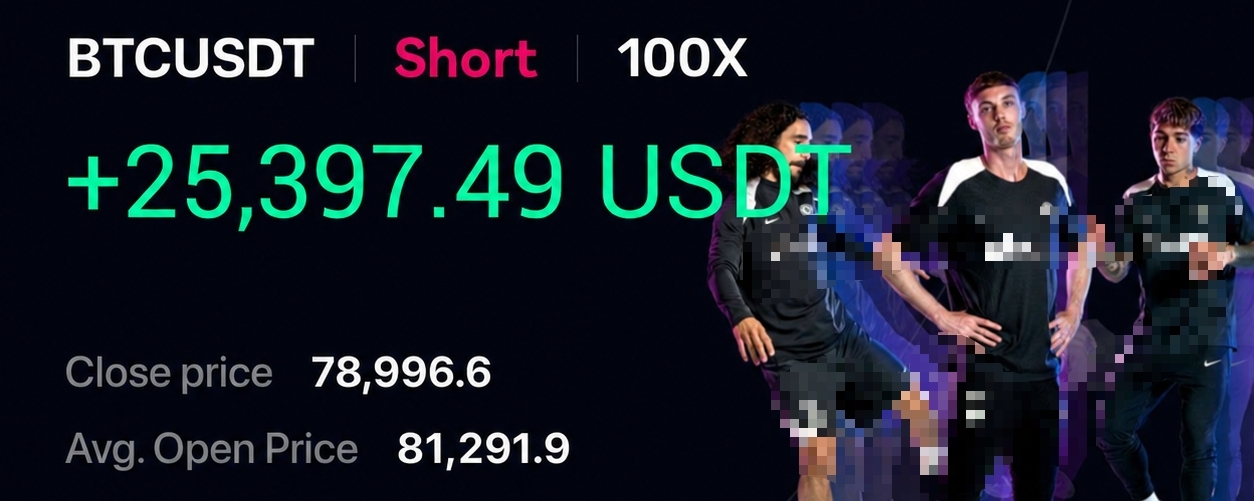
In trading, most people only see the final result — the profit, the percentage, the green numbers on the screen. What they don’t see is the patience behind the setup, the discipline behind the entry, and the emotional control behind the execution.
A successful trade is rarely about luck. It is built through preparation, market observation, timing, and risk management. Every experienced trader understands that the market rewards consistency more than excitement. Chasing random candles may work once, but structured decision-making is what survives in the long run.
One of the biggest mistakes traders make is entering the market emotionally. Fear and greed are responsible for more losses than bad analysis. Many traders enter too early because they fear missing out, while others hold losing positions too long because they refuse to accept small losses. The market tests psychology every single day, and those who fail to control emotions usually fail to protect their capital.
High leverage can create massive opportunities, but it also increases risk. This is why smart traders never rely only on leverage; they rely on precision. A well-planned setup with proper confirmation will always have more value than blindly entering multiple trades. Patience before the entry is often more important than confidence after the entry.
Professional traders think differently from beginners. Beginners focus only on profits, while professionals focus on risk. They understand that preserving capital is the first priority. A trader who can survive difficult market conditions will always have another opportunity waiting. But a trader who overtrades emotionally can lose weeks of progress in a single moment.
Another important lesson in trading is understanding market structure. Price movements are not random. Liquidity, support and resistance zones, trend direction, and market sentiment all play a role in shaping momentum. Traders who learn to read these factors develop a stronger edge compared to those who depend only on indicators without understanding the reason behind price action.
Losses are also part of the journey. Even the best traders in the world take losing trades. The difference is that they don’t allow one bad trade to destroy their mindset. They review mistakes, improve their strategy, and continue moving forward with discipline. Trading is not about being right every time; it is about managing risk while staying consistent over time.
There are days when the market moves exactly according to analysis, and there are days when volatility destroys expectations within minutes. This is why adaptability matters. The market changes constantly, and traders must learn to adjust instead of forcing trades. Sometimes the best trade is no trade at all.
Consistency in trading does not come from taking hundreds of trades. It comes from taking quality trades with patience and confidence. A calm mind performs better than an emotional one. Traders who wait for confirmation, respect stop losses, and trust their strategy usually outperform those who act impulsively.
At the end of the day, trading is a personal battle between discipline and emotion. Charts can be learned, indicators can be studied, and strategies can be copied, but emotional control is something every trader must develop personally. The market rewards those who stay focused during pressure and remain patient during uncertainty.
Success in trading is not built overnight. It is built trade by trade, lesson by lesson, and decision by decision. Stay disciplined, protect your capital, and remember that consistency will always outperform hype in the long run.
#BitcoinETFsSee$131MNetInflows
#VitalikMovesETHviaPrivacyPools
#DuneCuts25%AmidAIEfficiencyPush
