

@Bitcoin #cryptouniverseofficial
The crypto market spent most of the past month trading with a strange kind of confidence. Bitcoin kept finding buyers above the psychological $80,000 zone, leverage was building again across perpetual futures markets, and traders were slowly leaning back into the idea that 2026 could still turn into another strong institutional cycle. Then macro pressure returned all at once, and the unwind was brutal.
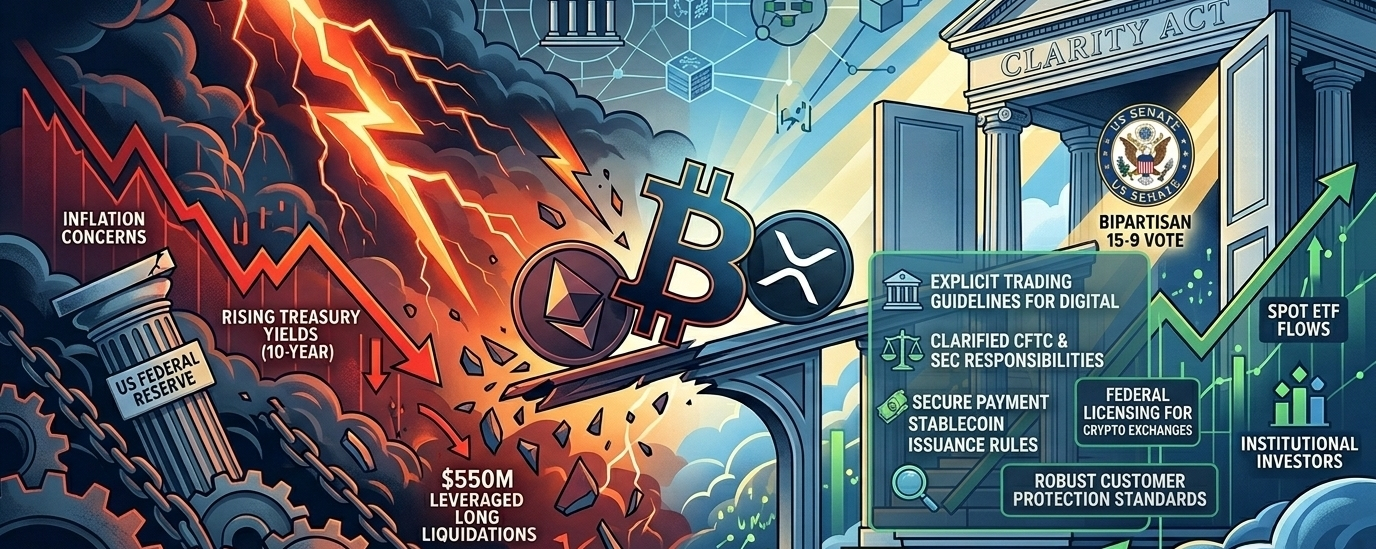
More than $550 million in leveraged long positions were wiped out across crypto derivatives markets during the latest flush, with $BTC sliding sharply toward the high-$70,000 region before stabilizing. Ethereum, Solana, and $XRP all followed lower as funding rates flipped and risk appetite disappeared almost overnight. The move was not really caused by crypto-specific weakness. It came from the same macro forces that have been pressuring equities, bonds, and growth assets for weeks now.
The trigger was a fresh wave of inflation concerns combined with rising Treasury yields. U.S. producer price inflation and consumer inflation readings came in hotter than many traders expected, pushing bond yields toward new yearly highs. The 10-year Treasury yield climbed above 4.5%, reigniting fears that the Federal Reserve may keep rates elevated longer than markets had priced in. That immediately changed the tone across speculative assets. Crypto, which had been benefiting from improving sentiment earlier this quarter, suddenly became part of a broader “risk-off” rotation.
What made the liquidation event especially aggressive was the amount of leverage already sitting in the system. Traders had become increasingly comfortable chasing upside after Bitcoin recovered from earlier corrections. Open interest remained elevated across major exchanges, and funding rates were signaling crowded long positioning.
I think this is one of those moments that reminds traders how connected crypto has become to macro markets. Years ago, Bitcoin often traded like its own isolated ecosystem. That narrative feels outdated now. Spot ETF flows, institutional exposure, hedge fund participation, and macro liquidity conditions matter more than ever. When bond yields spike, crypto notices immediately.
At the same time, the market is dealing with something more constructive beneath the surface: the continued progress of the CLARITY Act in the United States Senate. That is one reason this selloff feels different from some of the panic-driven corrections seen in previous cycles.
The CLARITY Act advanced through the Senate Banking Committee this week in a bipartisan 15-9 vote, moving one step closer to a full Senate floor vote. The legislation is designed to finally create a clearer regulatory framework for digital assets in the United States, something the industry has been demanding for years.
The bill attempts to define which crypto assets fall under securities law and which should be treated as commodities. It also establishes rules around decentralized finance platforms, stablecoin incentives, anti-money laundering compliance, and tokenized financial products. For traders and investors, the biggest takeaway is simple: regulatory uncertainty may finally be starting to narrow.
That matters because uncertainty has quietly been one of the largest suppressors of institutional participation in crypto markets. Many funds, banks, and large asset managers have spent years avoiding deeper exposure because the legal framework remained too vague. Every SEC lawsuit, every enforcement action, and every contradictory regulatory statement created hesitation.
Now, even though the CLARITY Act still faces debate and amendments before becoming law, the fact that it is progressing at all has become a major market narrative. Crypto-linked equities rallied earlier in the week after the committee vote, while Bitcoin briefly reclaimed strength above $81,000 before macro selling pressure interrupted momentum.
XRP traders in particular have been watching the legislation closely because the bill could strengthen the argument that certain digital assets should be regulated more like commodities than securities. That possibility has fueled speculation about future institutional flows if regulatory clarity improves.
Still, the current environment shows how difficult it is for bullish crypto narratives to overpower macro stress when liquidity conditions tighten. The market essentially received both positive and negative catalysts simultaneously. On one side, you have the most meaningful U.S. crypto legislation progress in years. On the other, you have inflation fears, rising oil prices, elevated Treasury yields, and growing concern that central banks may remain hawkish deeper into 2026.
That tension explains why traders feel conflicted right now.
Personally, I think the long flush was probably necessary from a positioning perspective. Markets had become overcrowded on the long side again, especially after weeks of relatively stable upward price action. These resets are painful, but they also remove excessive leverage that can destabilize future rallies.
If Treasury yields continue climbing and rate-cut expectations keep getting delayed, crypto could remain volatile for several more weeks. ETF inflows also become important here. Sustained institutional buying has helped absorb prior corrections, but traders will closely watch whether those flows weaken during periods of macro stress.
Meanwhile, the CLARITY Act story is unlikely to disappear anytime soon. That alone represents progress compared to previous years when the industry operated almost entirely in legal gray areas.
For now, the market sits between two powerful forces: macro fear and regulatory optimism. The $550 million liquidation event showed how fragile leveraged positioning can become when liquidity tightens. But the Senate movement on the CLARITY Act also showed that crypto’s long-term integration into traditional finance is still moving forward, even during volatile weeks like this one.