
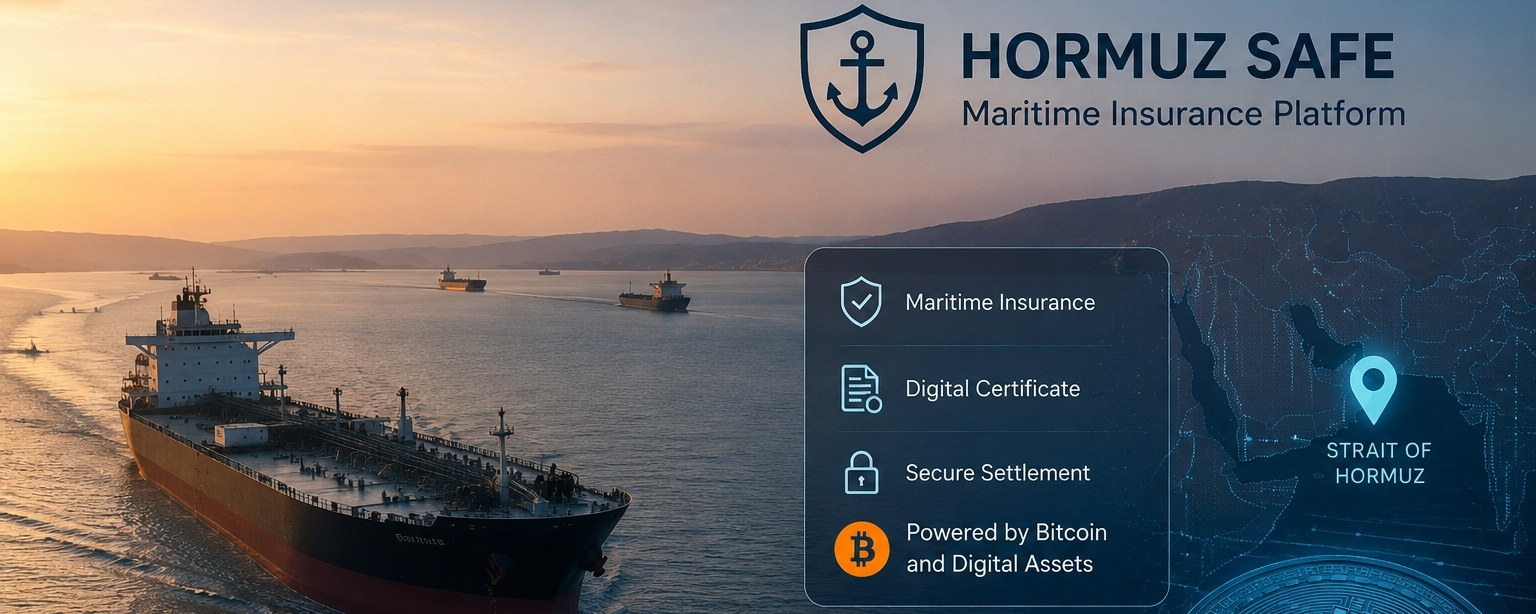

The relationship between crypto and global trade is starting to move beyond speculation, and Iran’s new “Hormuz Safe” initiative is one of the clearest examples of that shift.
Instead of treating Bitcoin as a trading asset, Iran is positioning it as infrastructure.
The newly launched platform is designed to provide maritime insurance services for ships operating through the Strait of Hormuz, one of the most strategically important shipping routes in the world. Nearly a fifth of global oil trade passes through this corridor, making insurance, settlement reliability, and financial access critical for every operator moving through the region.
What makes Hormuz Safe different is not just the insurance layer itself, but the payment rail underneath it.
According to reports, premiums and settlements can be processed using Bitcoin and digital assets instead of relying entirely on traditional banking systems tied to SWIFT or Western financial intermediaries. That changes the conversation completely.
For years, sanctions have pushed countries like Iran to search for parallel financial systems that cannot be easily interrupted by external pressure. Crypto originally entered that discussion as an alternative payment method, but platforms like Hormuz Safe suggest something larger is forming: blockchain-based economic infrastructure built specifically for regions facing restricted access to global finance.
The interesting part is that this is happening in maritime trade rather than retail payments.
Shipping insurance is not a niche market. It sits at the core of international commerce. Every tanker, cargo vessel, and energy shipment moving through high-risk waters depends on risk pricing, verification, and settlement systems that are trusted by multiple parties. By introducing blockchain into that process, Iran is effectively experimenting with whether crypto can support real operational coordination in global logistics.
The Strait of Hormuz itself adds another layer of importance.
This route has long been associated with geopolitical tension, sanctions pressure, naval disputes, and energy security concerns. Insurance costs in the region are heavily influenced by political risk, and even small disruptions can affect global shipping prices. A crypto-enabled insurance framework inside such an environment signals that digital assets are increasingly being explored where traditional financial systems become fragile or politically constrained.
There is also a strategic reason Bitcoin fits this model.
Bitcoin operates outside direct state control, remains globally transferable, and can move value without relying on correspondent banking networks. For countries or businesses facing sanctions exposure, that creates an alternative liquidity path that traditional infrastructure cannot easily provide.
Still, the platform faces major obstacles.
International recognition remains uncertain. Many ports, regulators, insurers, and shipping companies may hesitate to accept coverage tied to an Iranian crypto-based framework. Secondary sanctions from the United States could also discourage broader adoption, especially among multinational operators that depend on Western financial access.
Trust is another issue.
Insurance only works if counterparties believe claims will be honored consistently during real crises. Blockchain can improve transparency and settlement efficiency, but it cannot automatically solve geopolitical trust problems between states, institutions, and shipping authorities.
Even so, the launch matters because it expands the role crypto is trying to play globally.
The industry spent years focused on trading narratives, meme cycles, and speculative flows. Now the conversation is slowly shifting toward systems that attempt to replace or bypass parts of traditional financial infrastructure entirely.
That does not mean Hormuz Safe will immediately succeed.
But it does show how nations under economic pressure are beginning to test whether blockchain networks can function as operational tools for trade, logistics, and cross-border coordination — not just as investment assets.
And that may ultimately become one of crypto’s most important long-term use cases.
