
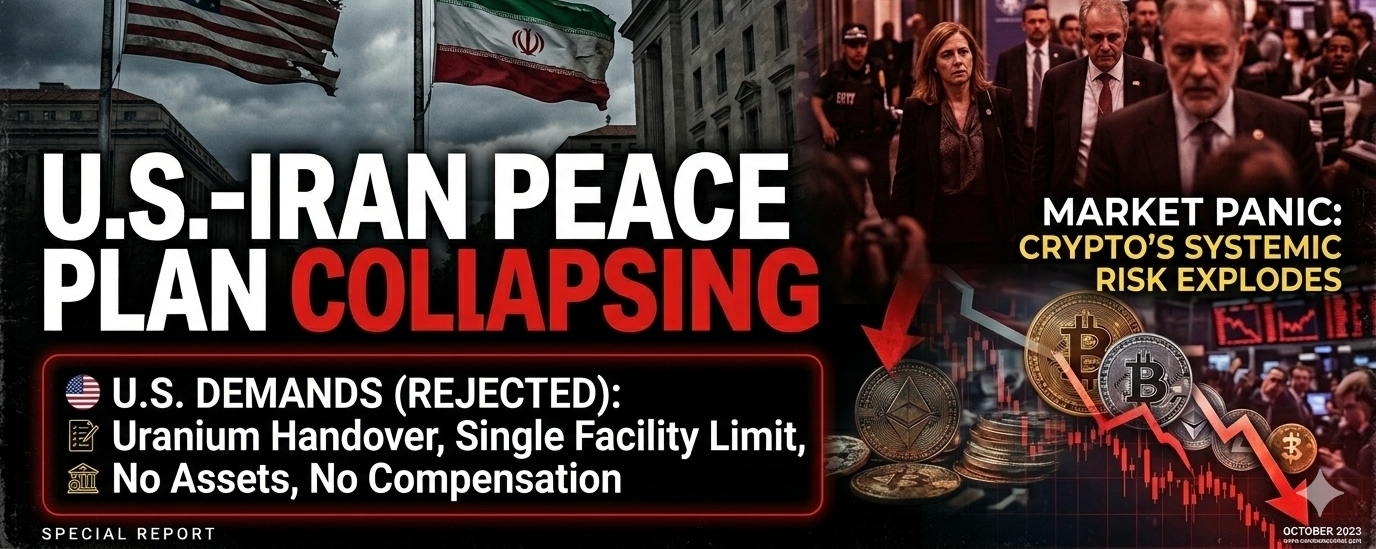
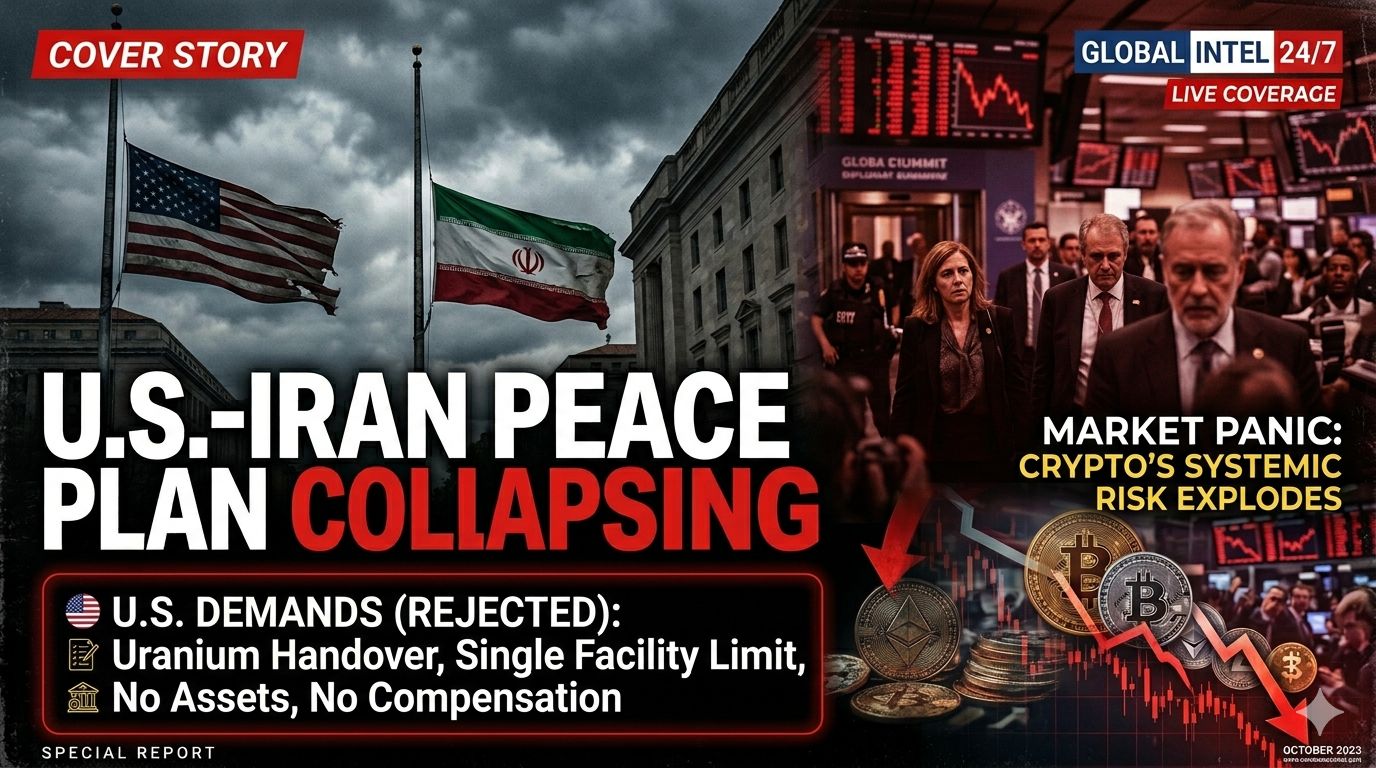
Hopes for a diplomatic resolution to the U.S.–Iran conflict have dimmed sharply after Washington presented a set of hardline new conditions that Tehran has flatly rejected, raising fears that the fragile ceasefire could unravel entirely and drag global markets into a fresh spiral of uncertainty.
At the heart of the breakdown is a stark list of demands from the Trump administration. The nuclear question remains the central obstacle — Iran holds roughly 400 kilograms of enriched uranium, enriched to 60% purity and just below the 90% threshold for weapons-grade material, which Washington regards as a core concern. (euronews) The U.S. is now pushing for the immediate handover of that stockpile, a dramatic reduction of Iranian nuclear operations to a single functional facility, the continued freezing of disputed Iranian financial assets, and an explicit refusal to offer Tehran any economic compensation in return.
Iran's response has been swift and uncompromising. Tehran handed its response to the latest U.S. proposal via Pakistan for delivery to Washington, after which President Trump dismissed the Iranian reply as "totally unacceptable" and warned that the ceasefire is on "life support." (Iran International) Iranian media accused Washington of making unreasonable demands, especially on nuclear rights and control of the Strait of Hormuz, adding that despite prolonged discussions no progress was made, and that Iran is not in a hurry to continue talks. (The Coin Republic)
The impasse reflects a gulf in expectations that analysts say may be unbridgeable in the near term. The fundamental issue, as one regional economist noted, is that "the same regime that has not agreed to terms over the last couple of years will not suddenly do so now," with the base-case scenario pointing to only a gradual recovery to about 60% of pre-war levels by late 2026. (Iran International) Secretary of State Marco Rubio has been blunt, saying the U.S. cannot allow Iran to "sprint towards a nuclear weapon at any point," while also warning that Washington will not tolerate Iran normalizing control over international shipping lanes like the Strait of Hormuz, through which roughly 20% of the world's oil and liquefied natural gas normally flows. (NPR)
The fallout has already begun to ripple through financial markets, with cryptocurrency assets bearing visible strain. Analysts project that a legitimate peace agreement could drive Bitcoin prices up by 10–15% in the short term due to reduced geopolitical risks, but the chances of achieving a lasting peace deal by June 30, 2026 remain low — estimated at less than 10%. (Value The Markets) For the immediate future, the crypto market will likely experience volatility tied to the level of global tensions, with key Bitcoin price points under close watch. Should uncertainties persist, prices will face continued pressure — though some analysts note that in cases of high global risk, Bitcoin can also act as a refuge similar to gold, potentially driving an uptrend regardless of geopolitical conditions. (The Coin Republic)
What began as a localized diplomatic standoff is now registering as a systemic macroeconomic risk. Investors are hedging, capital is rotating into traditional safe havens, and the window for a negotiated peace — already narrow — appears to be closing fast. Whether Washington recalibrates its demands or Tehran blinks first, the world is watching a high-stakes standoff with consequences that extend well beyond the Middle East.
#BinanceUSimpleEarnFlexibleCampaign #VerusBridgeHack11.58M #SpaceXEyes2TIPO #PolymarketInsiderTradingRevealed #IntesaSanpaoloReshapesCryptoAllocation


