
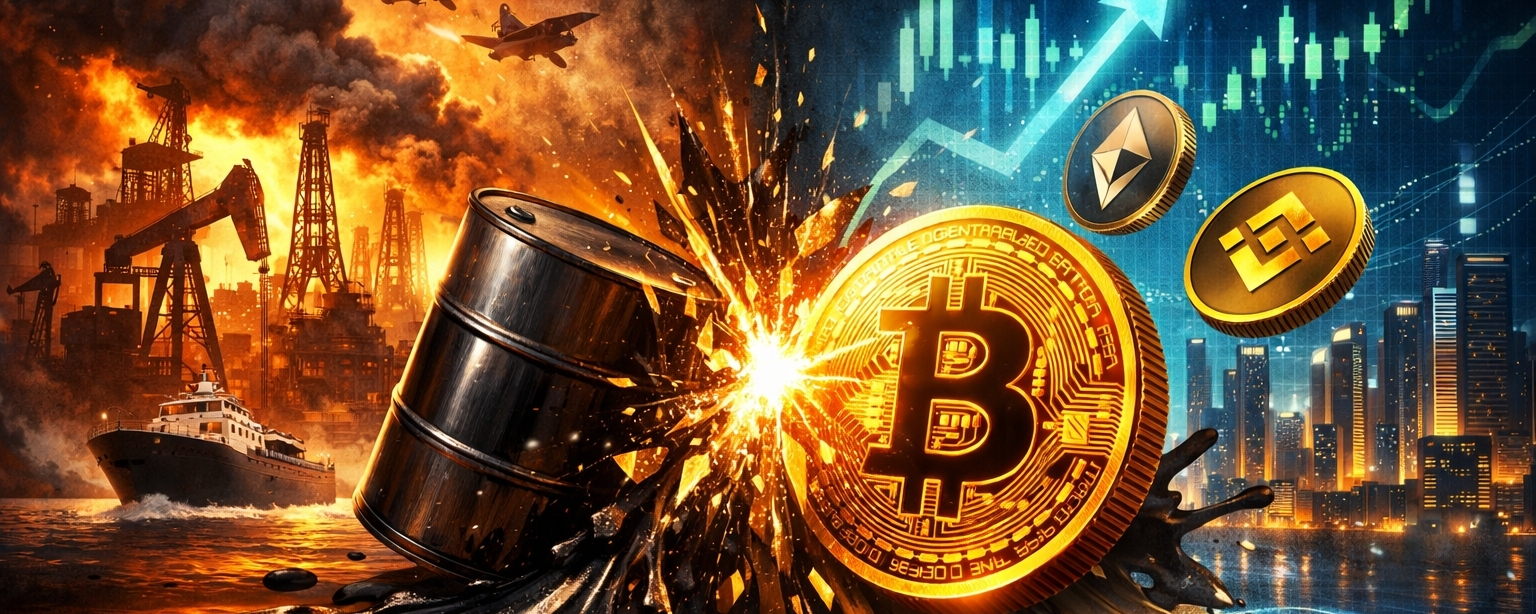
Inflation or is it Amplifying?
Global markets are caught smack in the crossfire of this oil war.
Brent crude has surged past the $100/barrel bracket, all of it driven by Middle East tensions and disruptions in the Strait of Hormuz.
Rising energy costs are inflating transport and manufacturing, threatening to push economies into stagflation.
Into this storm steps Binance, the world’s largest crypto exchange, with bold expansion: tokenized crude oil, Brent, and natural gas perpetual futures.
These contracts, offers leverage up to 100x, and allow retail traders to speculate on energy markets without traditional brokers.
Oil Meets Crypto
- Accessibility: Binance’s perpetual contracts democratize commodity speculation, opening energy exposure to millions of crypto traders.
- Volatility: Geopolitical shocks — a missile strike or Hormuz blockade — can add a $14/barrel risk premium overnight, triggering mass liquidations in leveraged positions.
- Liquidity Bridge: Crypto exchanges are positioning themselves as bridges between traditional finance and digital assets, offering 24/7 trading and instant settlement.
Hedge or Amplifier?
Bitcoin is often marketed as “digital gold,” a hedge against fiat debasement.
Yet history shows crypto frequently correlates with risk assets, falling when global liquidity tightens. In contrast, oil futures directly drive inflation, making them both hedge and hazard.
Risks Ahead
- Retail Exposure: Millions of Binance users now face commodity‑level volatility without traditional safeguards.
- Inflation Hedge Debate: Crypto’s role as a stabilizer remains contested — it may cushion shocks or amplify them depending on liquidity cycles.
- Geopolitical Fragility: Energy markets remain hostage to geopolitics, and crypto traders are now directly exposed.
Conclusion: Binance’s oil futures mark a turning point. Crypto is no longer just about digital assets — it’s becoming a direct player in global commodity wars. Whether this cushions inflation or magnifies risk will define the next chapter of financial markets.