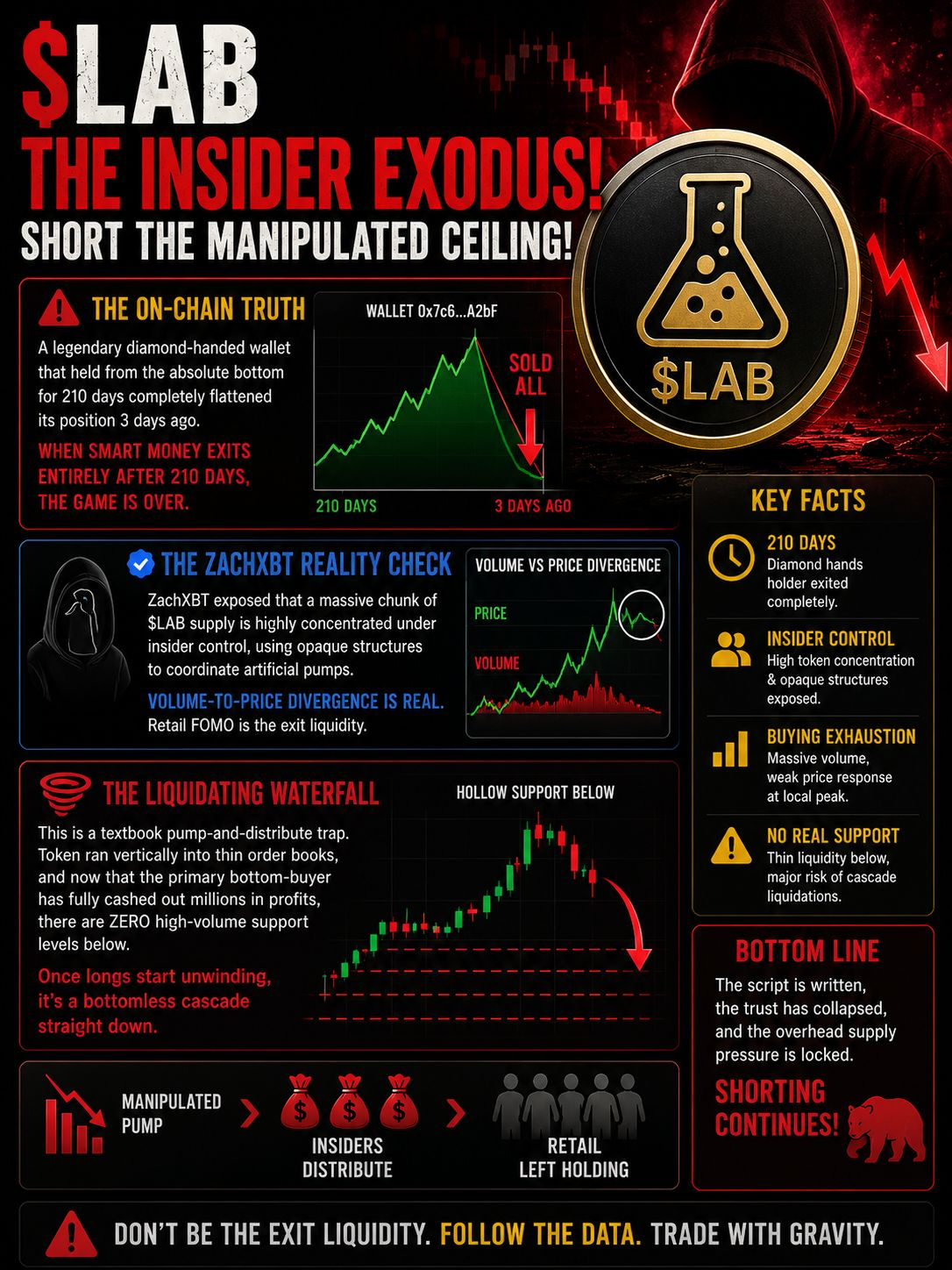
$LAB has recently become one of the most controversial tokens in the market after growing concerns around insider activity, concentrated supply control, and aggressive profit-taking from early wallets.
On-chain analysts noticed that a major wallet holder — believed to have accumulated near the early bottom — fully exited its position after holding for more than 200 days. Large exits from long-term holders often raise concerns among traders because they can signal weakening confidence from early smart-money participants.
At the same time, discussions across the crypto community intensified after blockchain investigator ZachXBT highlighted concerns around token concentration and insider-linked wallet structures within speculative projects. While not all claims are fully confirmed, the debate has increased fear around whether certain rallies are being driven organically or through coordinated liquidity events.
Market data also shows signs of exhaustion after the token’s rapid vertical move. Analysts point to weakening momentum, unstable support zones, and heavy overhead supply pressure as reasons many traders are becoming cautious on $LAB.
The biggest concern now is liquidity.
During aggressive rallies, low-float tokens can rise extremely fast due to thin order books and leveraged buying. But once momentum slows and early holders begin distributing into strength, price can reverse just as violently. If leveraged long positions begin unwinding simultaneously, volatility could increase sharply.
This is why many traders are now focusing less on hype and more on risk management, liquidity structure, and wallet behavior before entering highly speculative assets like $LAB.
The crypto market has seen similar stories before:
Parabolic rallies attract attention.
Insider exits trigger panic.
Retail traders are often left holding the volatility.
Whether $LAB stabilizes or faces deeper downside from here will likely depend on transparency, sustained demand, and whether buyers can rebuild confidence around the project.