
Crypto used to feel human.
That’s the strange thing nobody talks about anymore.
A few years ago the market felt chaotic, but in an exciting way. People discovered projects early through communities. Traders spent nights watching charts together. Narratives moved slower. If you researched enough and stayed active, you genuinely felt like you had a chance to compete.
Now the market feels different.
It feels colder.
Faster.
Almost mechanical.
Sometimes I open my phone after being offline for only an hour and suddenly an entire narrative already exploded. Wallet trackers already found the movement. AI bots already pushed alerts everywhere. Big accounts already posted threads. Early traders already entered positions. And retail starts arriving exactly when the easy opportunity is disappearing.
That feeling slowly changes how people experience crypto.
You stop feeling like you’re exploring opportunities.
You start feeling like you’re constantly trying not to fall behind.
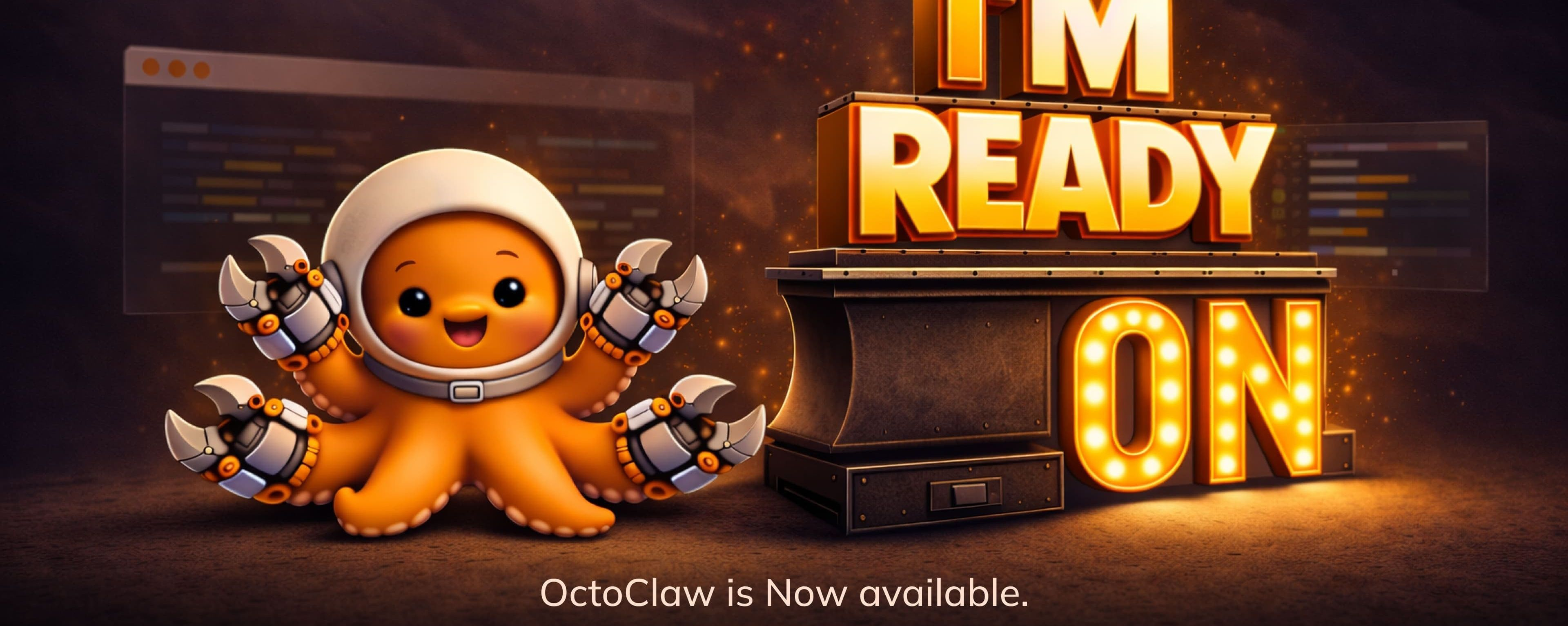
And honestly, that’s why OpenLedger’s OctoClaw launch caught my attention in a deeper way than most crypto announcements do.
Not because it screamed innovation.
Every project screams innovation now.
Not because it used AI branding.
At this point even basic projects add AI to their descriptions.
But because OctoClaw feels connected to something bigger happening inside crypto itself.
It feels like the market finally admitting that human attention alone is no longer enough.
That’s the real story here.
Most traders are not failing because they’re lazy anymore.
They’re overwhelmed.
There’s too much information moving too fast.
You’re expected to track on chain activity, social sentiment, whale wallets, AI narratives, meme rotations, token unlocks, liquidity migration, macro news, ecosystem wars, developer activity, Telegram alpha groups, market psychology, and momentum shifts all at the same time.
No human brain was designed for this level of nonstop input.
But crypto keeps accelerating anyway.
That’s why AI systems are suddenly becoming more important than many people expected.
Not because people want robots replacing them.
But because traders are mentally exhausted trying to process everything manually.
And this is where OctoClaw becomes interesting.
The launch itself is not really about another chatbot or another shiny dashboard.
It’s about coordination.
Automation.
Execution.
Workflow intelligence.
That changes the conversation completely.
Because most crypto tools today feel disconnected from each other. One app tracks wallets. Another tracks trends. Another handles automation. Another gives analytics. Another monitors sentiment. Another executes trades.
People spend half their trading life switching tabs and trying to connect information themselves.
Over time that becomes draining.
You can actually feel the fatigue building after years in crypto.
And I think OpenLedger understands that emotional reality better than most projects do.
OctoClaw seems built around the idea that intelligent systems should help traders carry part of the market burden instead of forcing humans to manually manage every layer themselves.
That idea feels bigger than many people currently realize.
Because the future trader may not look like today’s trader at all.
Right now most people still operate manually.
They search for narratives manually.
Track wallets manually.
Read market sentiment manually.
Monitor ecosystems manually.
Execute trades manually.
But slowly the market appears to be shifting toward intelligent assistance.
Imagine waking up and your system already tracked unusual wallet movements overnight.
It already filtered weak narratives from real liquidity flow.
It already summarized important ecosystem developments.
It already monitored risk conditions while you were sleeping.
That changes trading completely.
You stop drowning inside raw information.
You start supervising systems instead.
And honestly, I think crypto is moving toward that reality much faster than people expect.
The strange part is that this shift feels both exciting and uncomfortable at the same time.
Exciting because smarter systems could help retail traders survive information overload.
Uncomfortable because markets may become even more competitive once intelligent automation spreads everywhere.
The advantage may no longer belong to people with the best instincts.
It may belong to people with the best systems.
That changes the identity of trading itself.
And maybe that’s inevitable.
Markets always evolve.
The people who adapt survive.
The people who refuse usually disappear quietly.
What makes OpenLedger’s direction interesting is that they don’t seem focused only on AI conversations themselves. The broader vision appears connected to AI infrastructure, decentralized intelligence, attribution systems, and automated workflows.
That positioning matters.
Because AI is no longer just hype.
It’s becoming infrastructure.
And infrastructure narratives usually last longer than temporary market excitement.
OctoClaw feels like an attempt to move from background infrastructure into direct user interaction.
Instead of simply powering systems behind the scenes, OpenLedger now appears interested in building systems people actively depend on during daily crypto activity.
That’s a major shift.
Because users emotionally connect with tools that reduce stress.
And stress has quietly become one of crypto’s biggest hidden problems.
Most traders won’t openly admit it, but the market affects people mentally more than outsiders realize.
You feel pressure to stay online constantly.
You check notifications during meals.
You wake up and instantly search for overnight movement.
You worry opportunities are disappearing while you rest.
Crypto slowly trains people to exist in permanent alert mode.
That’s unhealthy.
But it’s also the current reality of modern trading culture.
And AI systems like OctoClaw are basically responding to that pressure.
They’re saying maybe humans shouldn’t have to carry every part of this process alone anymore.
That emotional angle is why I think this launch resonates more deeply than standard product announcements.
It reflects an actual problem traders feel every single day.
Of course, none of this automatically guarantees success.
Crypto has taught painful lessons about separating narratives from outcomes.
A project can sound revolutionary and still fail.
A token can have strong technology behind it and still struggle because of emissions, unlocks, liquidity pressure, or poor adoption.
That reality never disappears.
And experienced traders understand this better now.
The market matured after too many cycles of blind excitement.
People ask harder questions today.
They think about sustainability.
Utility.
Execution.
Long term demand.
The OPEN ecosystem still needs to prove itself over time like every other project.
And AI automation itself also creates new risks.
That part should never be ignored.
One flawed workflow can become dangerous very quickly inside crypto.
One compromised integration.
One manipulated signal.
One bad execution loop.
And suddenly losses happen faster than humans can even react.
That’s why I don’t think fully autonomous trading completely replaces human judgment anytime soon.
The smarter future probably looks hybrid.
Humans still control strategy.
AI systems assist with monitoring, filtering, research, and repetitive execution.
That balance feels more realistic.
Still, even with those risks, it’s hard not to notice where the market direction is heading.
Crypto is slowly becoming a competition between intelligent systems rather than just individual traders.
And projects like OpenLedger seem to understand that early.
That’s why OctoClaw feels important.
Not because it instantly changes everything overnight.
But because it quietly signals what the next phase of crypto may look like.
Less manual chaos.
More intelligent coordination.
Less isolated decision making.
More system assisted participation.
And honestly, once you truly notice that shift happening, it becomes impossible to ignore it anymore.