A few weeks ago I was digging through a completely different corner of the market mostly watching how liquidity was rotating back into AI-related infrastructure after months of meme coin exhaustion and half-dead modular narratives. You could feel the shift happening again. Not the loud kind that retail notices first, but the quieter flow. Smart money moving before CT starts recycling the same five buzzwords for engagement.
What caught my attention wasn’t even OpenLedger at first. It was this broader realization that AI crypto still hasn’t solved its biggest contradiction.
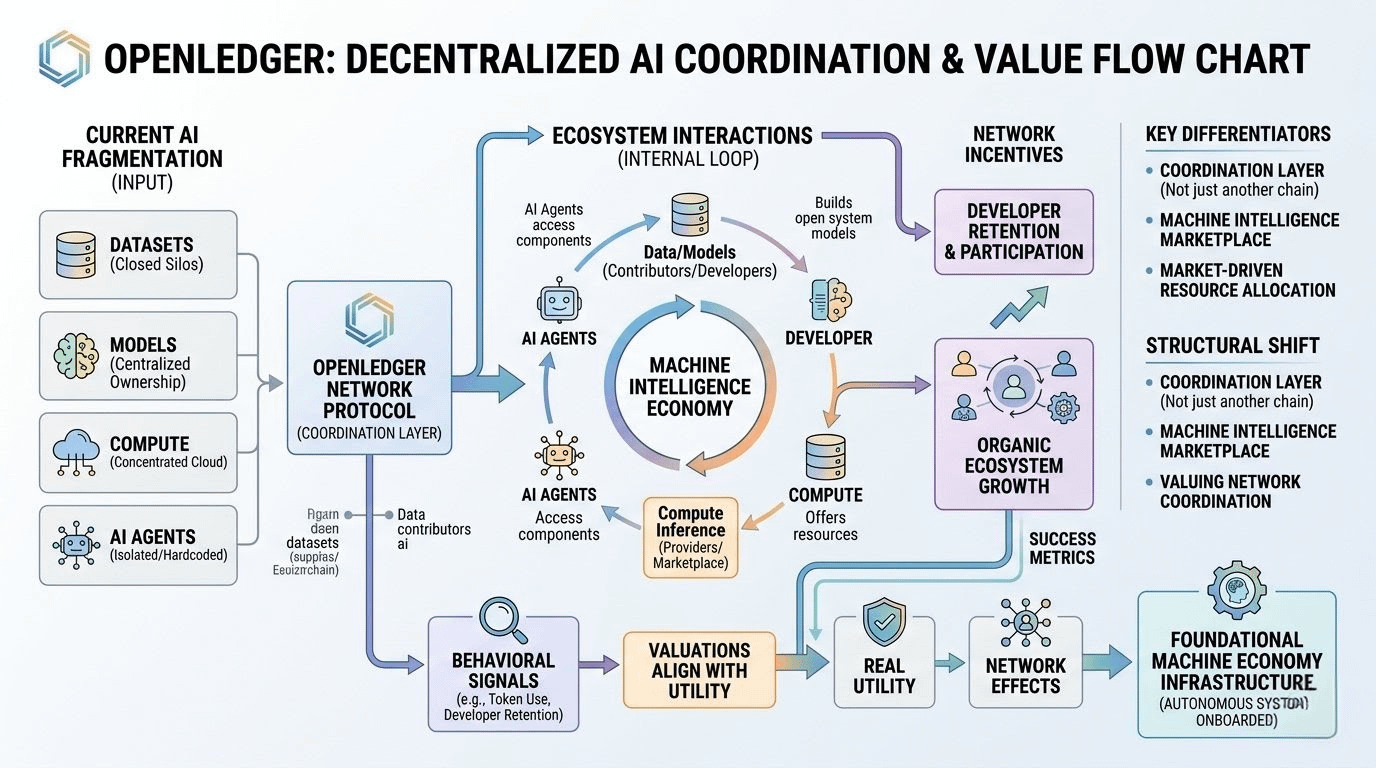
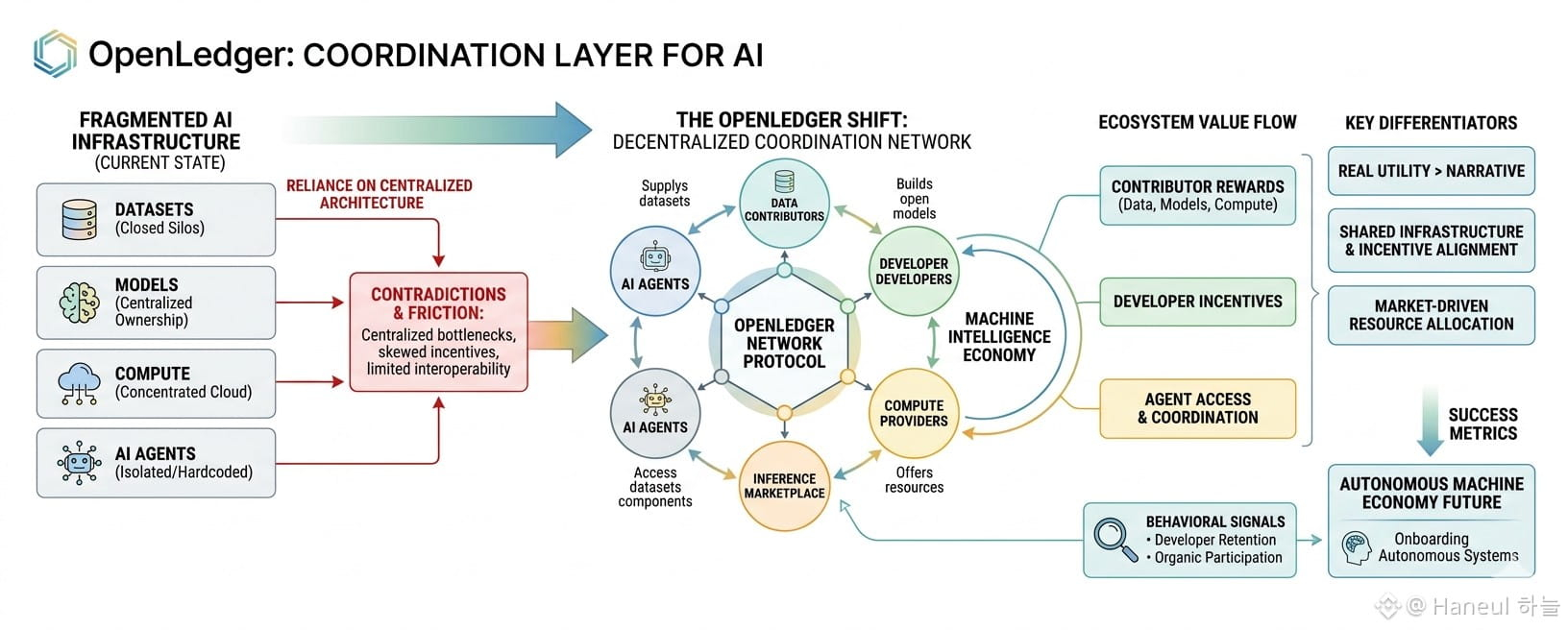
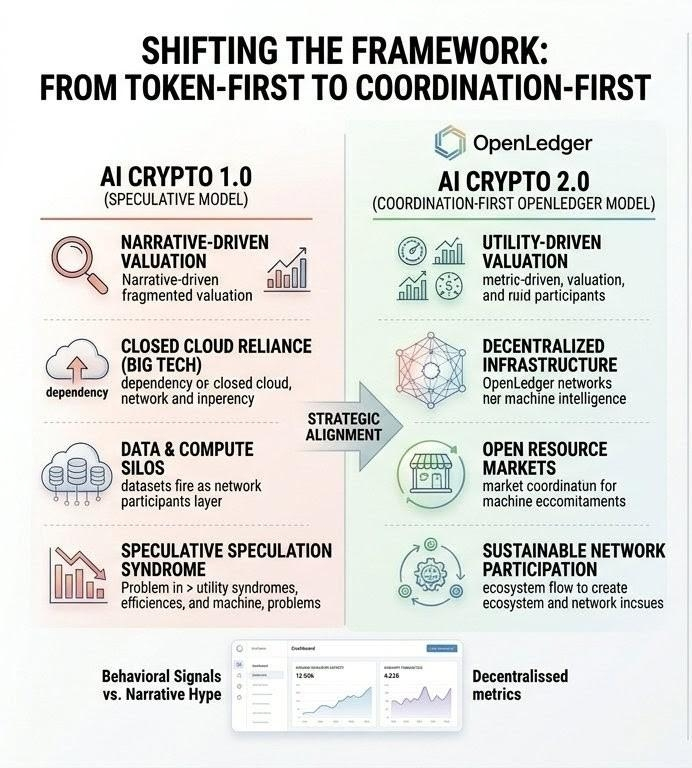
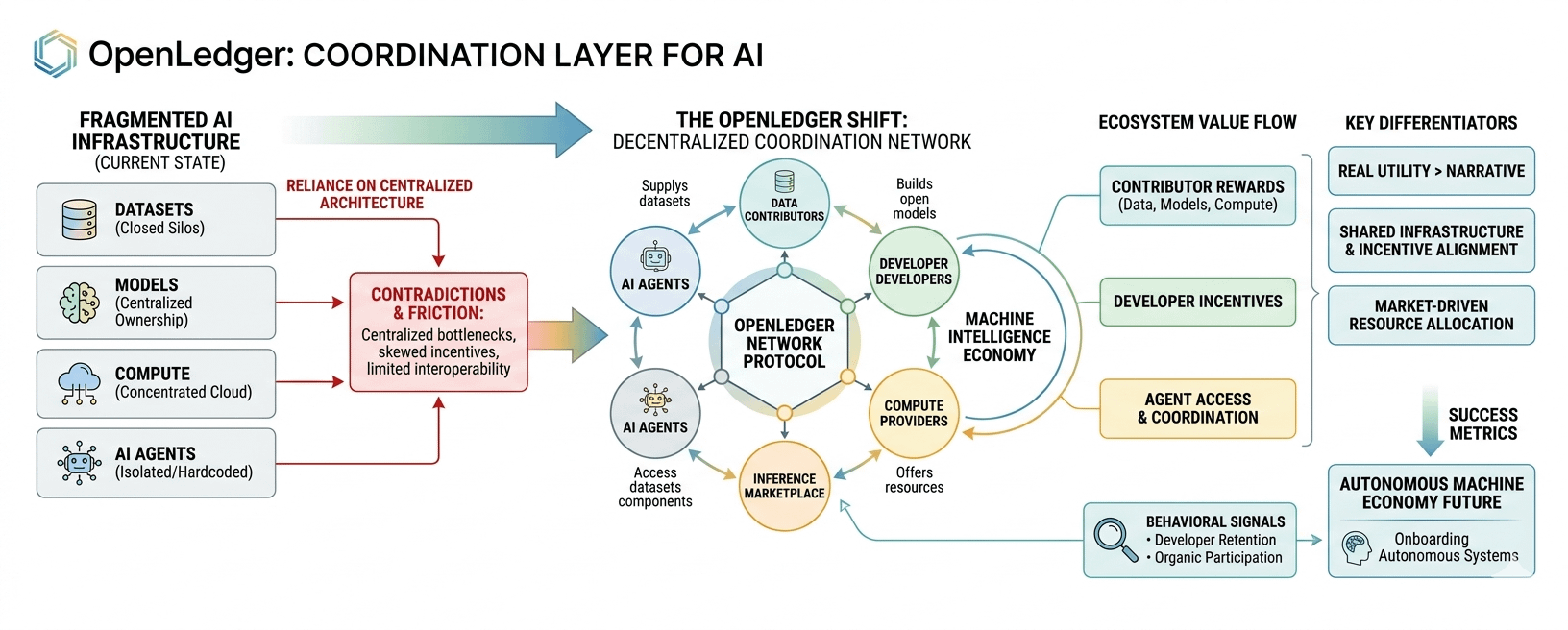
Everyone keeps talking about autonomous agents, machine economies, decentralized intelligence, but when you look under the hood, most of these systems still rely on highly centralized infrastructure. The data sits inside closed platforms. The compute is concentrated. The models are owned by a handful of companies. Even projects claiming to be “decentralized AI” often just add a token on top of traditional cloud architecture and call it a revolution.
That disconnect has been bothering me for a while.
Then I started reading deeper into OpenLedger, and for the first time in months, something felt directionally different.
Not perfect. Not guaranteed. Just more aware of the actual problem.
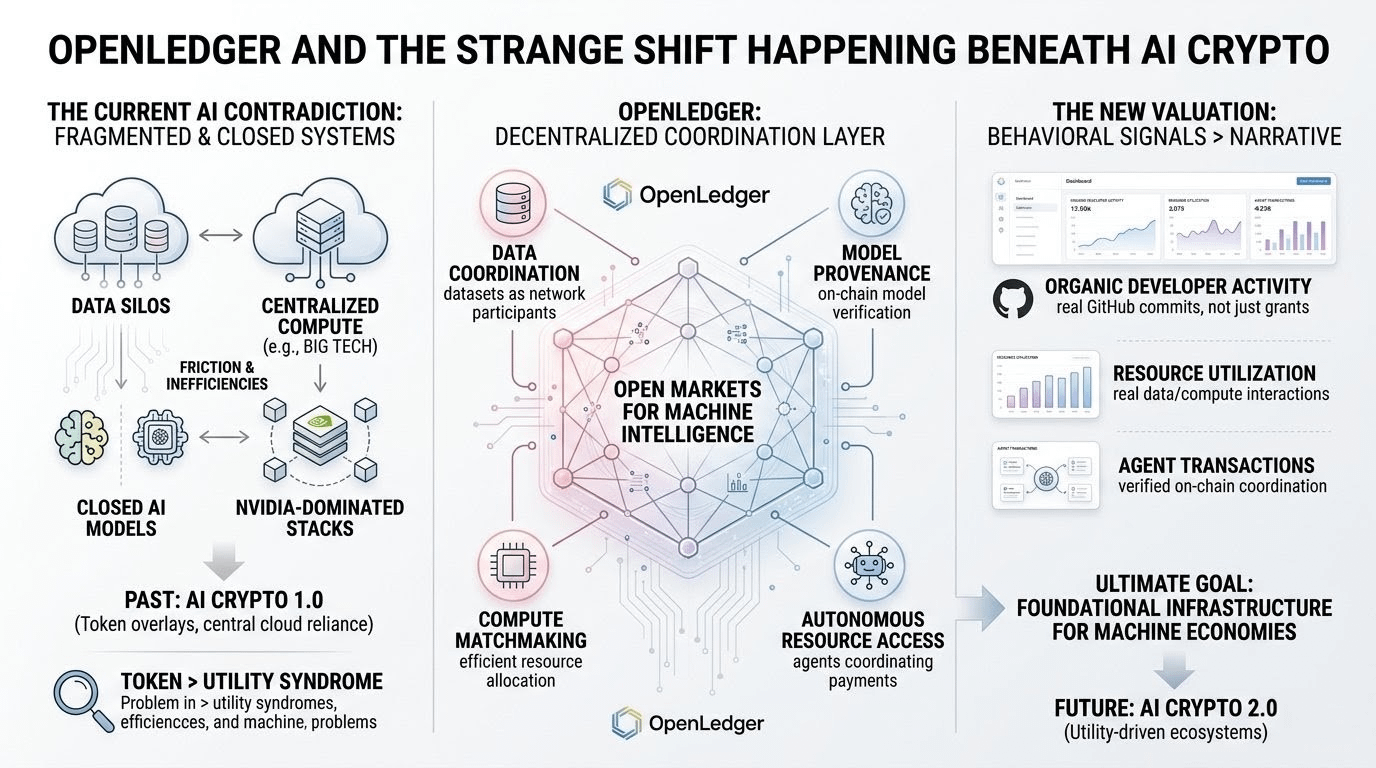
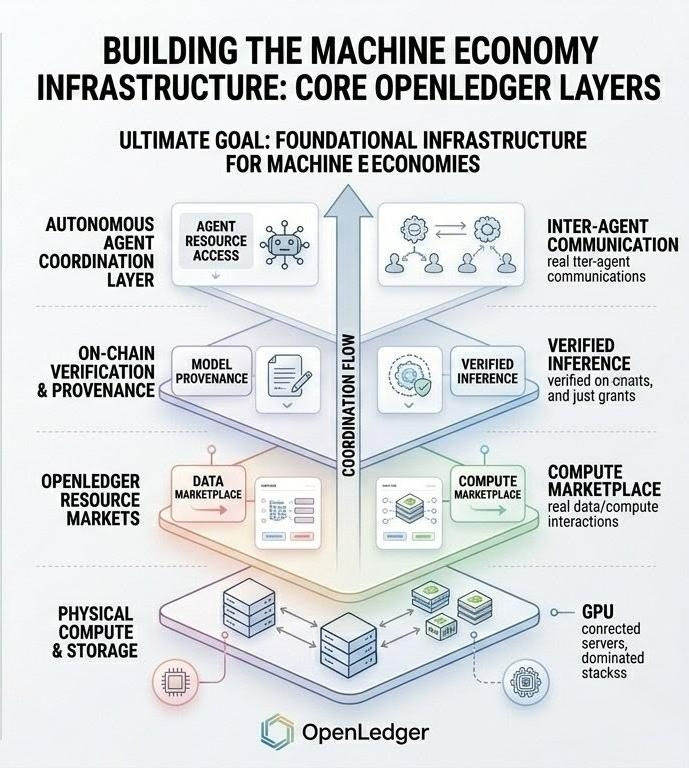
The simplest way I can explain OpenLedger is this: it’s trying to build coordination layers for AI. Not just another chain, not another inference marketplace, not another “GPU narrative” farming engagement while NVIDIA dominates the entire stack anyway. The idea seems more focused on connecting the fragmented pieces of AI infrastructure data, compute, models, agents into a system where they can actually interact economically.
And honestly, that matters more than people think right now.
Crypto has always been good at creating assets. It’s been much worse at creating systems that coordinate real utility efficiently. That’s why so many sectors eventually collapse into speculation loops. Liquidity comes in, tokens pump, incentives get distorted, users farm emissions, then attention leaves. We’ve seen this cycle with DeFi, GameFi, SocialFi, even parts of restaking already.
AI could easily become the same thing.
OpenLedger at least seems to recognize that the missing layer isn’t just intelligence itself it’s shared infrastructure and incentive alignment. If AI agents eventually become economically active, they need access to resources they don’t fully control themselves. Data. Compute. Models. Verification. Payments. Coordination.
That’s where decentralization starts making practical sense instead of ideological sense.
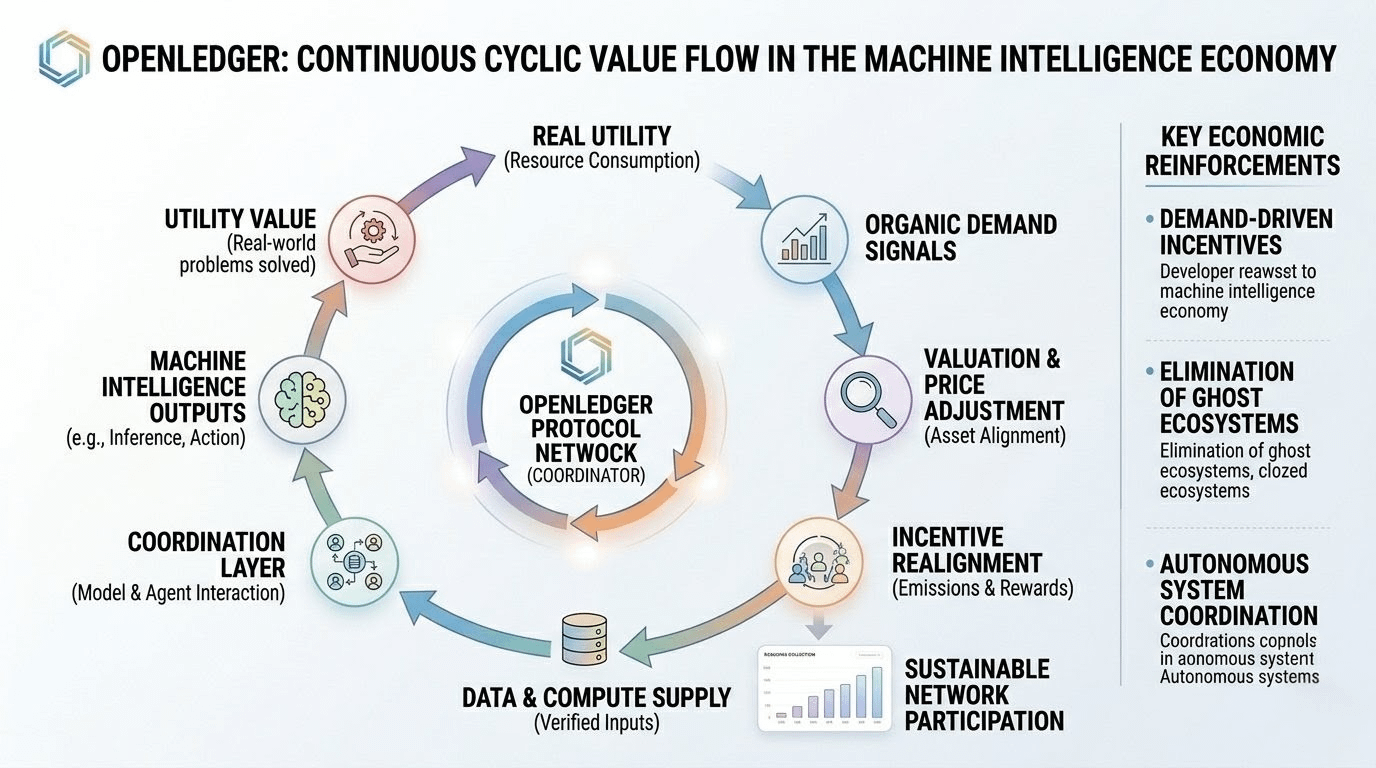
The interesting part is how they approach this. Instead of treating AI systems like isolated products, OpenLedger frames them more like participants inside a network economy. Contributors can provide datasets, developers can build models, compute providers can offer resources, and AI agents can theoretically access and use those components through the network itself.
In theory, it creates something closer to an open market for machine intelligence rather than another closed platform.
Now obviously, theory is cheap in crypto.
What I’m still trying to figure out is whether this becomes actual infrastructure or just another narrative abstraction people trade for six months before moving on to the next shiny sector. Because there’s a real execution challenge here that most people underestimate.
Coordination sounds elegant until you realize decentralized coordination is usually slow, messy, and economically fragile.
You need contributors to stay incentivized long enough for the network effects to matter. You need developers to actually build there instead of extracting grants and leaving. You need the token to support participation without becoming purely speculative. And most importantly, you need actual demand for these AI interactions beyond crypto-native users roleplaying the future on Twitter.
That last part matters a lot.
One thing I’ve noticed lately is that the market has become extremely good at pricing narratives before products exist. Especially in AI. Traders don’t wait for adoption anymore. They front-run imagination itself. Sometimes that works. Sometimes it creates ghost ecosystems where valuations expand faster than utility.
So when I look at OpenLedger, I’m less interested in surface-level partnership announcements or ecosystem maps and more interested in behavioral signals. Are developers staying? Are contributors participating organically without absurd emissions? Are people using the infrastructure because it solves friction, or because incentives temporarily make it profitable?
That distinction eventually decides everything.
Still, I’ll admit there’s something compelling about the timing here.
AI models are becoming commodities faster than most expected. Open-source models keep improving. Compute demand keeps rising. Data quality matters more than raw quantity now. And autonomous agents despite all the hype still need environments where they can coordinate resources independently.
OpenLedger feels positioned inside that intersection rather than chasing one isolated trend.
I also think the project benefits from not feeling overly retail-manufactured yet. Some ecosystems immediately feel optimized for virality before utility. OpenLedger still feels somewhat early and intellectually unfinished, which oddly makes it more believable to me. The market is so saturated with polished narratives now that rough edges sometimes signal authenticity better than perfect branding.
But there’s another side to this people rarely talk about.
If decentralized AI networks actually work at scale, they may reduce the importance of individual chains entirely. The value could shift away from base-layer tribalism and toward whoever coordinates intelligence and resources most efficiently across environments. In that world, the winning platforms may not be the fastest chains or the loudest communities. They may simply be the systems machines prefer interacting with.
And that’s a strange thought.
Because for years crypto has been obsessed with onboarding humans. Maybe the next phase is about onboarding autonomous systems instead.
I keep coming back to that idea whenever I revisit OpenLedger. Not whether the token performs well next quarter. Not whether CT adopts the narrative for a cycle. But whether projects like this are quietly pointing toward a structural shift most people still interpret as just another AI trade.
Maybe this becomes foundational infrastructure for machine economies.
Or maybe it becomes another beautifully designed coordination experiment that couldn’t survive the reality of liquidity cycles, speculation, and fragmented incentives.
Right now, honestly, I’m not sure anyone knows the difference yet.