

I didn’t really understand what felt different about OpenLedger at first.
on the surface, it looked familiar enough to ignore. contribute data, interact with models, move through the same flows most decentralized AI systems already use. everything felt functional in the way infrastructure usually does — almost invisible while you’re inside it.
nothing about it immediately looked unusual.
OpenLedger presents itself as decentralized AI infrastructure built around collaborative data contribution, model coordination, attribution, and monetization. the idea itself sounds straightforward enough: create open systems where contributors can help power AI instead of leaving intelligence entirely controlled by closed platforms.
but after spending more time around it, i started noticing something strange in how certain information kept returning while other pieces quietly disappeared from circulation.
some contributions seemed to gain persistence far beyond the moment they were created. not through direct promotion or visible prioritization, but through repetition. they kept resurfacing through outputs, references, interactions, and model behavior like the network had slowly absorbed them into its internal memory.
while other contributions faded surprisingly fast.not deleted. not rejected. just no longer reinforced strongly enough for the system to keep surfacing them.and the strange part was how invisible that filtering process felt while it was happening.
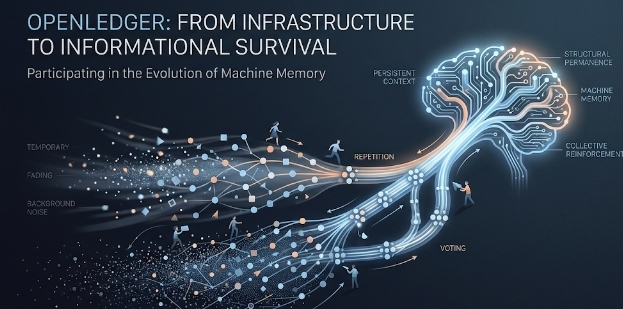
The more i interacted with OpenLedger, the more i realized the network wasn’t simply storing information. it seemed to be continuously shaping what remained retrievable over time. almost like persistence itself was becoming selective.
that’s where the experience started feeling different to me.
because it stopped feeling like i was merely contributing data into a decentralized protocol and started feeling more like i was participating in the survival process of knowledge itself.
not intentionally. not directly.
but through repetition. through interaction. through what i kept validating without realizing it.
and once i noticed that, i couldn’t stop seeing how quickly human behavior begins adapting around continuity.
without thinking, i naturally drifted toward whatever the system appeared willing to keep carrying forward. not necessarily because it was better, but because everything else started feeling temporary — fragile, easy for the network to stop reinforcing altogether.
it’s uncomfortable realizing how fast people learn to align themselves with what systems repeatedly remember.
eventually OpenLedger stopped feeling like simple infrastructure to me.
it started feeling more like an informational gravity layer where visibility, retrieval, and reinforcement quietly determine which forms of knowledge gain structural permanence inside machine-readable systems.
and the network never needs to force that outcome directly.
it happens through circulation.
through retrieval.
through repeated reinforcement.
through informational patterns appearing often enough to become difficult for both humans and AI systems to ignore.
while everything else slowly dissolves into background noise.
that’s the part i can’t fully settle.
because from the outside, everything still appears open. anyone can contribute. anyone can participate. the structure still presents itself as decentralized and neutral.
but underneath that openness, there’s a quieter process constantly shaping which informational patterns survive long enough to matter.
and most people probably won’t notice themselves adapting to it while it’s happening.
i know i didn’t.
at some point, even the meaning of participation started changing for me.
it stopped being about simply adding information and started feeling more like influencing what future AI systems are even capable of remembering. like every interaction becomes a small vote toward which forms of knowledge continue surviving inside machine-readable infrastructure.
and once you see that, the entire system feels heavier without visibly changing at all.
because now every contribution feels like it carries consequences beyond the moment itself. like it’s feeding into an evolving memory structure that quietly decides what remains accessible, reusable, and continuously reinforced over time.
the more i sat with it, the more i realized there’s no clear boundary anymore between user behavior and system behavior.
participants shape the network.the network shapes what participants learn to reinforce.and eventually both begin stabilizing each other until it becomes difficult to tell where one ends and the other begins.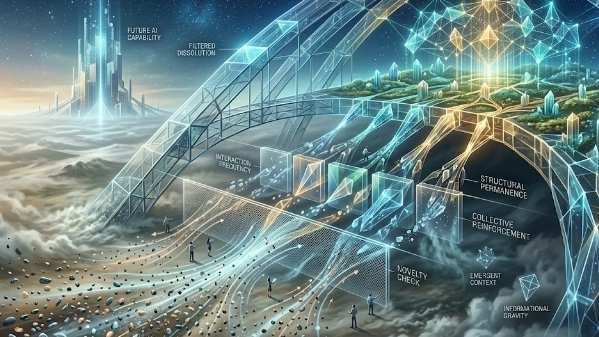
That feedback loop is what keeps staying in my mind.because if decentralized AI infrastructure eventually learns from whatever survives circulation the longest, then engagement itself stops being passive. every interaction slowly contributes to what future intelligence systems inherit as persistent context.
and somehow we’re already participating in that selection process long before most people realize that’s what’s happening.
maybe that’s why OpenLedger no longer feels like a simple data protocol to me anymore.
it feels more like a living system for informational survival — one where persistence quietly matters more than visibility, and where the knowledge that survives is not always the knowledge intentionally chosen, but the knowledge continuously reinforced through collective interaction over time.
and i keep wondering what happens once systems like this stop merely organizing information…
and start quietly determining what knowledge is allowed to remain structurally alive at all.