

Artificial intelligence is expected to become one of the largest technological sectors of the next decade. However, most AI infrastructure today remains highly centralized. A small number of companies control the majority of data, compute resources, and model distribution networks.
@OpenLedger is attempting to disrupt this structure by introducing a blockchain architecture specifically optimized for AI participation. Instead of treating AI as an external application layer, the protocol integrates AI directly into its infrastructure design. This includes:
On-chain attribution systems
Decentralized data networks (“Datanets”)
AI model deployment layers
Agent economies
Revenue-sharing mechanisms
Transparent reward distribution
The platform’s infrastructure is built to ensure that contributors can verify how their data and models are used while receiving automated compensation through smart contracts.
This model is especially relevant as global regulators increasingly demand transparency and accountability from AI systems. OpenLedger’s roadmap strongly emphasizes auditability, traceability, and economically fair AI operations. #OpenLedger
A Vision Centered on “Proof of Attribution”
One of OpenLedger’s most important innovations is its “Proof of Attribution” mechanism. This system tracks the influence and usage of datasets, AI models, and contributors on-chain. $OPEN

In traditional AI environments, creators rarely know how their contributions are utilized after submission. OpenLedger changes this dynamic by embedding attribution directly into blockchain infrastructure. Every interaction, training process, and model execution can theoretically be verified and recorded transparently.
This creates several major advantages:
Fair compensation for contributors
Transparent AI development
Verifiable data provenance
Stronger trust between developers and users
Improved compliance potential for enterprise adoption
The project believes this system could become essential in future AI economies where ownership and accountability are increasingly important.
OPEN Token Utility and Ecosystem Growth
The native token, OPEN, powers the entire ecosystem. Its utility extends across several areas, including:
Network gas fees
Governance participation
AI marketplace transactions
Contributor rewards
Node incentives
Staking mechanisms
Agent economy interactions
The launch of the OPEN mainnet marked a significant milestone for the project. It transformed OpenLedger from a conceptual AI infrastructure initiative into a functioning Layer-1 blockchain ecosystem.
Market observers have highlighted that utility-driven demand could become a major growth catalyst for the token if ecosystem adoption accelerates. Increased developer participation, AI marketplace activity, and enterprise integrations may all contribute to sustained network usage over time.
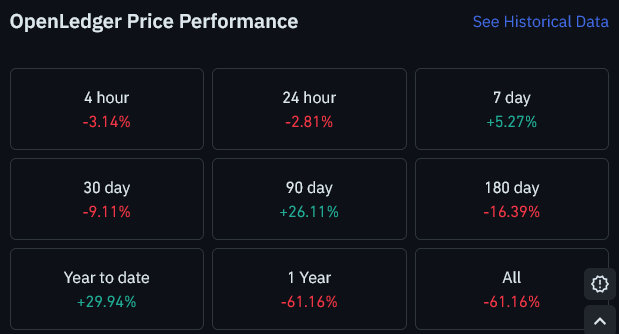
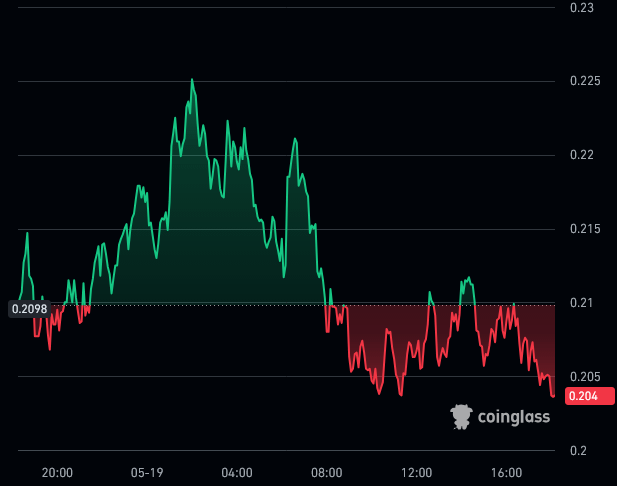
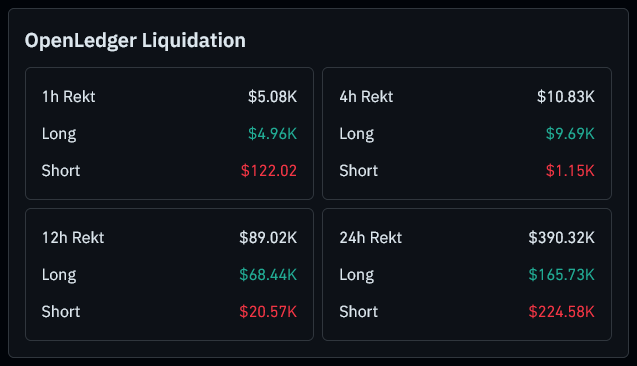
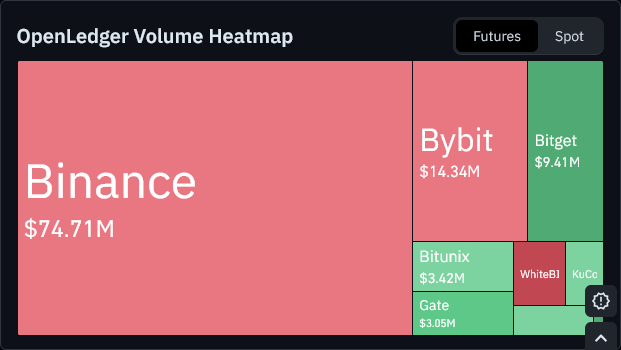
According to recent market data, OPEN has continued attracting strong trading activity across major exchanges, reflecting growing market interest in AI-focused crypto infrastructure.
Strategic Market Narrative: AI + Blockchain
The broader market environment has also become increasingly favorable for projects like OpenLedger.
Over the past year, AI-related crypto narratives have emerged as one of the strongest sectors in digital assets. Investors are actively searching for projects that provide real infrastructure rather than speculative hype alone.
OpenLedger benefits from several powerful market trends simultaneously:
Expansion of decentralized AI
Growth of autonomous AI agents
Demand for verifiable AI systems
Increased focus on data ownership
Enterprise interest in AI accountability
Cross-chain interoperability
Tokenized AI economies
The project’s positioning within the “AI x Web3” sector gives it exposure to one of the most discussed emerging themes in crypto markets.
Additionally, OpenLedger’s integration efforts around interoperability may significantly enhance liquidity and ecosystem accessibility. The project’s LayerZero-powered cross-chain functionality reportedly enables assets and data movement across more than 130 blockchains.
This level of interoperability is increasingly important as the blockchain industry evolves toward multi-chain ecosystems.
Community Expansion and Ecosystem Incentives
Strong communities are often essential for blockchain success, and OpenLedger appears heavily focused on ecosystem growth.
The platform recently launched initiatives such as the “Yapper Arena” campaign, designed to incentivize community participation and ecosystem discussion through token rewards. Reports indicate that millions of OPEN tokens are being allocated to reward active contributors and ecosystem supporters.
These campaigns serve multiple strategic purposes:
Increasing brand visibility
Expanding social engagement
Encouraging educational content
Growing developer participation
Strengthening token holder loyalty
In crypto markets, community momentum often plays a major role in long-term ecosystem expansion, particularly for emerging narratives like decentralized AI.
AI Marketplace: A Potential Turning Point
One of the most anticipated components of OpenLedger’s roadmap is its upcoming AI Marketplace.
This marketplace is expected to allow users to deploy, monetize, and access AI models and autonomous agents within a decentralized framework. Instead of relying on centralized AI providers, developers may eventually be able to publish models directly to the OpenLedger ecosystem while contributors receive revenue shares based on actual usage.
This concept could become transformative for the AI economy because it creates a direct monetization layer for:
AI developers
Data providers
Model trainers
Infrastructure operators
Agent creators
If executed successfully, the marketplace could establish OPEN as a core transactional asset within a broader decentralized AI economy.