
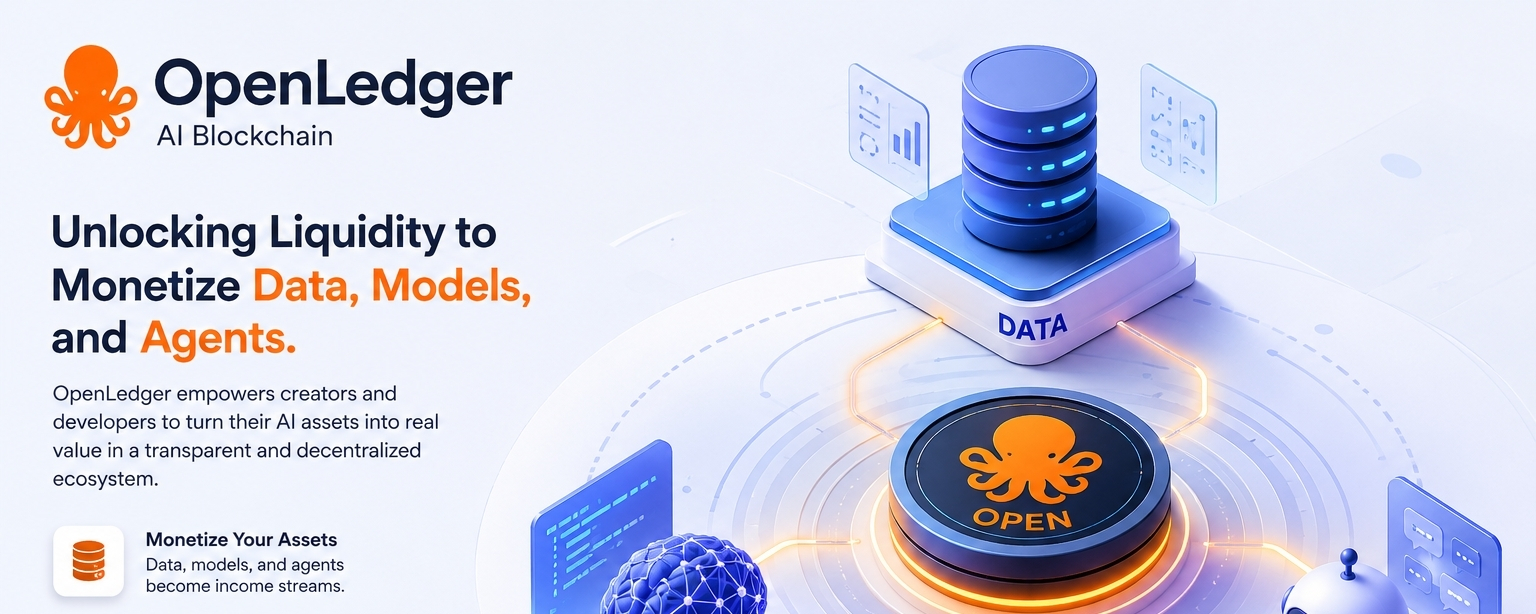
When I first came across OpenLedger (OPEN), I assumed it was just another blockchain project trying to ride the AI wave. After spending time learning about its vision, I realized it aims to solve a real challenge in the growing AI economy: how creators can earn fair value from the data, models, and AI agents they build.
Today, data powers almost every AI system we use, yet the people who contribute valuable datasets or develop advanced models often receive little recognition or reward. OpenLedger is designed to change that by creating a blockchain-based ecosystem where these digital assets can be shared, utilized, and monetized more efficiently.
What stood out to me most is OpenLedger’s focus on unlocking liquidity for AI resources. Instead of valuable data and models remaining trapped within closed platforms, the network seeks to make them accessible and tradable while ensuring contributors are rewarded for their participation. This creates opportunities not only for developers and researchers but also for businesses looking to leverage high-quality AI resources.
Transparency is another important aspect of the platform. By using blockchain technology, OpenLedger provides a verifiable record of contributions and transactions, helping establish trust between participants. Creators maintain greater control over their work, while users can confidently interact with assets whose origins and ownership are clearly recorded.
The OPEN token plays a central role within the ecosystem, supporting network operations, incentives, and governance. As more participants join the platform and contribute valuable resources, the token helps facilitate interactions across the network and encourages long-term engagement.
From my perspective, OpenLedger represents an interesting step toward a more open and collaborative AI economy. By connecting artificial intelligence with blockchain infrastructure, it offers a framework where innovation can be rewarded more fairly and where creators have greater ownership of the value they generate. If the project continues to develop its ecosystem successfully, it could become an important player in the future of AI-powered Web3 applications.