
I’ve been looking deeper into OpenLedger lately, mostly because AI-related tokens keep showing up everywhere again and honestly a lot of them still feel interchangeable to me. Same narrative, same promises, different branding. So when I started reading about OPEN, I was mostly trying to understand whether the token actually has a role inside the ecosystem or if it’s just there because every project needs one.
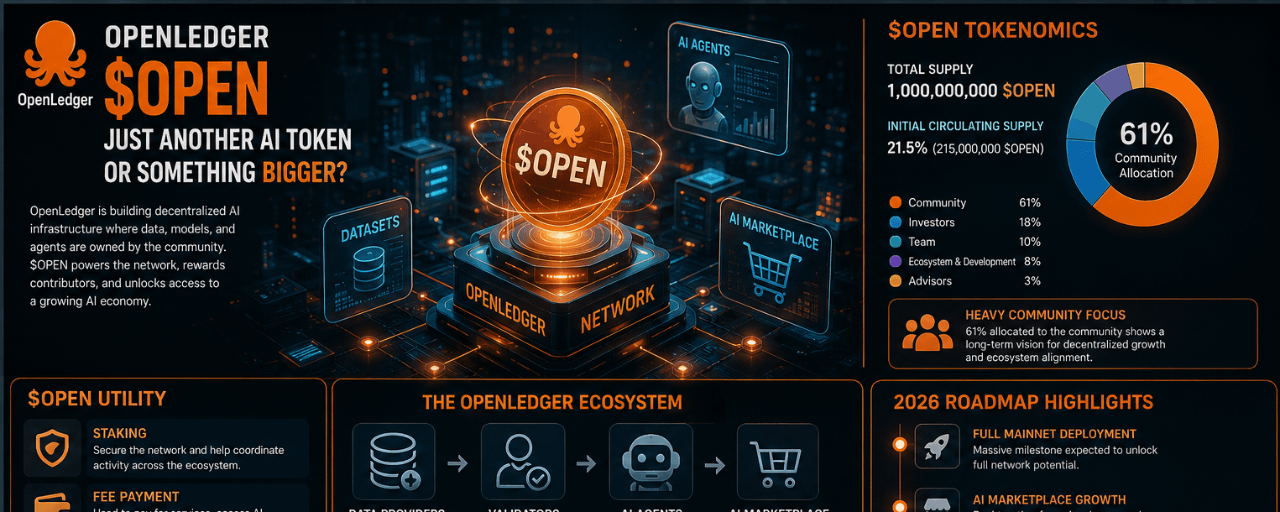
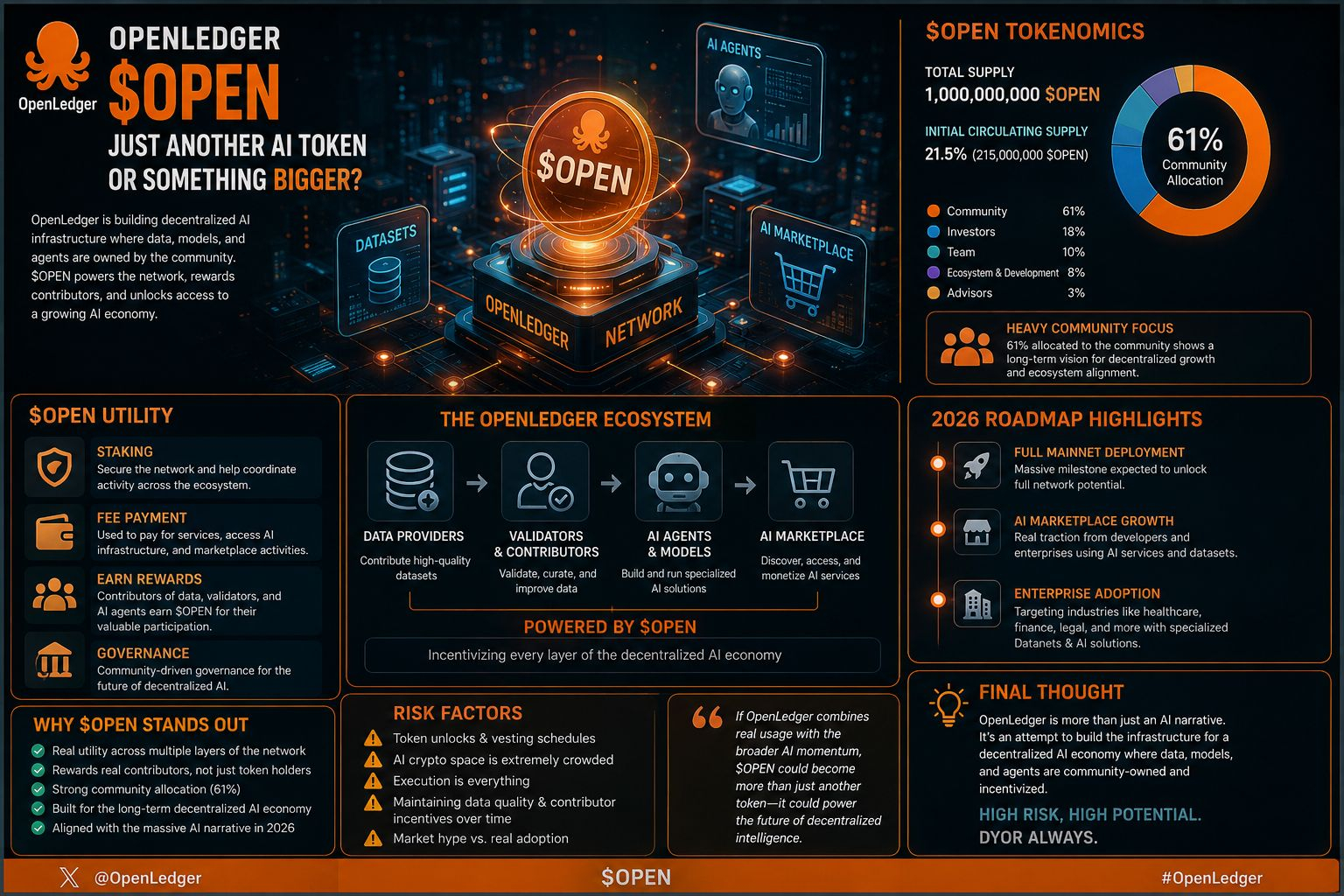
At the current stage, the market cap still feels relatively early compared to some of the bigger AI narratives already running around crypto. That’s probably why people are paying attention now. From what I saw, the total supply is set at 1 billion tokens, while the initial circulating supply is only around 21.5%. Usually when I see low circulation I become cautious immediately because unlock pressure can become a real problem later, especially if hype runs ahead of actual adoption. But at least the allocation structure caught my eye a little.
The community allocation being around 61% feels intentional. A lot of projects talk about decentralization while most of the supply quietly sits with insiders or early funds. OpenLedger still has investor and team allocations obviously, which is normal, but the heavier community focus seems connected to the whole idea of decentralized AI participation. At least from the outside, it looks like they’re trying to align the token with ecosystem growth rather than only fundraising.
What made me spend more time on it though was the utility side. I know “utility token” has become one of the most overused phrases in crypto, but OPEN actually seems tied into multiple layers of the network instead of just governance voting nobody participates in.
From what I understand, staking is supposed to help secure and coordinate activity across the network. Then there’s fee payment for using services inside the ecosystem, especially if OpenLedger’s AI infrastructure and marketplace become active later. Contributors who provide datasets, validate information, or help run AI agents can also earn rewards in $OPEN. That part feels important because the token isn’t only rewarding speculation, at least theoretically. It’s trying to create an economy around data, AI execution, and participation itself.
I think that’s also where the 2026 narrative could become interesting if the roadmap actually lands properly. Full mainnet deployment sounds like the obvious catalyst people are watching, but honestly I’m more curious about whether the AI Marketplace gets real traction. If developers and companies start using decentralized datasets or specialized AI agents there, demand for the token might start coming from actual network activity instead of pure market hype.
The enterprise angle is another thing I keep thinking about. Crypto people sometimes underestimate how valuable specialized data can become for businesses. Generic AI models are useful, but industries like healthcare, finance, and legal services usually need smaller, domain-specific systems trained on curated datasets. OpenLedger seems to be positioning itself around that idea with Datanets and contributor-owned AI infrastructure. If that works, then the token could end up representing access to a growing data economy rather than only governance rights.
Still, there are obvious risks too. Vesting schedules matter a lot for projects like this, especially when narratives move faster than adoption. AI crypto is also becoming extremely crowded. Every week there’s another protocol claiming it will power decentralized intelligence or autonomous agents. Some of them will disappear once attention rotates elsewhere.
And honestly, even if the idea is strong, execution is still everything here. Building decentralized infrastructure is already difficult. Building decentralized AI infrastructure while keeping incentives aligned feels even harder. The challenge isn’t only attracting contributors early on, it’s maintaining data quality once rewards become financialized.
At the same time though, I can also see why people think OPEN could benefit heavily if the AI narrative expands again in 2026. Crypto markets tend to move toward sectors where people believe future demand could exist, even before the fundamentals fully mature. If OpenLedger manages to combine real usage with the broader AI momentum, the upside probably looks very different from smaller “AI meme” projects that don’t actually build infrastructure.
I’m still treating it carefully for now. Not because the concept feels weak, but because AI and crypto together can create a lot of excitement very quickly, and excitement alone usually isn’t enough long term. Still, among the newer AI projects I’ve read recently, OpenLedger feels like one of the few trying to connect token incentives with something that could have real economic value outside speculation.
Definitely still a DYOR situation for me, but I understand the thesis a lot more now than I did a few weeks ago.