
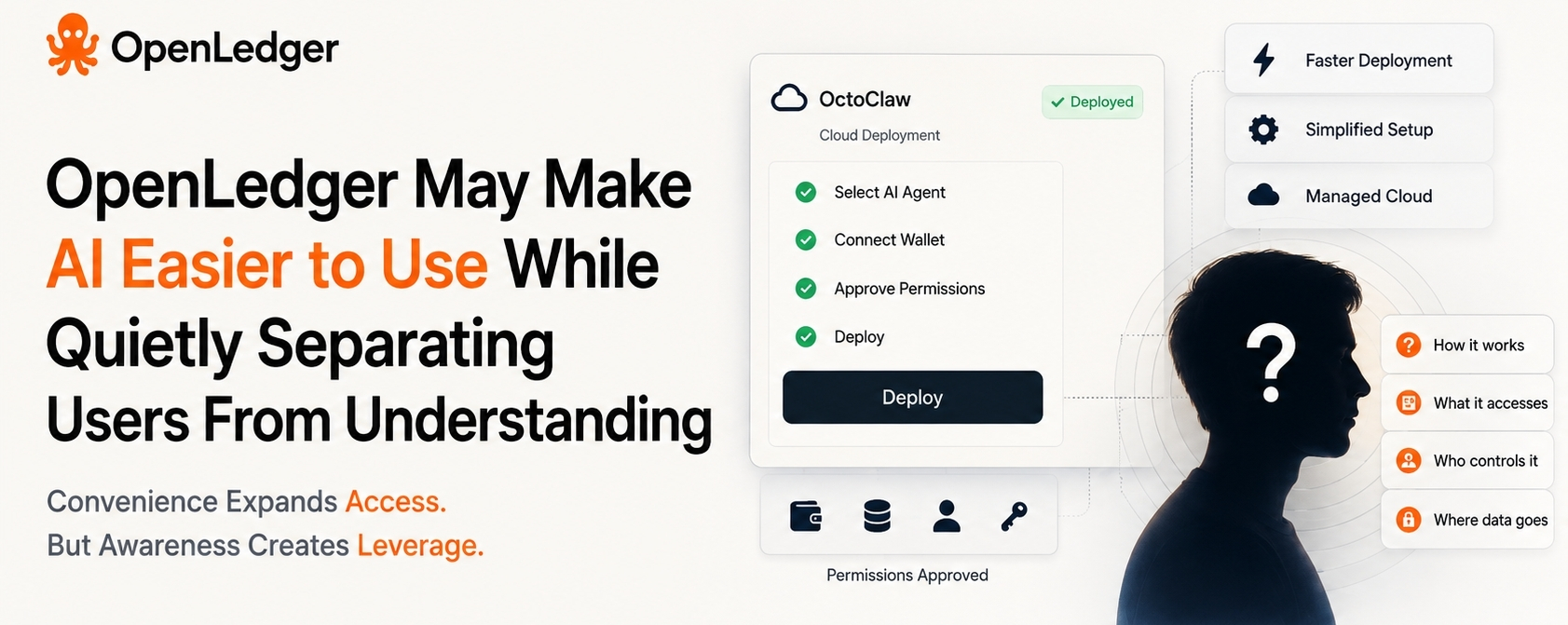
been looking deeper into the OctoClaw cloud configuration update from @OpenLedger and at first it sounded like a simple usability improvement
faster deployment .. cleaner setup.. less manual .. configuration.. fair enough
but the more i looked at it the less it felt like a normal infrastructure update
because easier systems usually do something dangerous at the same time
they expand access while reducing how close users stay to the system itself
OctoClaw’s managed cloud setup removes the need to manually handle Docker environments, Linux configuration, and deployment infrastructure directly
which means AI agents can increasingly be deployed without users staying close to the technical layer anymore
that sounds positive and honestly it is
because lower friction usually brings in more builders
more experimentation
more automation
more participation
but i think another shift quietly begins underneath that growth
and honestly we already live this behavior every day online
most people connect apps
approve wallet permissions
accept integrations
click “I Agree”
without fully reading what the system is actually allowed to access the result still works so convenience replaces inspection
that is the deeper shift i think people are missing here
because OpenLedger may not only be simplifying AI deployment
it may also be accelerating something i’d call
Execution Distance
when systems become simple enough that users can operate them successfully while staying further away from how those systems actually work
before, technical complexity forced users to stay close to infrastructure
mistakes were visible immediately bad setups broke things
users learned because the system forced them to learn now the interface absorbs more of that complexity instead
and that changes who keeps leverage
i kept thinking about one very normal scenario while reading the OctoClaw update
someone opens a dashboard selects an AI agent template
connects a wallet
approves permissions
clicks deploy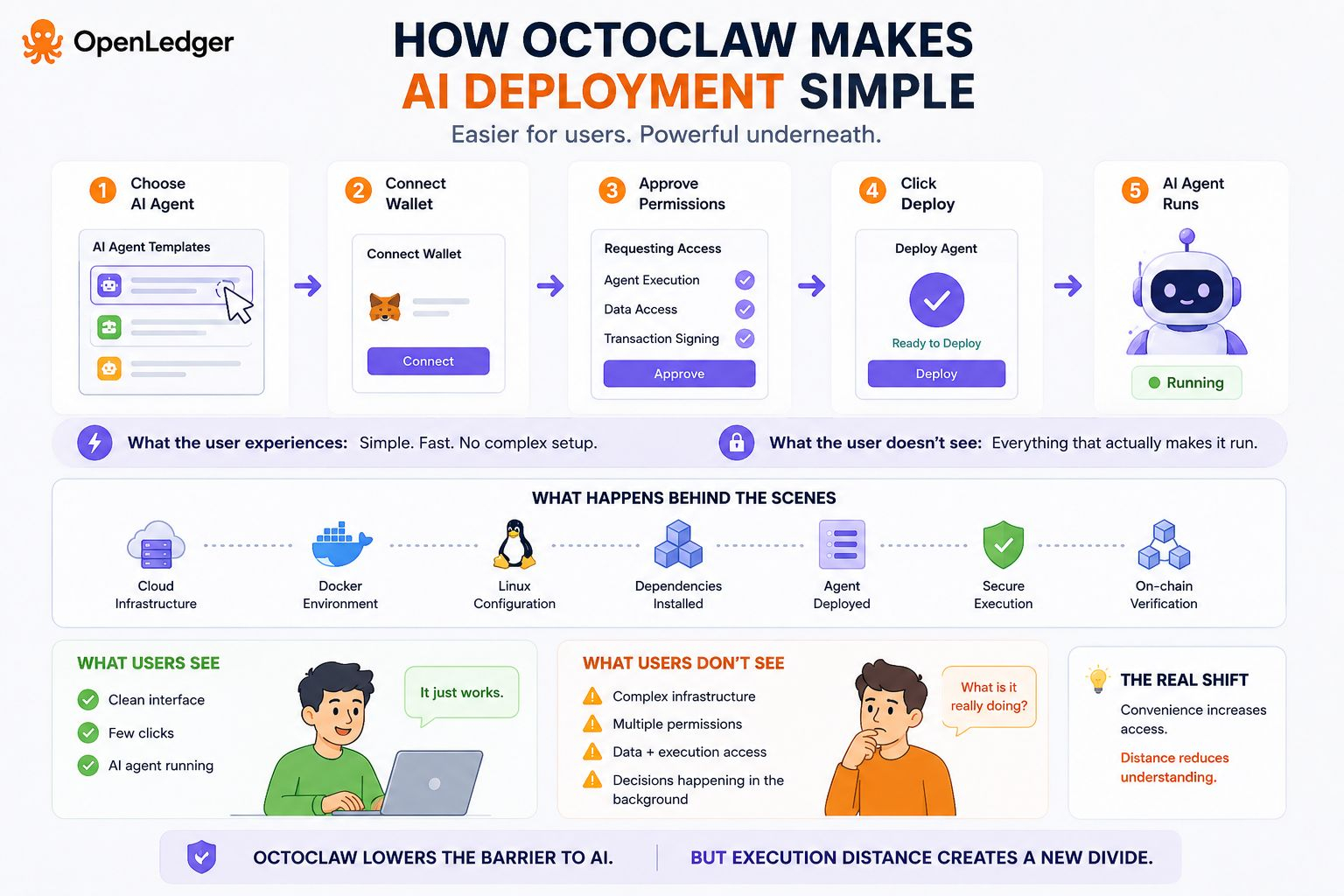
and minutes later the system starts running automatically in the background
the deployment feels smooth so the user never studies what the agent can fully access
they never inspect how decisions move through the system they simply trust the interface because it worked
and honestly that may become the most important shift of all
because convenience does not remove complexity it hides complexity
same tools
same interface
very different awareness behind the screen most users may simply operate the system
while a much smaller technical minority still understands how the infrastructure actually behaves underneath
and over time that difference compounds quietly
because once deployment stops being difficult real advantage shifts somewhere else
Toward the people still capable of seeing what the simplified experience removed from view
that is the devastating contradiction inside easier AI systems the easier AI becomes for everyone to use
the harder it becomes for most people to understand who actually holds leverage underneath
and historically that is usually when power starts concentrating fastest
because convenience may expand access
while concentrating real control with the few who still understand the hidden mechanics behind the interface
which means the next divide in AI may not be between users and non-users anymore
it may be between the people operating systems they barely inspect
and the smaller group quietly shaping the systems everyone else depends on
because if AI deployment becomes simple enough that anyone can launch powerful systems instantly
then the real question may no longer be who can use AI but who still understands what AI is actually allowed to do