
Artificial intelligence has become one of the fastest-growing technologies in the modern world. From automated customer support systems to advanced machine learning applications, AI is changing industries at a rapid pace. However, despite this growth, the infrastructure supporting artificial intelligence still faces several major problems. Issues such as lack of transparency, poor attribution systems, centralized ownership, and unfair distribution of rewards continue to limit the full potential of AI development.
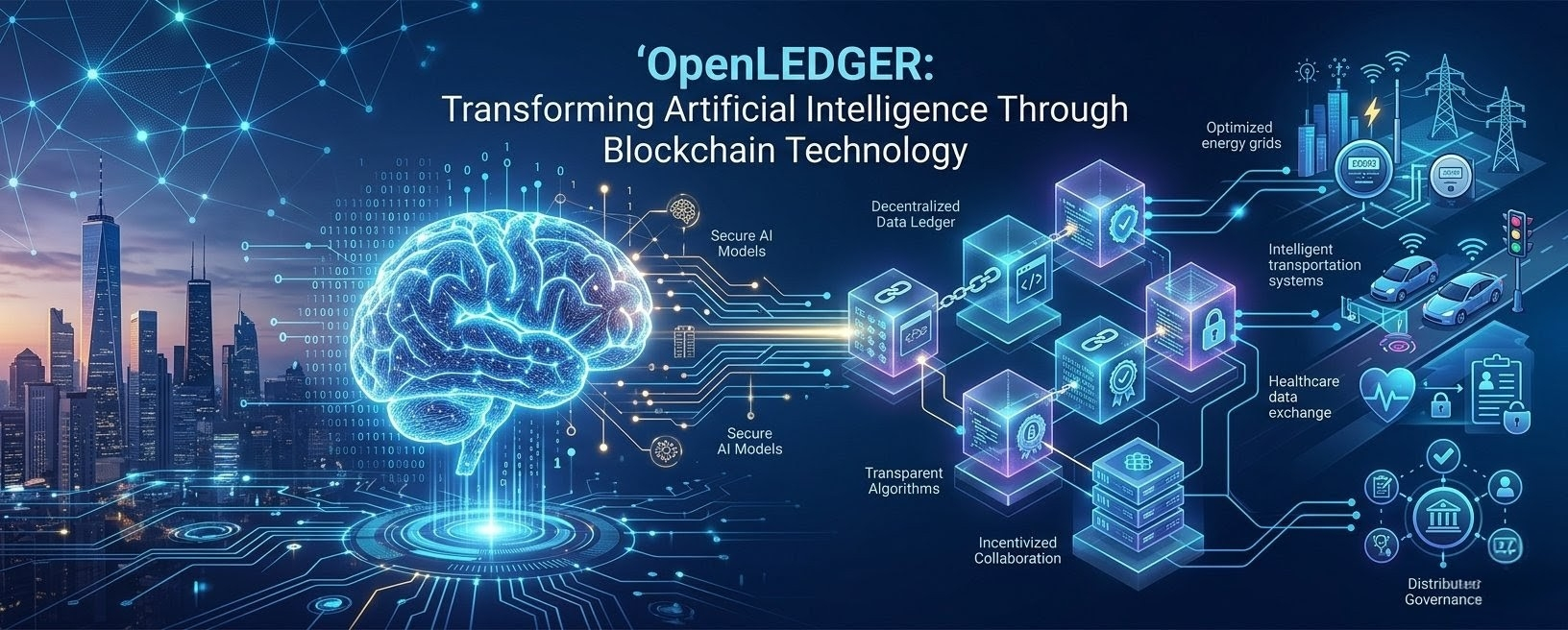
OpenLedger introduces a new approach to solving these challenges by combining blockchain technology with artificial intelligence. It presents itself as an AI Blockchain designed to create a transparent, traceable, and decentralized ecosystem where contributors are properly recognized and rewarded for their work. Through its unique Proof of Attribution mechanism, OpenLedger aims to reshape how AI models, datasets, and digital contributions are managed and monetized.
The Need for a New AI Infrastructure
Most modern AI systems are developed using large amounts of internet data collected from different sources. While this method helps create general-purpose AI models, it often lacks the specialization required for real-world industries such as healthcare, finance, education, and research. Specialized AI systems need high-quality and carefully curated datasets that are accurate, reliable, and domain-specific.
The current AI ecosystem does not provide a strong framework for handling these contributions fairly. Data providers, researchers, and developers often contribute valuable resources without receiving proper recognition or financial rewards. Large centralized companies usually control the platforms where AI models are trained and distributed, making it difficult for independent contributors to benefit from the value they create.
OpenLedger attempts to solve this problem by introducing a decentralized infrastructure where every contribution is permanently recorded on-chain. This ensures that contributors maintain ownership of their work while also creating a system of transparency and accountability.
Understanding the AI Blockchain Concept
The concept of an AI Blockchain is built around the idea that artificial intelligence development should not rely on centralized control. Instead, it should function through collaboration between different participants in the ecosystem. OpenLedger uses blockchain technology to record every stage of the AI lifecycle, including data contributions, model improvements, and interactions between participants.
This creates a permanent and verifiable history of all activities within the network. Every dataset, model update, or contribution becomes traceable and auditable. Such a system increases trust among participants because everyone can verify where the data came from and how it was used.
Traditional AI platforms often operate as closed systems where users have limited visibility into training data or decision-making processes. OpenLedger focuses on openness and explainability by making the development process transparent. This approach can help reduce concerns about bias, hidden manipulation, and lack of accountability in AI systems.
Proof of Attribution and Its Importance
One of the most important features of OpenLedger is its Proof of Attribution mechanism. In many existing AI ecosystems, it is difficult to determine who contributed specific datasets, improvements, or innovations. As a result, contributors often lose ownership of their work or receive little to no compensation.
Proof of Attribution solves this issue by linking every contribution directly to its creator. The blockchain records verifiable metadata that identifies the source of data, model refinements, or other valuable inputs. This creates a system where ownership can be proven transparently.
The mechanism also supports fair economic rewards. Contributors receive incentives based on the actual impact of their work within the ecosystem. For example, if a particular dataset significantly improves the performance of an AI model, the data provider can receive compensation proportional to that contribution.
This reward structure encourages more people to participate in AI development. Researchers, developers, data providers, and even independent contributors can collaborate without depending on centralized organizations to manage recognition or payments.
Open Collaboration and Decentralized Ownership
Collaboration is essential for the future of artificial intelligence. OpenLedger promotes an open ecosystem where anyone can contribute data, models, or ideas. Instead of restricting access to a few large corporations, the platform creates opportunities for a global community of contributors.
This decentralized approach changes the concept of ownership in AI development. Rather than giving full control to centralized companies, OpenLedger distributes ownership across the network. Contributors maintain rights over their work while participating in a shared ecosystem.
Such a system may lead to more innovation because individuals and smaller organizations can contribute without fear of losing control over their intellectual property. It also creates a more inclusive environment where expertise from different industries and regions can be integrated into AI systems.
Transparency and Explainability in AI
One of the biggest criticisms of modern AI systems is that they often function like black boxes. Users may receive outputs or predictions without understanding how the system reached its conclusions. This lack of transparency creates trust issues, especially in sensitive sectors such as healthcare, law, or finance.
OpenLedger addresses this challenge by ensuring that every action within the AI lifecycle is recorded on-chain. Training data sources, model updates, and system interactions become fully traceable. This allows developers, researchers, and users to examine how AI systems evolve over time.
Transparency also improves accountability. If an AI model produces inaccurate or biased results, stakeholders can trace the source of the issue more effectively. This level of explainability is becoming increasingly important as governments and organizations demand stronger ethical standards for AI development.
Economic Opportunities in the AI Ecosystem
The integration of blockchain technology into artificial intelligence also creates new economic possibilities. OpenLedger enables contributors to monetize their work directly through the network. Data providers, evaluators, model developers, and other participants can earn rewards based on their contributions.
This creates a more balanced economic model compared to traditional systems where most profits are controlled by centralized corporations. By distributing rewards fairly, OpenLedger encourages continuous participation and innovation within the ecosystem.
The platform may also support the development of specialized AI marketplaces where datasets, models, and AI services can be exchanged securely and transparently. Such marketplaces could accelerate the growth of decentralized AI economies in the future.
Challenges and Future Potential
Although OpenLedger presents a promising vision, the concept of combining blockchain and AI also faces challenges. Blockchain systems must handle large amounts of data efficiently while maintaining speed and scalability. AI development requires significant computational resources, which can create technical and operational difficulties.
Adoption may also take time because many organizations still rely on centralized AI platforms. Convincing industries to transition toward decentralized systems will require strong infrastructure, user-friendly tools, and clear benefits.
Despite these challenges, OpenLedger represents an important step toward building a fairer and more transparent AI ecosystem. Its focus on attribution, collaboration, and decentralization addresses several major weaknesses in current AI infrastructure.
Conclusion
OpenLedger introduces a new vision for the future of artificial intelligence by combining blockchain technology with decentralized collaboration. Through its AI Blockchain and Proof of Attribution mechanism, the platform creates a transparent environment where contributions can be verified, rewarded, and permanently recorded.
The project focuses on solving some of the most critical issues in modern AI development, including lack of transparency, centralized control, and unfair distribution of rewards. By enabling open collaboration and decentralized ownership, OpenLedger creates opportunities for developers, researchers, and data providers to participate in a more balanced ecosystem.
As AI continues to evolve, systems that prioritize accountability, explainability, and fair incentives may become increasingly important. OpenLedger’s approach demonstrates how blockchain technology can support the development of more trustworthy and community-driven artificial intelligence in the years ahead.
