
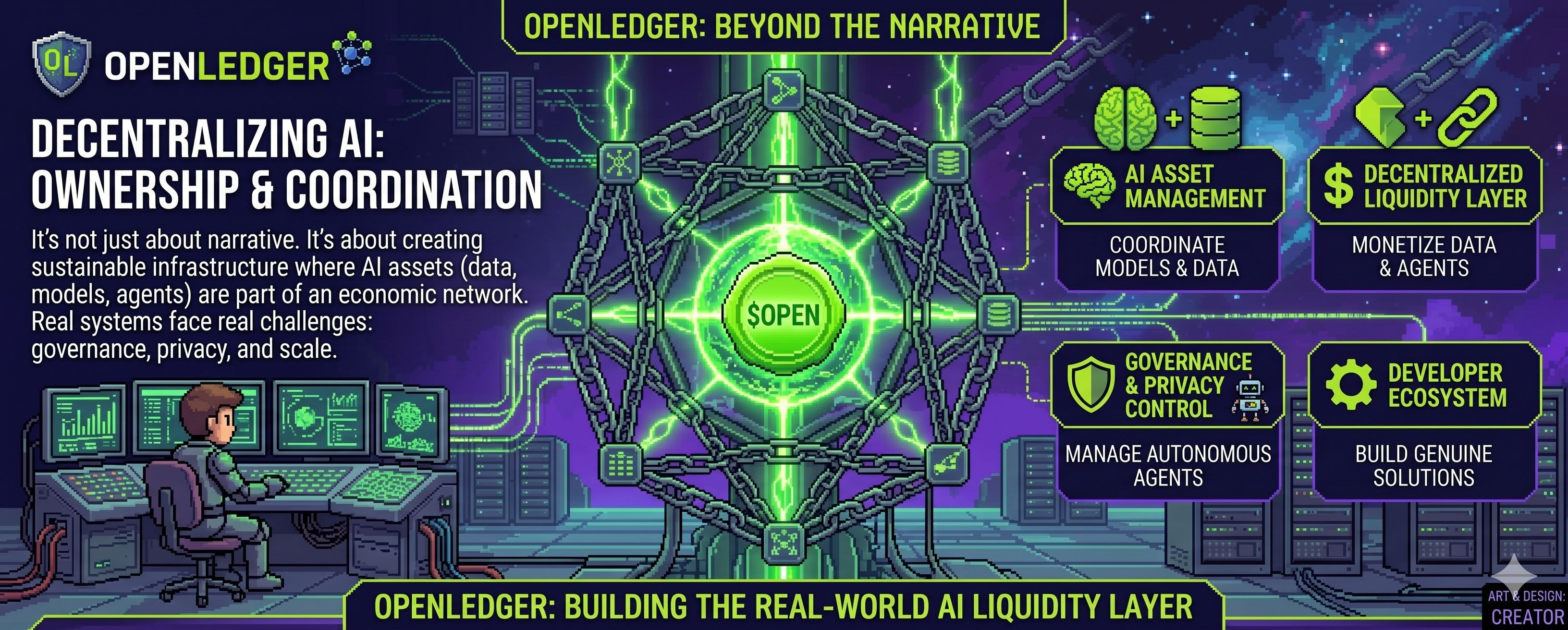
I’m watching the conversation around decentralized AI shift in a way that feels more serious than it did even a few months ago. Not louder, not necessarily smarter, but more grounded. At conferences, in Telegram groups, during long late-night discussions between developers, I keep hearing the same concern repeated in different forms: everyone wants AI infrastructure, but very few people are talking honestly about ownership, incentives, and long-term sustainability.
That’s partly why @OpenLedger keeps showing up in conversations I’m paying attention to. Not because people are treating it like the next guaranteed breakout project, but because it sits directly in the middle of a problem the industry still hasn’t solved properly. AI systems need data, models, compute coordination, and liquidity. Blockchain networks want decentralization, transparency, and economic alignment. At first it sounds simple to combine those things. But reality is different.
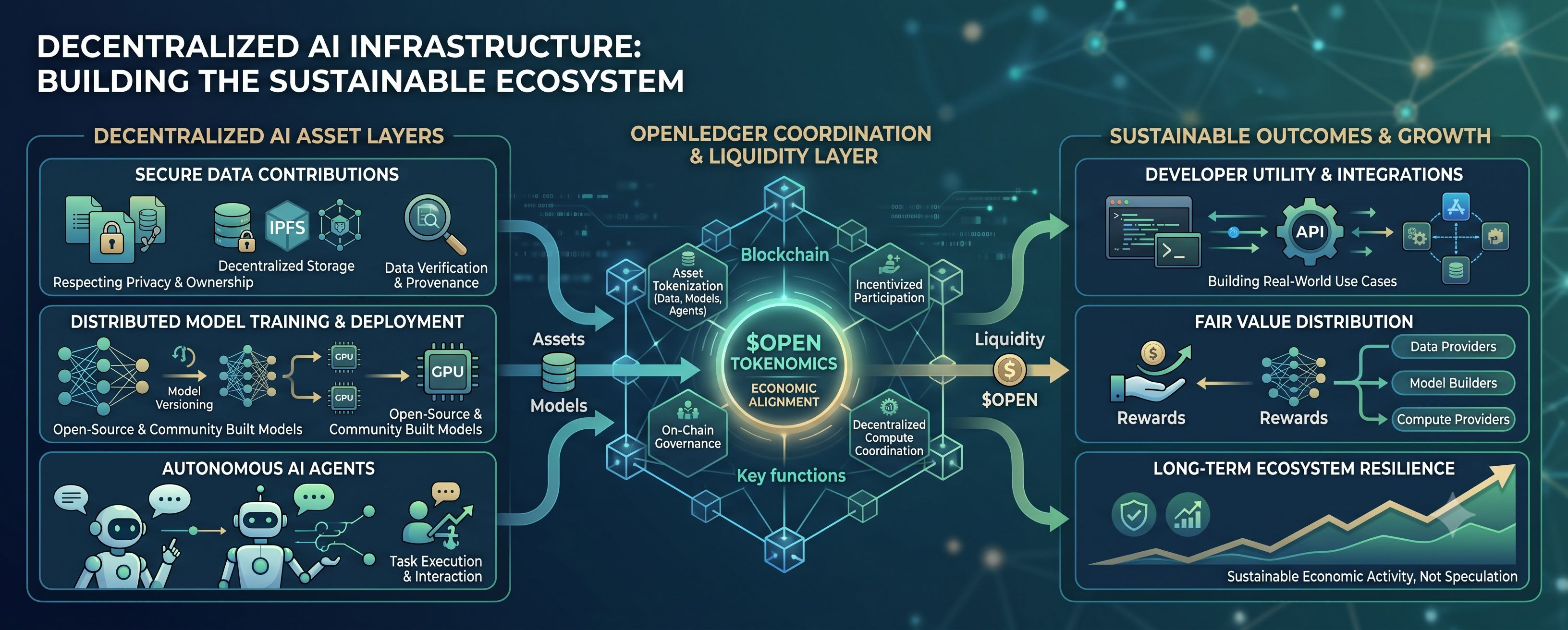
I’ve been noticing that most AI-related crypto projects either lean too heavily into narrative or become trapped in technical abstraction. One side overpromises intelligence. The other side builds systems nobody outside a small developer circle can realistically use. Somewhere in between, projects like OpenLedger are trying to create infrastructure where AI assets themselves become part of an economic network. Data, models, and agents are no longer isolated tools but components that can theoretically interact with liquidity layers and decentralized coordination mechanisms.
This is where it gets complicated.
The crypto industry has always liked the idea of tokenizing everything. Sometimes that instinct creates useful infrastructure. Other times it creates unnecessary complexity around systems that would function better without a token layer at all. I’m not fully convinced yet where decentralized AI liquidity ultimately lands on that spectrum. Execution will decide everything.
When I look at $OPEN, I’m less interested in short-term market reactions and more interested in whether the underlying architecture can survive real operational pressure. Real systems don’t work in extremes. They don’t operate in ideal conditions forever. Networks face spam, governance disputes, economic imbalance, and shifting regulation. AI systems introduce another layer of uncertainty because model quality changes constantly while compute requirements keep growing.
I keep coming back to this idea that AI infrastructure may eventually face the same centralization pressures that cloud computing did. Everyone starts decentralized in theory, then scale forces consolidation around whoever controls the best hardware, the largest datasets, or the strongest developer ecosystem. Blockchain projects often underestimate how aggressive those market dynamics become over time.
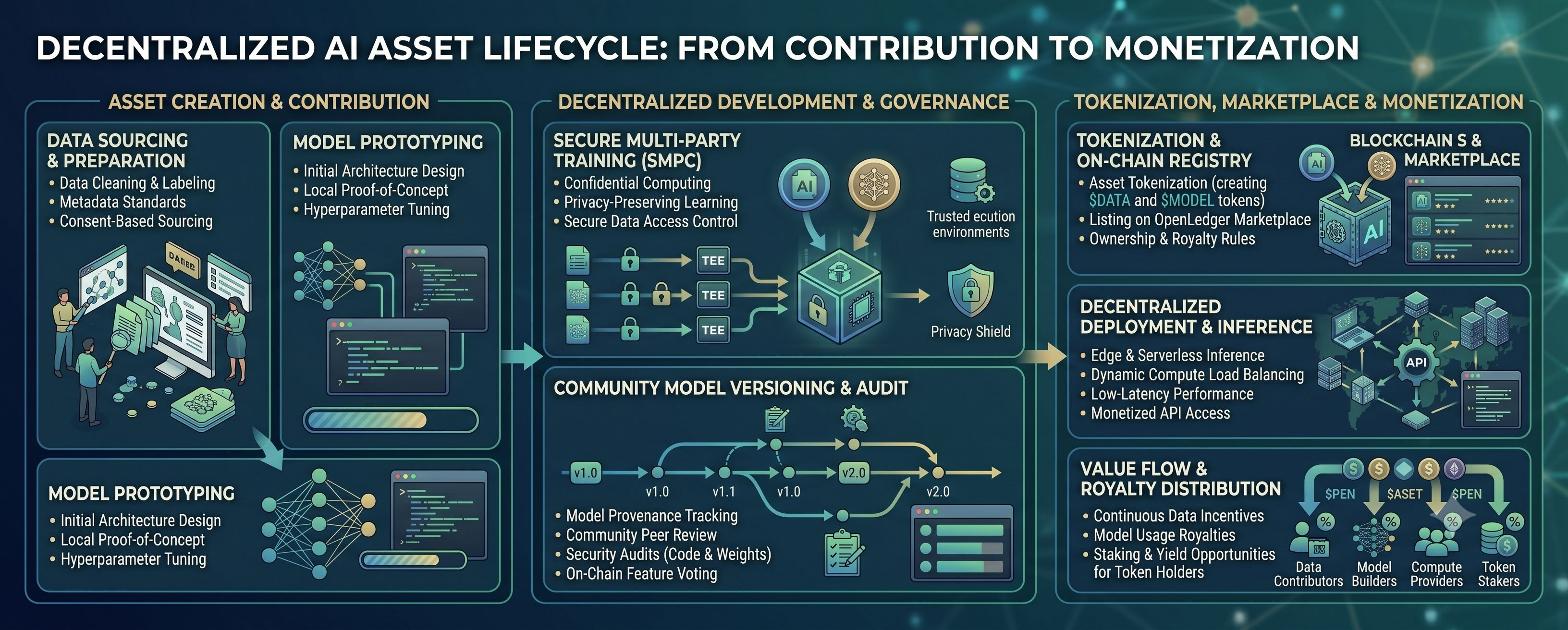
That’s where things get interesting with @OpenLedger. The discussion around monetizing data and AI agents sounds appealing on paper, but underneath that idea sits a difficult balancing act. Open access competes against privacy concerns. Liquidity competes against quality control. Decentralization competes against efficiency. Those trade-offs don’t disappear because blockchain is involved.
I was listening to a panel recently where several builders talked about AI agents interacting autonomously with decentralized systems. Everyone seemed fascinated by the concept, but almost nobody addressed the governance implications. If AI agents begin operating inside financial ecosystems at scale, accountability becomes blurry very quickly. Who carries responsibility when autonomous systems fail, manipulate markets, or leak sensitive information? This is where crypto infrastructure starts colliding with legal reality.
Projects connected to AI and blockchain are entering a phase where technical architecture matters more than storytelling. During the last cycle, narratives alone were enough to attract liquidity. Now the environment feels more skeptical. Investors ask harder questions. Developers are less patient with vague roadmaps. Communities are paying closer attention to whether products actually function outside controlled demos.
I think @OpenLedger is entering the market during that transition period, which could either help or hurt the project. On one hand, there’s increasing demand for infrastructure tied to AI coordination and decentralized ownership. On the other hand, expectations are becoming far more realistic. People want systems that scale properly, protect user data, and create sustainable economic activity rather than temporary speculation.
Privacy is another issue I keep thinking about while watching this sector evolve. AI systems become more valuable as they consume more data, but that creates tension with decentralization principles. Blockchain networks prefer transparency. Users increasingly demand privacy. Regulators want accountability. Real systems don’t work in extremes, and eventually every project has to choose where compromise happens.
The thing I find most important right now is whether projects like OpenLedger can create genuine developer participation instead of temporary attention cycles. Infrastructure networks only survive when builders continue showing up after the market narrative cools down. Liquidity alone is not enough. Communities alone are not enough. Sustainable ecosystems usually emerge slowly, through tooling, integrations, and practical use cases that solve boring but necessary problems.
I’ve been listening carefully to how people discuss decentralized AI lately, and the tone feels different now. Less euphoric. More cautious. There’s growing awareness that AI systems will eventually require economic coordination layers that current centralized platforms may not provide fairly. That doesn’t automatically mean every blockchain solution succeeds, but it does explain why projects like @OpenLedger keep attracting attention from serious researchers and infrastructure-focused developers.
I’m still skeptical about parts of the sector. Energy consumption, compute concentration, regulatory uncertainty, and governance fragmentation are all real obstacles. This is where it gets complicated because crypto often moves faster socially than it does technically. Narratives spread before infrastructure matures. Markets reward promises before systems are tested under pressure.
Still, I keep watching how OpenLedger positions itself around AI liquidity and decentralized coordination because the underlying question feels unavoidable now. If AI becomes foundational infrastructure for the internet economy, who owns the value generated by models, data, and autonomous agents? Centralized corporations? Governments? Open networks? Hybrid systems? Nobody seems fully certain yet.
Maybe that uncertainty is exactly why the conversation around $OPEN continues growing quietly in technical circles. Not because people think the outcome is guaranteed, but because the problem itself is becoming impossible to ignore. #OpenLedger #Trump'sIranAttackDelayed #RussiaDumaCryptoMonitoringBill