
Most people in crypto still treat AI like a narrative instead of a real infrastructure shift. Every week there’s another token claiming to be “AI-powered,” but after spending time reading about @OpenLedger, I think the project is trying to approach the problem from a completely different angle.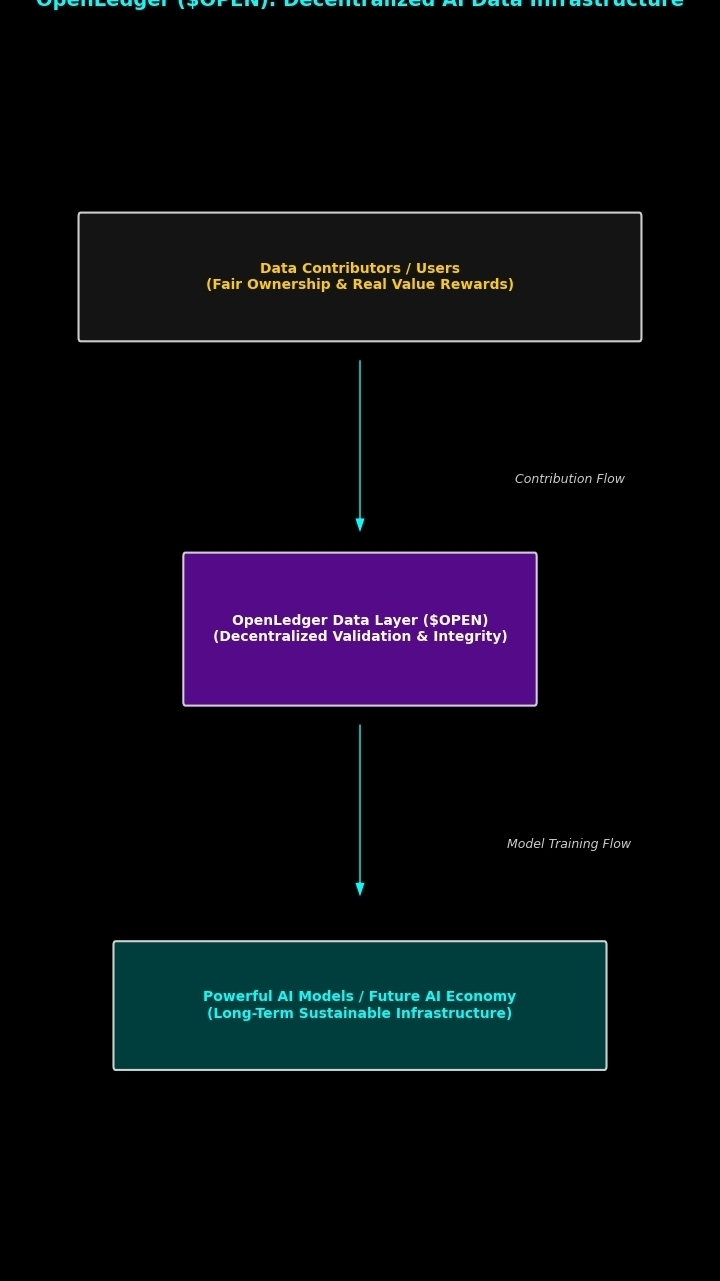
The part that stood out to me first was the idea of attribution. AI today runs on massive amounts of data collected from millions of users, creators, researchers, and developers, but almost nobody gets recognized for the value they add. Big companies train models, monetize them, and keep the rewards centralized. The people contributing information stay invisible. OpenLedger is trying to build a system where contributions are actually tracked on-chain through Proof of Attribution, which could completely change the economics around AI development.
What makes this interesting is that OpenLedger is not positioning itself as another general blockchain trying to add AI features later. The whole architecture seems built specifically around AI workflows. Data contributors, validators, model developers, governance participants, and AI agents all become part of one connected ecosystem where actions are transparent and traceable.
I also think the timing matters. A few years ago, decentralized AI sounded more theoretical than practical. Infrastructure was weak, transaction costs were high, cross-chain systems were unreliable, and most AI tooling was still centralized. But now the environment looks different. Modular infrastructure is improving, account abstraction is becoming more common, and AI models themselves are evolving much faster than people expected. Projects that combine these trends early could end up creating entirely new economic layers inside crypto.
Another thing I found important is the project’s focus on specialized AI instead of only giant general-purpose models. Most people are obsessed with massive models trained on internet-scale datasets, but real-world industries usually need focused intelligence. Finance, healthcare, cybersecurity, legal systems, and research all depend on domain-specific information where explainability matters more than raw scale. OpenLedger seems to understand that future may belong to smaller and more efficient models trained on high-quality data rather than only giant black-box systems.
At the same time, I don’t think the road ahead is simple. AI agents handling execution, coordination, and automation across decentralized systems also create risks that most people still underestimate. Security, incorrect outputs, manipulated datasets, broken smart contract interactions, and attribution disputes are all real challenges. Decentralized AI sounds exciting until real capital and real consequences enter the system. That’s why I’m more interested in whether projects can build trust over time instead of simply generating short-term hype.
What I keep coming back to is the bigger economic shift happening behind all of this. The internet economy was built around ads, platforms, and centralized ownership of data. AI changes that equation because intelligence itself becomes the product. If AI agents, models, and automation systems start replacing parts of the traditional internet economy, then platforms managing attribution, coordination, and transparent incentives may become extremely important.
That’s the lens I’m using when I watch @OpenLedger right now. Not as a short-term trade based on hype cycles, but as a project experimenting with how decentralized AI economies could actually function in practice.
#OpenLedge#OPenledger $OPEN @OpenLedger
