
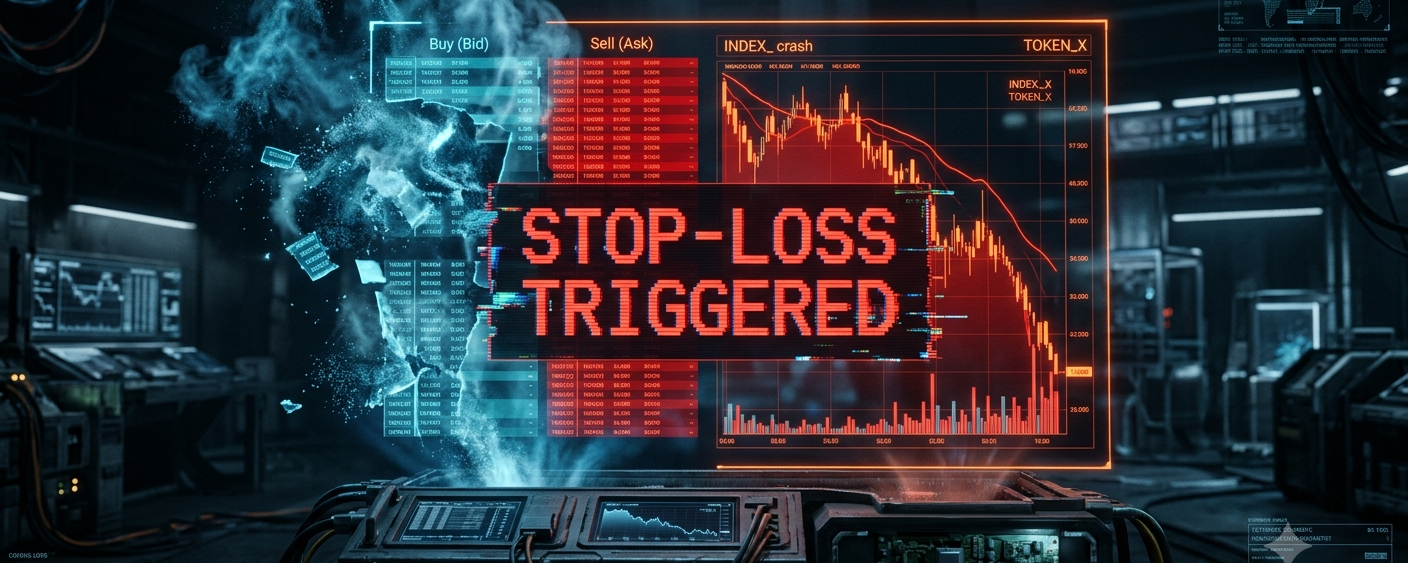
While most retail traders blame "market manipulation" or their own psychology during a liquidation cascade, they are ignoring the mathematical reality of exchange architecture: Matching Engine Priority.
The 200ms Death Sentence
When Bitcoin or Solana drops aggressively, the standard WebSocket feed you rely on is already lagging. By the time your local interface registers the price drop and sends a limit order, the order book you are looking at is displaying "ghost liquidity."
The real orders were pulled or filled hundreds of milliseconds ago by institutional market makers using dedicated low-latency gateways. Your API rate limit isn't just there to protect the exchange's servers; it mathematically guarantees that retail accounts are the last to exit a volatile market.
Infrastructure is Your Only True Edge
If your automated trading setup (or manual execution terminal) does not account for:
1. Local Order Book Reconstruction: Building the book from raw binary feeds rather than delayed JSON snapshots.
2. Execution Jitter: Measuring the exact delta between "Order Sent" and "Order Acknowledged" to detect throttling.
3. Queue Position Modeling: Understanding that a limit order is not a guaranteed fill, but a request placed at the back of a highly competitive line.
...then your backtests and technical analysis are built on a mirage. You are simply providing exit liquidity for infrastructure-focused funds.
Stop optimizing your RSI periods and start optimizing your ingestion latency. The market doesn't care about your chart patterns; it only cares who reaches the matching engine first.
#MarketMicrostructure #AlgorithmicTrading #CryptoDevelopment #Infrastructure #TradingTech