
══════════════════════════════
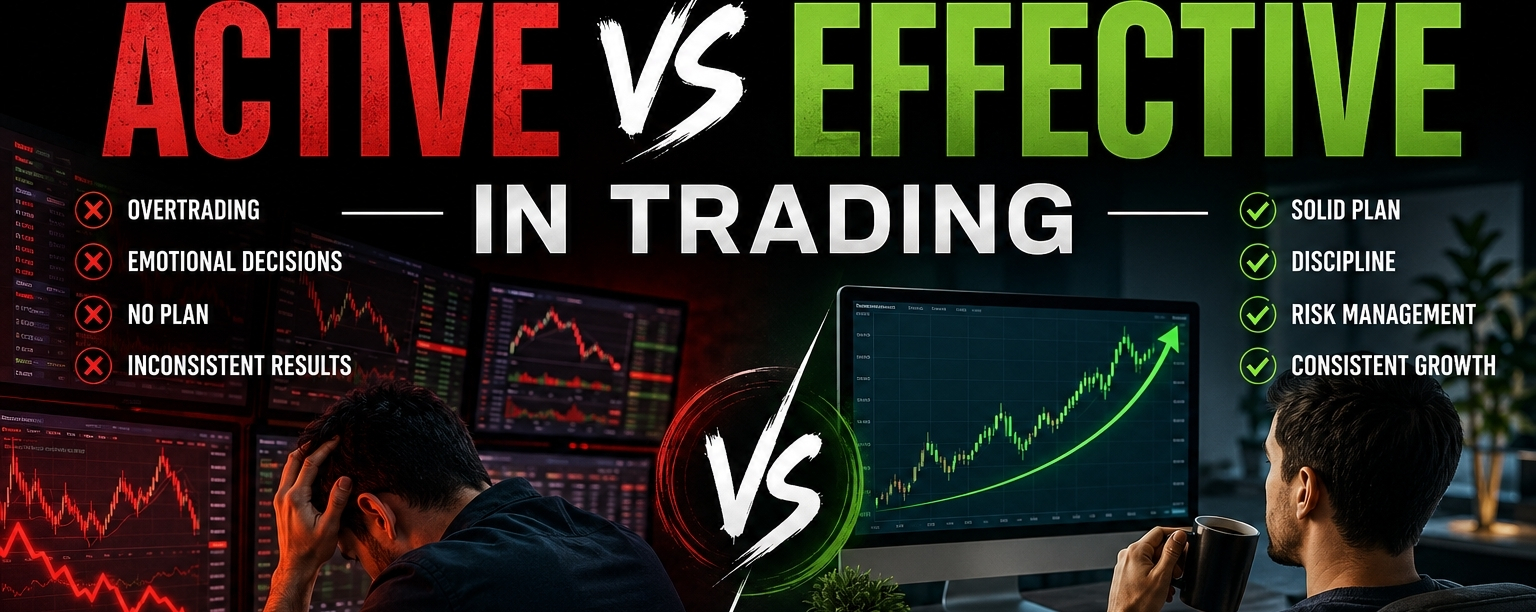
Most traders lose money not because they don't try hard enough — but because they try too hard, in all the wrong ways.
══════════════════════════════
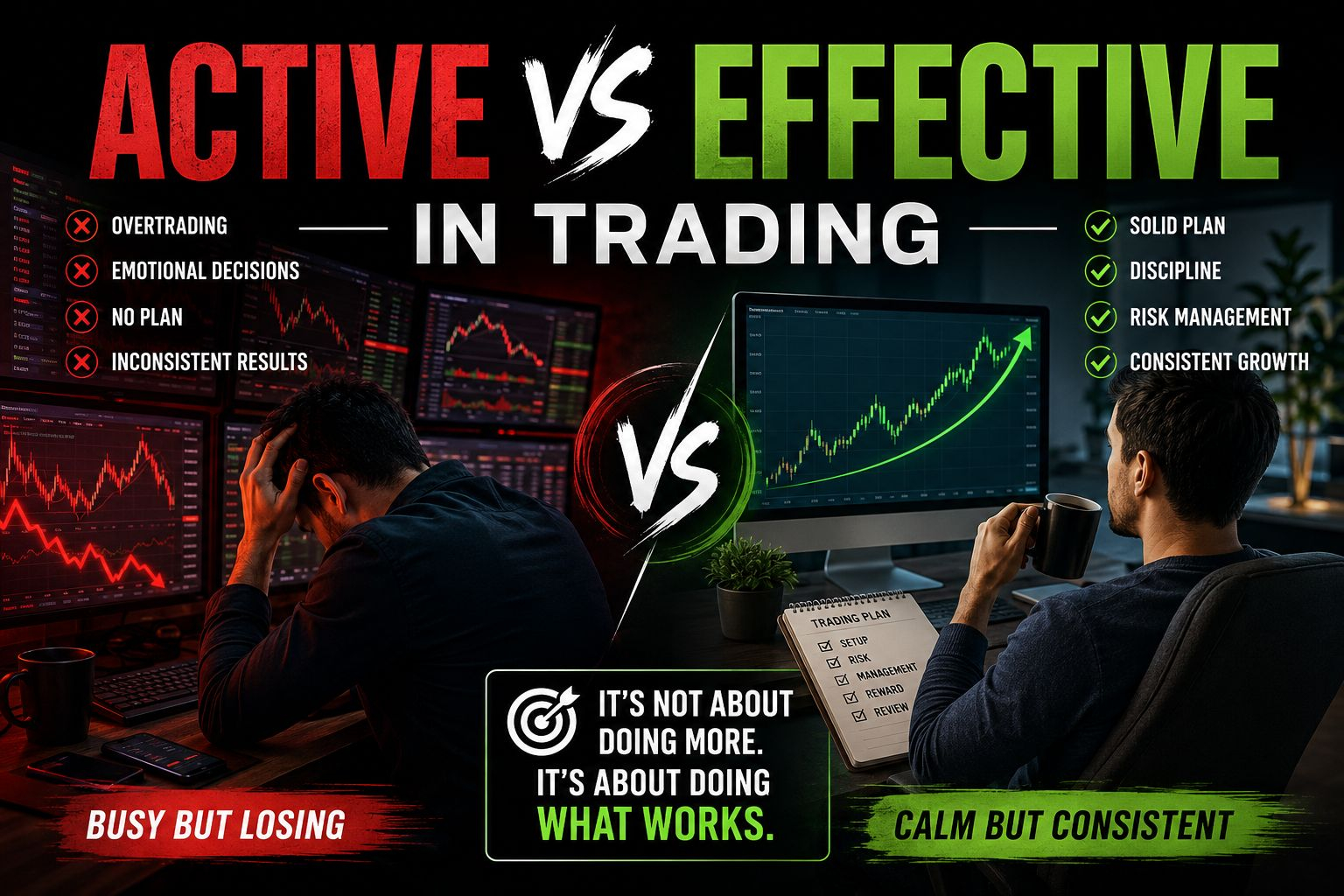
There's a version of trading that looks impressive from the outside.
➤ Multiple screens open
➤ Charts everywhere
➤ Positions entered and exited throughout the day
➤ Alerts going off every few minutes
➤ Constant market watching
➤ Constant decision-making
➤ Constant movement
And then there's the version that actually builds wealth.
These two versions rarely look the same.
The market has a way of rewarding the patient and punishing the restless. But most new traders never figure this out — because activity feels like progress.
➜ Clicking buttons feels productive.
➜ Watching charts feels responsible.
➜ Staying out of the market feels like laziness.
So they stay busy, stay active, and slowly drain their account wondering where they went wrong.
This article is about that dangerous gap — the space between being active and being effective.
══════════════════════════════
◆ ACTIVITY IS NOT THE SAME AS PROGRESS ◆
══════════════════════════════
Let's be honest about something uncomfortable.
➤ Checking charts every 20 minutes isn't trading smarter — it's feeding anxiety.
➤ Opening three trades after a loss isn't “recovering” — it's revenge trading.
➤ Switching strategies every two weeks isn't growth — it's avoiding the real work.
Activity creates the illusion of control.
The market moves.
You react.
You feel engaged.
But engagement without a rules-based reason behind every decision is just noise dressed up as strategy.
➜ A professional trader might take 3 trades in a week and call it productive.
➜ An anxious retail trader might take 30 trades in the same week and wonder why results are worse.
The difference isn't effort.
✔︎ It's selectivity.
══════════════════════════════
◆ THE COST OF OVERTRADING ◆
══════════════════════════════
Yes, overtrading eats your account through fees and spreads.
But that's actually the smaller cost.
The real damage is what overtrading does to your mind.
Every trade carries emotional weight.
➤ A win creates overconfidence.
➤ A loss creates hesitation or desperation.
➤ Too many trades create emotional exhaustion.
By trade number ten in one session, you're no longer thinking clearly.
① Risk management starts slipping — “just this once.”
② Entry criteria become loose — “close enough.”
③ Position sizing becomes emotional — “I need to make it back.”
This is how disciplined traders slowly become gamblers.
Not through one dramatic mistake — but through hundreds of tiny compromises.
✔︎ Fewer trades = more mental clarity
✔︎ More clarity = better decisions
✔︎ Better decisions = consistent long-term results
══════════════════════════════
◆ WHAT EFFECTIVENESS ACTUALLY LOOKS LIKE ◆
══════════════════════════════
Effective trading is almost boring to watch.
It means:
➜ Waiting patiently for a specific setup
➜ Ignoring random market noise
➜ Letting opportunities go if they don't match your plan
➜ Closing the platform when there's nothing valid to trade
Effective traders operate with structure.
✔︎ They use watchlists — not random scans.
✔︎ They follow entry rules — not emotions.
✔︎ They respect daily loss limits without negotiation.
✔︎ They review mistakes honestly every week.
The goal is not to always be in the market.
The goal is to be right when you are.
══════════════════════════════
◆ THE PSYCHOLOGICAL TRAP ◆
══════════════════════════════
Understanding this is easy.
Applying it is hard.
Why?
Because the human brain hates uncertainty.
When markets move and you're inactive, your brain interprets stillness as danger.
So traders react emotionally:
➤ They overtrade to feel productive.
➤ They check charts nonstop to feel informed.
➤ They average into losses to feel in control.
None of it is rational.
All of it feels necessary in the moment.
➜ The urge to overtrade is strongest after a loss.
➜ The urge to break discipline is strongest after a win.
These emotional reactions destroy accounts far more often than bad setups do.
Effective traders build systems to protect themselves from themselves.
✔︎ Stop losses are planned before entry.
✔︎ Position sizes are calculated logically.
✔︎ Trading hours are fixed to avoid emotional decisions.
✔︎ Rules exist for the moments when emotions become strongest.
══════════════════════════════
◆ HOW TO SHIFT FROM ACTIVE TO EFFECTIVE ◆
══════════════════════════════
① Define your setups before the market opens.
Know exactly what you're waiting for before price starts moving.
② Set a maximum trade limit per day.
For most traders, 1–3 quality trades are enough.
③ Track everything honestly.
Your journal is a diagnostic tool, not an ego booster.
④ Use a pre-trade checklist.
If one condition fails — you wait.
⑤ Measure success by process, not profit.
Following your system on a losing day is still a successful day.
✔︎ Discipline compounds.
✔︎ Patience compounds.
✔︎ Process compounds.
══════════════════════════════
◆ THE POWER OF DOING LESS, BETTER ◆
══════════════════════════════
Nobody tells new traders this:
The path to profitability usually comes through reduction, not addition.
➜ Less trades
➜ Less screen time
➜ Less emotional decision-making
➜ Less noise
And more:
✔︎ Patience
✔︎ Selectivity
✔︎ Discipline
✔︎ Clarity
The traders who survive long enough to become profitable aren't the ones who worked hardest.
They're the ones who wasted the least:
➤ Least capital on bad trades
➤ Least energy on weak setups
➤ Least time chasing invalid opportunities
Being active keeps you emotionally entertained.
Being effective keeps you financially alive.
Only one matters six months from now.
══════════════════════════════
The market does not reward effort.
It rewards:
✔︎ Accuracy
✔︎ Patience
✔︎ Clarity
✔︎ Consistency
You don't need to trade more.
You need to trade better.
The most powerful decision you can make today isn't finding another indicator or strategy.
It's deciding that you will only act when your edge is present — and wait without apology when it isn't.
That decision alone puts you ahead of most retail traders.
➜ Slow down.
➜ Be selective.
➜ Be effective.
══════════════════════════════
✔︎ If this shifted your perspective on trading, drop a comment below:
➤ Are you currently trading more actively… or more effectively?
◆ Share this with a trader who needs the reminder.
➜ Follow for more content on trading psychology, risk management, and building long-term discipline in the markets.
══════════════════════════════


#Trump'sIranAttackDelayed #PolymarketNasdaqPredictionMarketPartnership #SolanaAIAgentEconomicImpact #TruthSocialWithdrawsBitcoinETF #RWAMarketCapRisesTo$65B