
The Hidden Engine of AI: Why Infrastructure Matters More Than the Output
Everyone loves talking about the front-end of Artificial Intelligence. We see a brilliant image, an autonomous agent executing a complex workflow, or a chatbot answering a highly technical question in seconds, and we are immediately impressed. It’s easy to focus on the final product because it’s right in front of us.
But if you look under the hood of the current AI boom, you quickly realize something is broken.
Right now, the data that trains these massive models is sucked into corporate black boxes. The everyday data contributors, niche researchers, and developers who actually supply the intelligence rarely see a dime of the long-term value they create. Once your data enters the machine, your ownership over it vanishes.
This is exactly why the intersection of Web3 and AI is shifting from a speculative trend to an absolute necessity, and it’s why I have been keeping a close eye on the team at @OpenLedger (https://www.binance.com/en/square/profile/openledger).
Breaking the Black Box
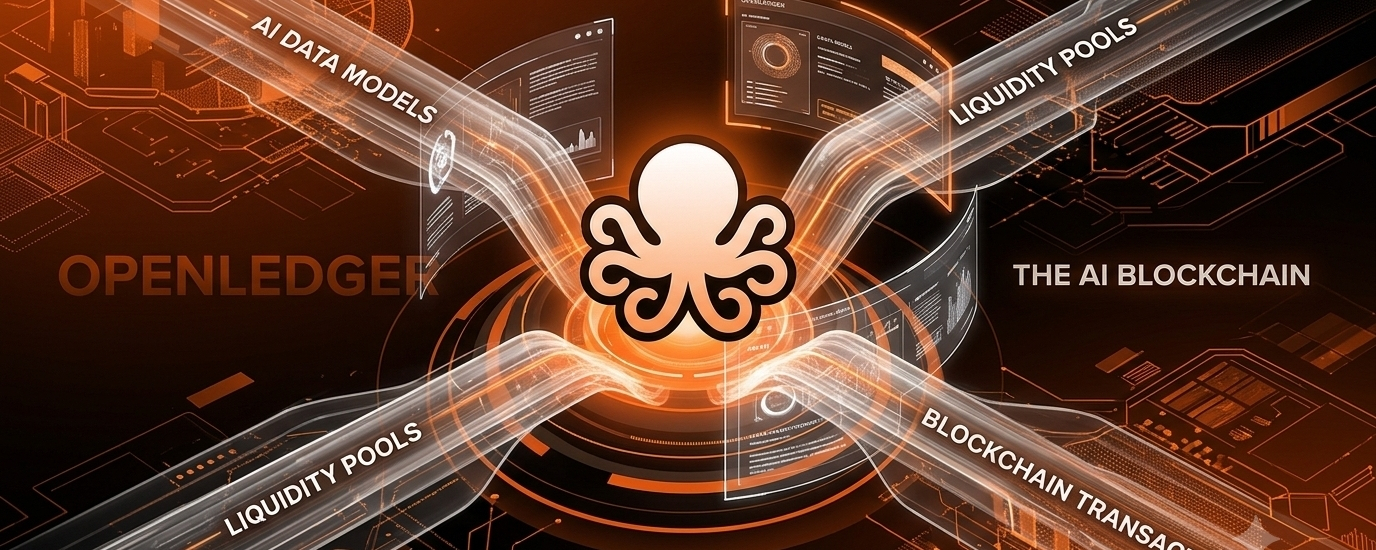
Instead of letting AI remain entirely centralized, OpenLedger is building what they call the "AI Blockchain." The core concept here isn’t just about putting AI on a ledger for the sake of buzzwords; it’s about establishing an execution layer where data, models, and agents can coexist with cryptographic proof.
Their infrastructure relies on a concept called Proof of Attribution. Think of it as a permanent digital receipt for value creation. If a specific dataset helps refine a specialized AI model, that contribution is tracked and verifiable on-chain. This creates a fair, transparent environment where data providers and developers are directly rewarded for the actual impact of their work.
Sizing Up the $OPEN Ecosystem
To make this ecosystem functional, a decentralized network needs an efficient framework. OpenLedger addresses this through three core components:
DataNets: Specialized, community-driven data networks that curate high-quality datasets for targeted AI training.
ModelFactory: A no-code dashboard that allows developers to easily customize large language models using DataNet resources.
OpenLoRA: An engine designed to drastically lower infrastructure costs, allowing thousands of specific fine-tuned models to run efficiently on limited hardware.
At the center of all these moving parts is the native token, $OPEN . It serves as the network's foundational gas, handles inference fees, secures the network via staking, and powers the governance decisions that will shape the platform’s future.
The Bigger Picture
AI cannot safely or sustainably scale if it relies entirely on a handful of tech giants controlling the world's data. For the intelligence economy to mature, we need decentralized infrastructure that ensures transparency, provenance, and fair rewards.
By anchoring the entire AI lifecycle on-chain, OpenLedger is turning static data into liquid, composable assets. It’s a massive step toward an open, verifiable AI ecosystem, and it’s definitely a project worth watching as the Web3 AI sector continues to mature.