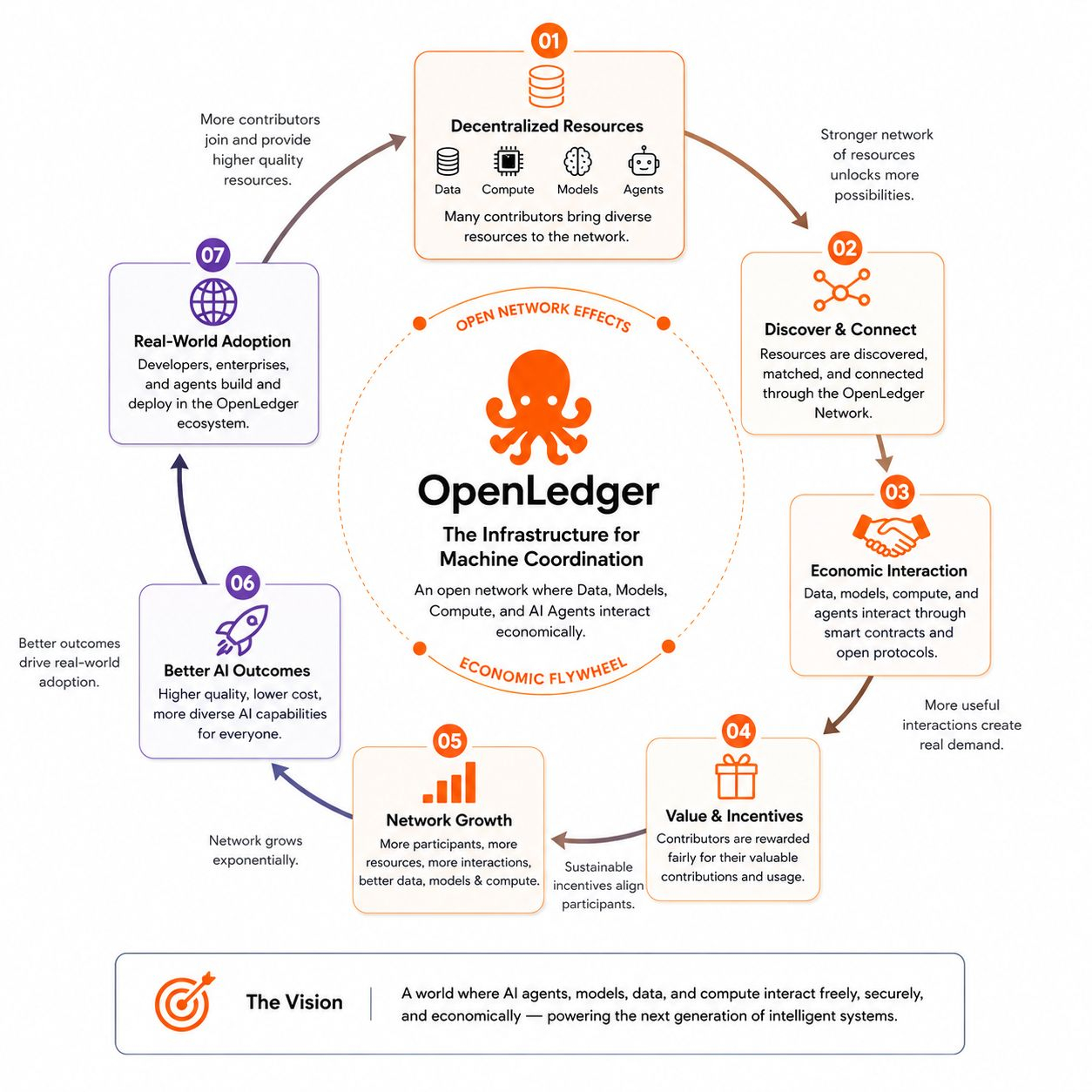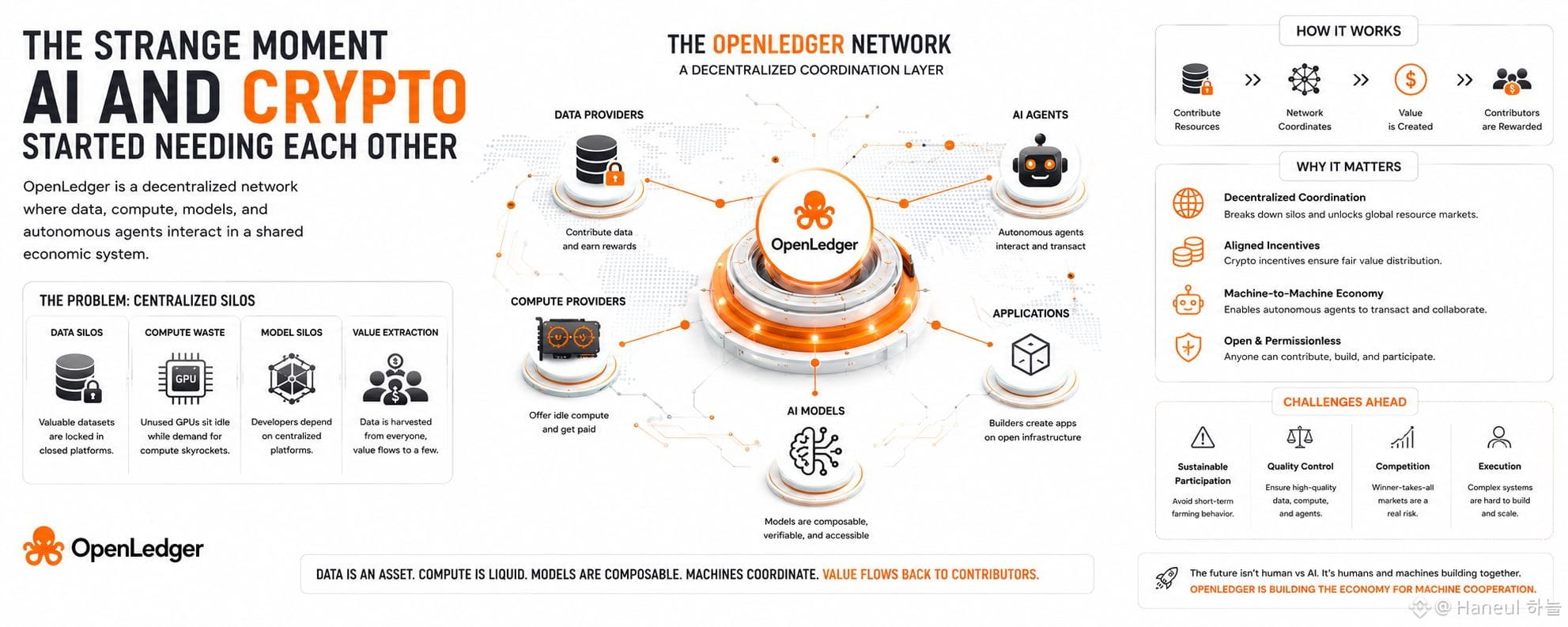
A few weeks ago I was digging through AI-related tokens again, mostly out of habit. That part of the market has become impossible to ignore lately. Every cycle has its obsession, and right now you can feel capital slowly drifting back toward anything connected to AI infrastructure. Not the loud meme layer of it, but the deeper plumbing. Data. Compute. Coordination. The stuff most people skip because it doesn’t fit neatly into a one-line narrative.

What caught my attention wasn’t even the chart at first. It was the way people were talking about OpenLedger. Not with the usual forced excitement you see during rotation season, but with a kind of uncertainty. Like people were still trying to figure out whether this was actually infrastructure or just another AI wrapper dressed in blockchain language.
That uncertainty interested me more than hype ever does.
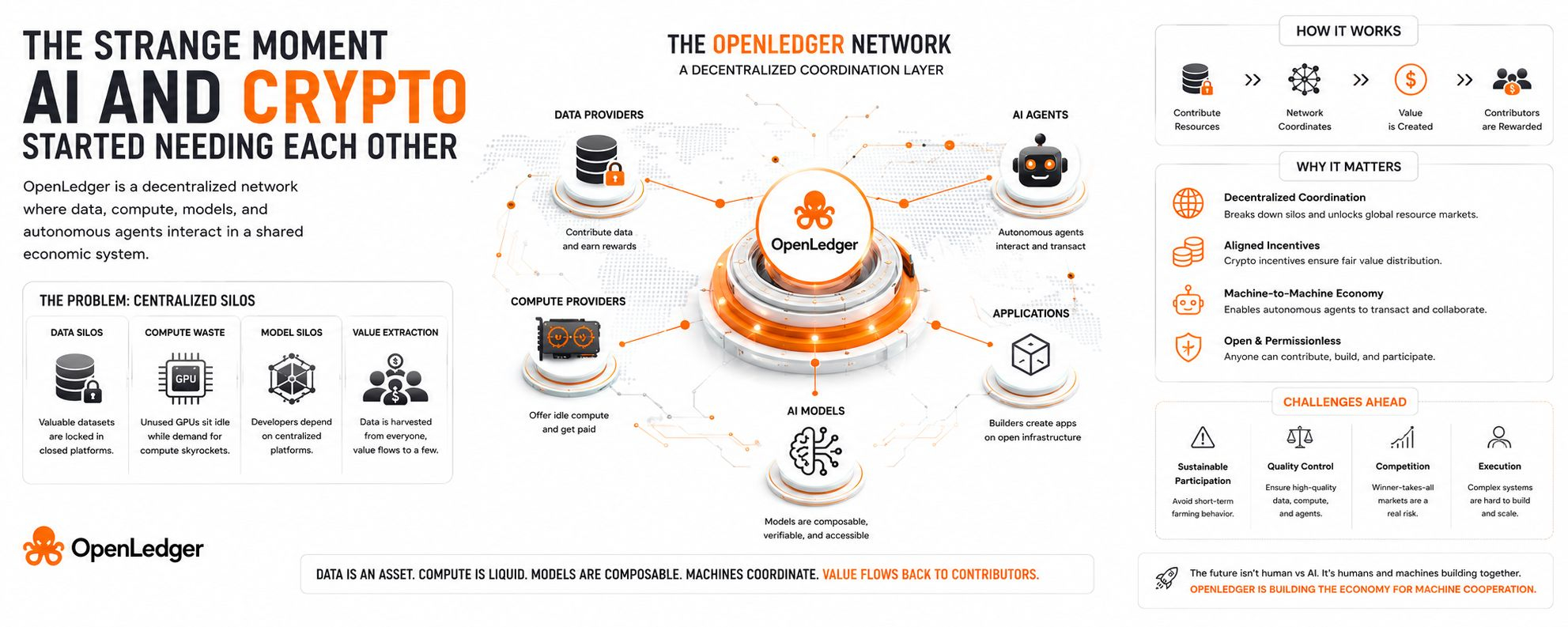
Because if you zoom out for a second, the current AI market feels weirdly centralized for something that’s supposed to represent the future. A handful of companies own the models. A handful control the compute. Data gets harvested from everyone, but value rarely flows back outward. Crypto people talk endlessly about decentralization, yet most AI systems today are basically giant private kingdoms.
And that’s the gap OpenLedger seems to be aiming at.
The first time I looked into it, I honestly thought it was another “AI + blockchain” pitch stitched together to fit whatever narrative was getting liquidity that week. We’ve seen enough of those already. But after spending more time with it, the idea started feeling less like marketing and more like a response to something structurally broken.
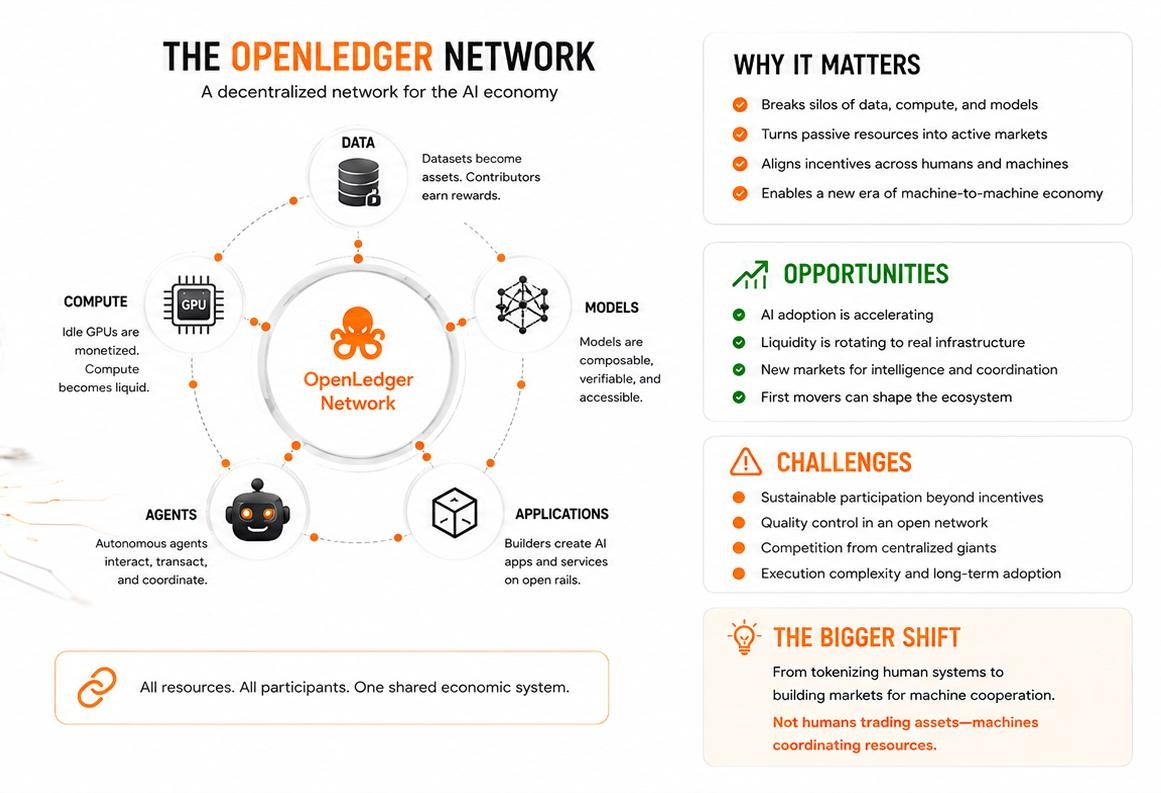
The core concept is actually pretty simple once you strip away the terminology. OpenLedger is trying to create a network where data, compute resources, AI models, and autonomous agents can interact in a shared economic system instead of existing in isolated silos.
That matters more than people realize.
Right now there are people sitting on valuable datasets who can’t monetize them properly. There are unused GPUs scattered across the world while AI companies spend billions chasing compute capacity. There are developers building useful models who still depend on centralized platforms to distribute them. Everything is fragmented.
OpenLedger’s bet is that crypto can coordinate these fragmented pieces better than traditional systems can.
Not through ideology. Through incentives.
That distinction matters.
Crypto works best when it turns passive resources into active markets. Bitcoin monetized idle energy. Ethereum monetized blockspace. Restaking monetized economic security. OpenLedger is attempting something similar with intelligence itself. Data becomes an asset. Compute becomes liquid. Models become composable. Machines interact with other machines inside a coordinated network instead of sitting behind corporate walls.
At least that’s the vision.
And honestly, I can see why that narrative is starting to resonate now specifically. Liquidity conditions have changed. The market is becoming more selective again. People are looking beyond pure speculation toward systems that might actually matter if AI adoption keeps accelerating. Infrastructure narratives tend to outperform once the easy meme phase cools off.
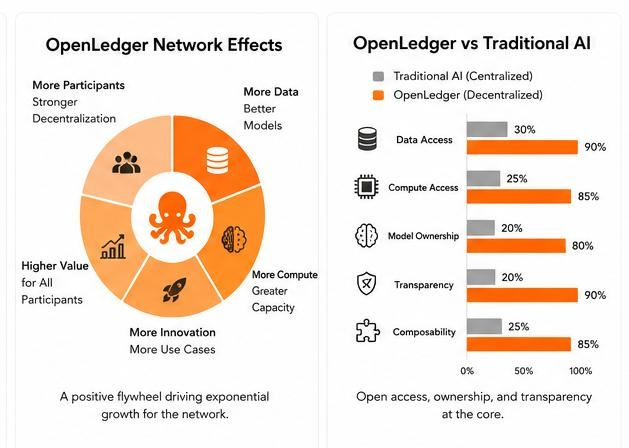
Still, this is where things get complicated.
Because building decentralized coordination systems sounds elegant on paper until you run into reality. Most people don’t care about decentralization unless the user experience is genuinely better or economically unavoidable. That’s been crypto’s biggest lesson for years. Technology alone doesn’t create adoption.
The challenge for OpenLedger isn’t whether the idea sounds smart. It does.
The challenge is whether enough real participants actually want to contribute resources into an open network instead of relying on centralized providers that are faster, simpler, and already dominant.
And this is where I think the project becomes genuinely interesting.
A lot of AI crypto projects feel like they’re forcing blockchain into places it doesn’t belong. OpenLedger feels different because coordination might actually be the thing blockchains are naturally good at. Not replacing AI models themselves, but organizing incentives around the resources AI systems depend on.
That’s a more believable role.
I also think the timing matters. We’re entering a period where AI agents, autonomous systems, and machine-to-machine interactions are starting to become less theoretical. Once machines begin transacting with other machines, traditional infrastructure starts looking awkward. Crypto rails suddenly make more sense in that environment.
But there are still real risks here.
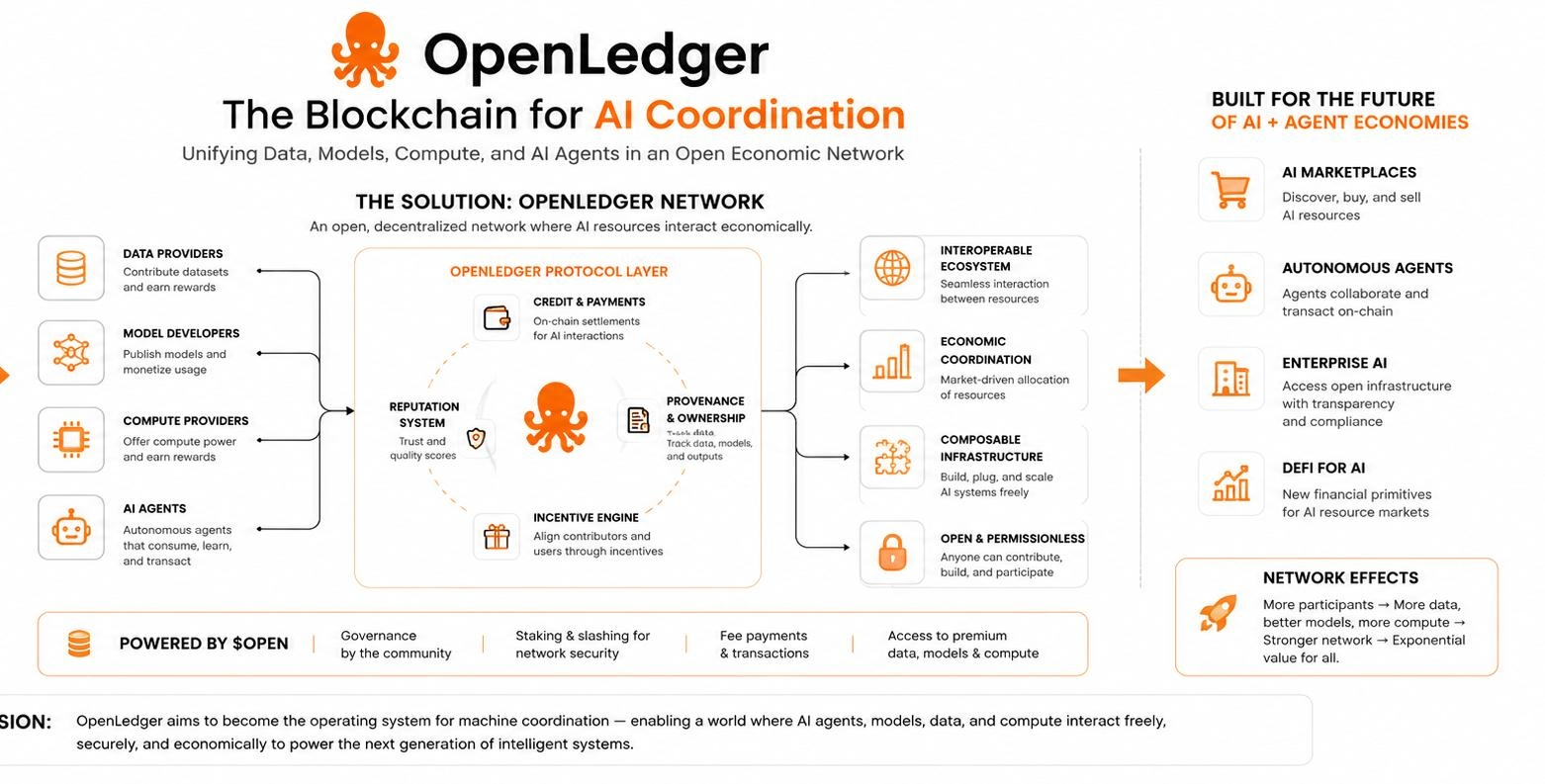
The token model has to create sustainable participation instead of short-term farming behavior. Networks like this can easily attract mercenary liquidity that disappears the moment incentives weaken. Decentralized systems also tend to struggle with quality control. Open contribution sounds great until low-quality data, spam compute, or unreliable agents start flooding the network.
And then there’s the broader market risk nobody talks about enough: AI infrastructure could become brutally winner-takes-all. If one or two dominant ecosystems capture developer mindshare early, smaller coordination layers may never reach escape velocity no matter how good the technology is.
That’s why I’m watching behavior more than announcements.
Partnerships don’t impress me anymore unless they produce actual usage. Metrics without context don’t mean much either. What matters is whether people continue participating when incentives normalize. Whether developers build because the network is useful, not because emissions temporarily make it profitable.
One thing I keep thinking about, though, is slightly more philosophical.
Crypto spent years trying to tokenize finance, culture, art, attention basically everything human. But OpenLedger points toward something different. It’s trying to build markets for machine cooperation itself. That feels like a much bigger shift than most people realize.
Not humans trading assets.
Machines coordinating resources autonomously.
Maybe that’s where this whole thing is eventually heading. Or maybe it’s just another beautifully designed system competing for attention in a market that constantly mistakes complexity for inevitability.
I honestly don’t know yet. And maybe that uncertainty is the most honest signal of all.