
Most people already understand the basic shape of the creator economy. You make something useful, people pay attention, and platforms build systems around that attention. Sometimes it is direct through subscriptions. Sometimes it is indirect through ads, sponsorships, or ranking systems that decide who gets seen. What changes is the format. The behavior stays familiar.
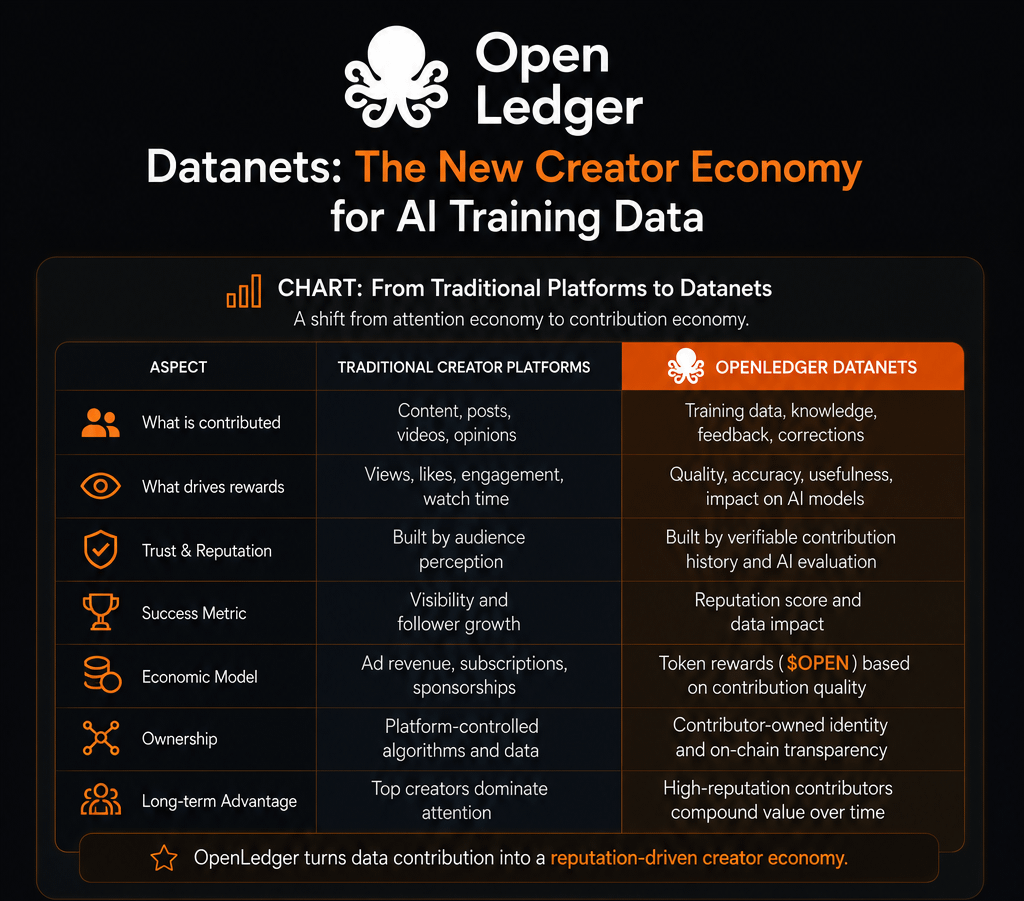
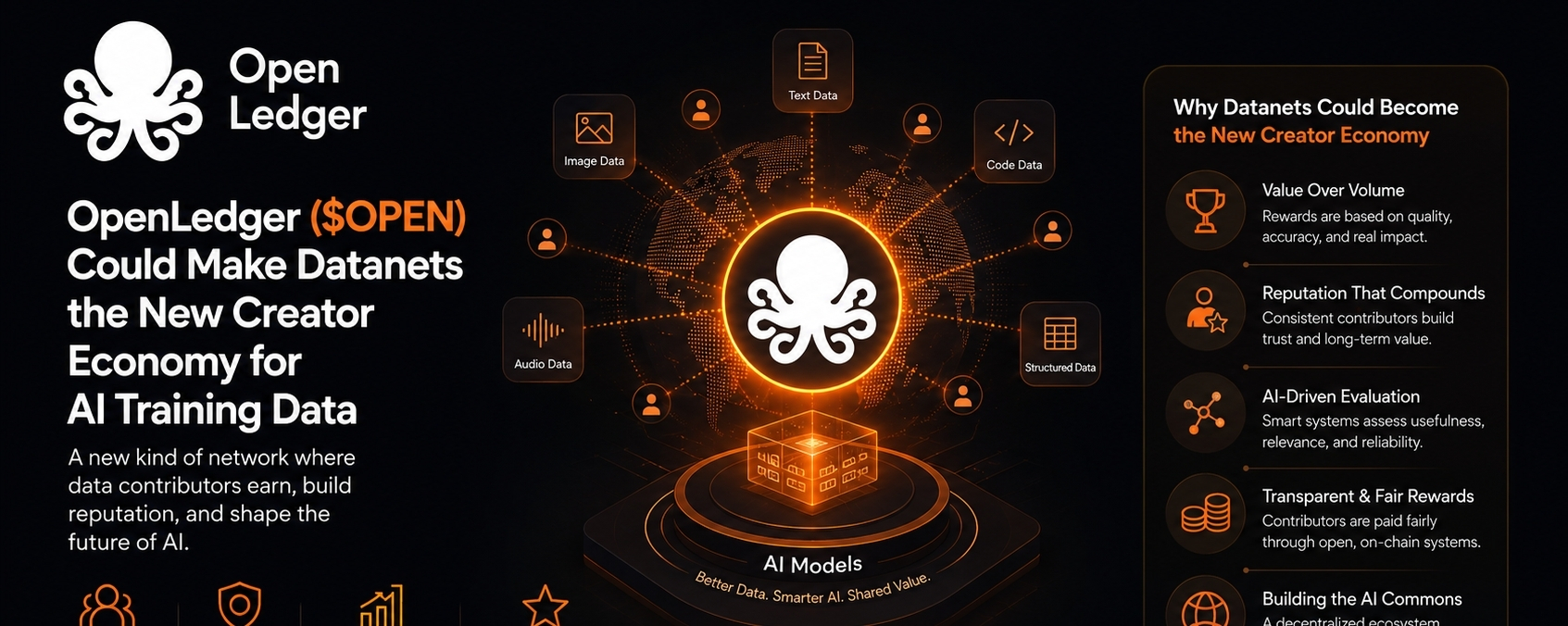
That is partly why OpenLedger caught my attention. At first glance, it looks like another AI infrastructure idea built around data contribution. But the more I think about it, the less it looks like a simple data marketplace. It starts to resemble something closer to a creator economy, except the “content” is not videos, posts, or threads. It is training data, model feedback, structured knowledge, and maybe even behavioral correction.
The interesting shift is this: creators today compete for visibility. Data contributors in an AI network may end up competing for trust.
That sounds abstract, but the mechanics are actually familiar. On Binance Square, for example, visibility is not just about posting frequently. Ranking systems, engagement metrics, audience reactions, and AI-assisted relevance filters shape who appears credible. A creator with strong reach is not simply someone who writes a lot. The system gradually builds a signal around consistency, usefulness, and audience response. Imperfect, yes. But recognizable.
Now imagine something similar applied to AI data contribution.
A datanet, in simple terms, is a network where data contributors provide information that AI systems may use for training, validation, or decision support. Instead of one company quietly collecting and organizing everything internally, contribution becomes distributed. But distributed systems create a problem. Not all contributions are equally useful. Some are noisy. Some are duplicated. Some are outright manipulative.
That is where token systems like OpenLedger become more interesting than the usual “get paid for your data” story.
Paying for contribution is easy in theory. Measuring whether the contribution mattered is much harder.
This is where the creator economy comparison becomes useful. Most platforms learned the hard way that paying purely for activity creates strange behavior. People optimize for output, not value. Clickbait emerges. Engagement farming appears. Metrics get gamed. AI-generated spam floods timelines. The reward system unintentionally teaches bad habits.
AI data networks could face the same problem much faster.
If contributors are rewarded simply for uploading data, the network may fill with quantity instead of quality. So the real question becomes whether OpenLedger is building a contribution economy or a reputation economy.
Those are not the same thing.
A contribution economy says, “You submitted something, here is compensation.” A reputation economy says, “Your past usefulness changes how much your future contributions matter.”
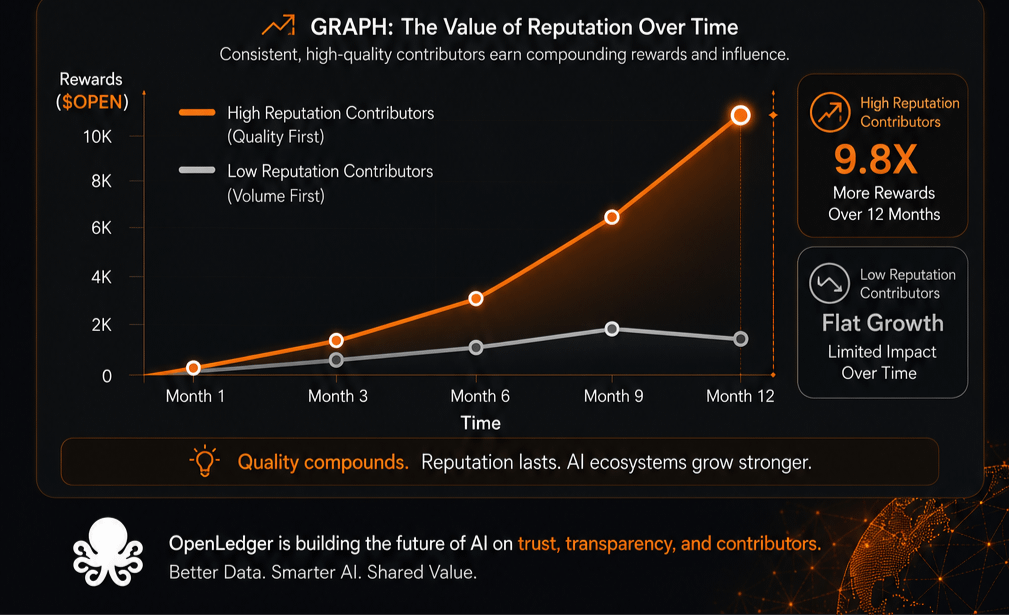
That second model feels much closer to how creator ecosystems actually stabilize over time.
A creator with a history of useful analysis gets more trust than a brand-new anonymous account posting recycled thoughts. Not because the system is perfectly fair, but because repeated behavior creates signal. AI training networks may need the same logic. Reliable data providers might gradually become economically distinct from low-value participants.
This is where the term datanet starts feeling less technical and more social.
Because if contributors are building recognizable economic identities based on data quality, correction accuracy, domain expertise, or validation history, then participation starts looking less like raw labor and more like digital authorship.
That creates opportunity, but also a strange tension.
Creator economies often reward visibility over substance, at least temporarily. Loud participants sometimes outperform useful ones. Networks built around training data could inherit similar distortions if reward signals are poorly designed. A contributor who learns how to satisfy dashboard metrics may outperform someone producing genuinely difficult, high-quality work.
That risk matters because AI systems do not merely display bad content. They absorb flawed inputs.
A weak social platform recommendation system is annoying. A weak AI training signal can quietly shape future outputs at scale.
This is why verification becomes more important than contribution volume.
If OpenLedger works, the economic moat may not come from attracting the most contributors. It may come from building strong filtering around which contributions deserve trust. That sounds less exciting than marketplace growth narratives, but structurally it matters much more.
I also think people underestimate how behavior changes once data becomes economically visible.
Today, most users give away useful behavioral signals without thinking about it. Search habits. Correction patterns. Specialized expertise. Domain knowledge. If networks begin explicitly pricing those inputs, participation becomes intentional. People may begin optimizing not just what they contribute, but how they are perceived as contributors.
Again, very creator economy behavior.
The independent thought I keep returning to is that OpenLedger may not be creating a marketplace for data at all. It may be creating a status system for AI usefulness.
That is a different kind of asset.
Because markets for raw supply often race toward commoditization. Status systems behave differently. Reputation compounds unevenly. Early trusted participants can become structurally advantaged. New entrants struggle for recognition. Incentives become less about one contribution and more about preserving long-term credibility.
That could create durable participation. It could also create gatekeeping.
And there is another practical issue. AI usefulness is difficult to measure cleanly. Some contributions help immediately. Others only become valuable after being combined with other inputs. Some appear useful but introduce subtle errors later. Attribution in AI systems is messy. If reward systems pretend otherwise, confidence may become artificial.
So while the creator economy analogy is useful, it also carries a warning.
Creator platforms often look meritocratic from the outside while hiding algorithmic biases, visibility loops, and opaque scoring rules underneath. A datanet that rewards AI contributors could develop similar blind spots, except the stakes would be infrastructure-level rather than social.
Still, the broader direction feels believable.
People already compete for attention, credibility, and digital status. Turning AI contribution into a structured economic identity is not a wild leap from current internet behavior. It is almost the logical next version of it.
Maybe the real question is not whether people will become creators for AI systems.
Maybe it is whether AI networks can avoid inheriting the same incentive problems human platforms never fully solved.