
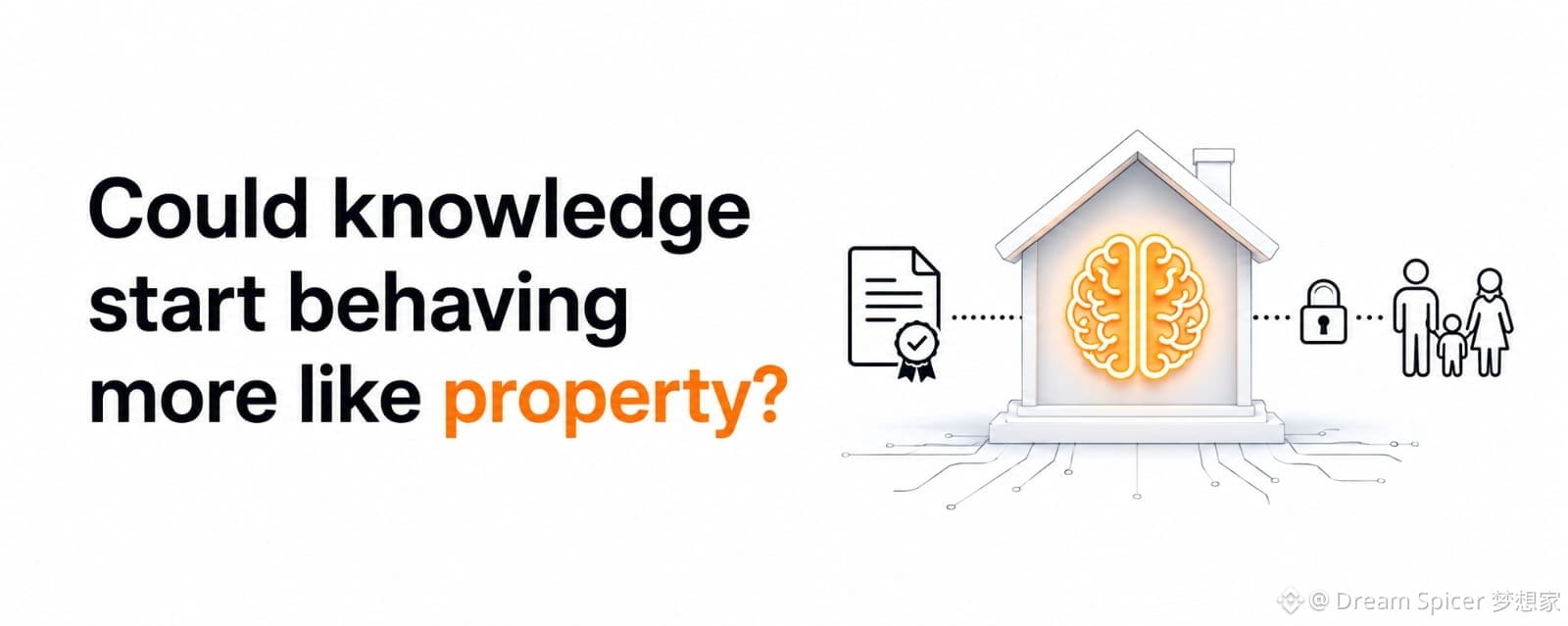
I keep thinking about that because something feels different now. People are not only chasing AI exposure anymore. They are starting to think about what stays behind after participation ends. Data used to feel disposable. Prompt work felt temporary. Model contribution felt invisible. Now there is a slow shift toward asking who keeps the value once the work is done.
That is partly why OpenLedger keeps pulling my attention back.
Not because it promises some AI future. More because it sits inside this changing assumption that knowledge itself may become an asset layer.
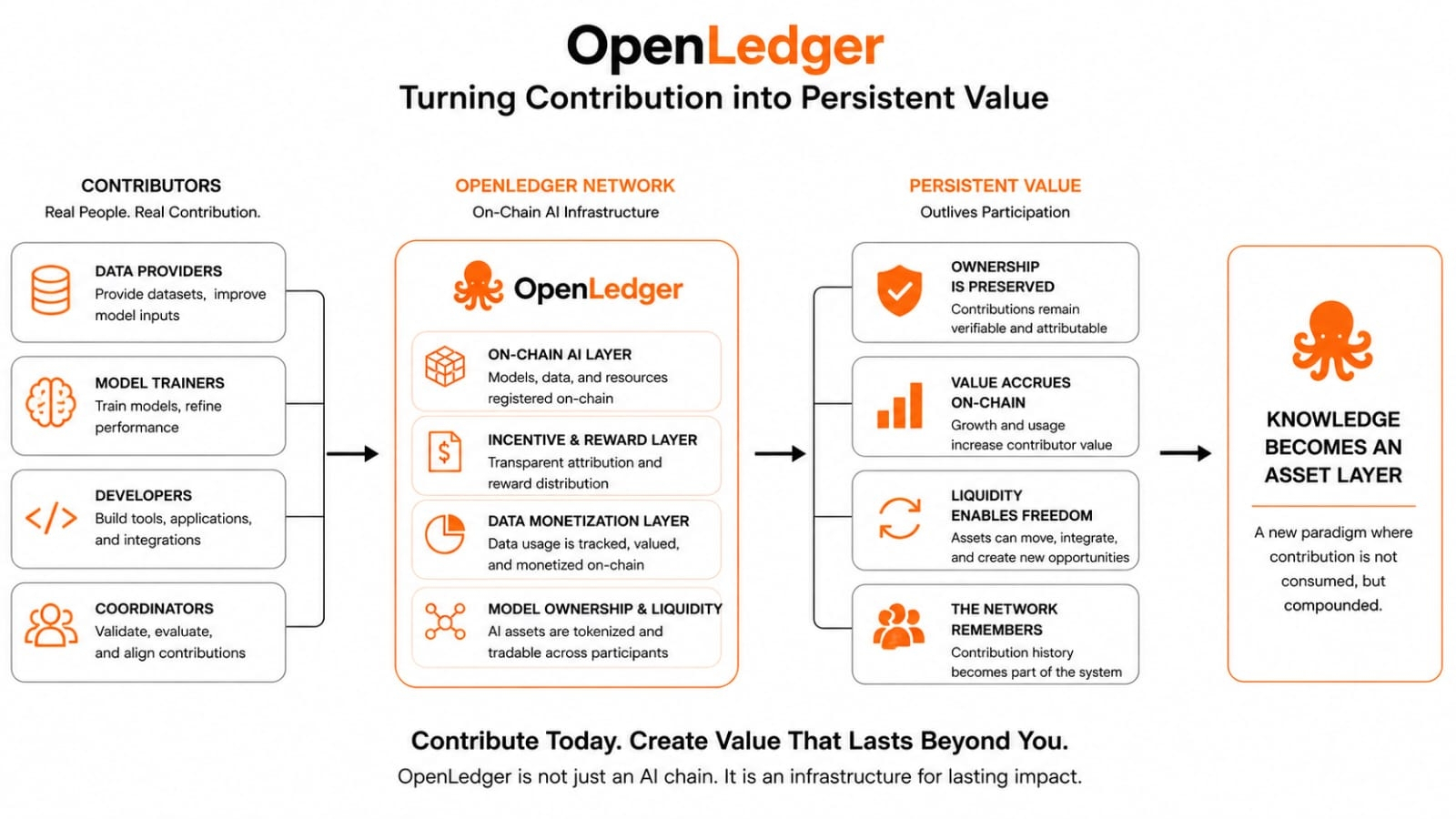
I have been looking at @OpenLedger less as an AI chain and more as a system trying to turn contribution into something persistent. The network is built around on chain AI infrastructure where contributors do not only interact with models. They feed them through data participation and coordination layers that can be tracked and rewarded.
The interesting part is what happens if those contributions survive longer than the contributor.
Most AI systems today have weak memory when it comes to ownership. People contribute data Train behavior and Improve outputs. Then value moves upward into the model layer. The contributor leaves with rewards at best.
OpenLedger seems to question that flow.
Its incentive design tries to keep contribution visible inside the network. Data monetization is not treated as an external event. It becomes part of the architecture. Model ownership and liquidity also matter here because AI value is not locked into one operator. It can move across participants.
I keep wondering whether this opens the door to something bigger.
Not token inheritance, Knowledge inheritance.
Imagine years of domain data contribution. Agent deployment activity. Model coordination work. Wallet linked participation history. Smart contract connected ownership rights. If all of that exists on chain then theoretically it stops being temporary labor.
It starts looking closer to digital estate.
OpenLedger already has pieces that make this thought possible. The blockchain architecture records participation. Ethereum compatibility keeps assets and interactions connected with existing ecosystems. Wallet integration gives identity continuity. Smart contracts create transfer logic.
The question becomes whether AI contribution itself can become transferable wealth.
Could a family inherit productive AI assets built through OpenLedger participation?
Maybe.
But I also think this idea runs into difficult problems fast.
Data quality is one of them.
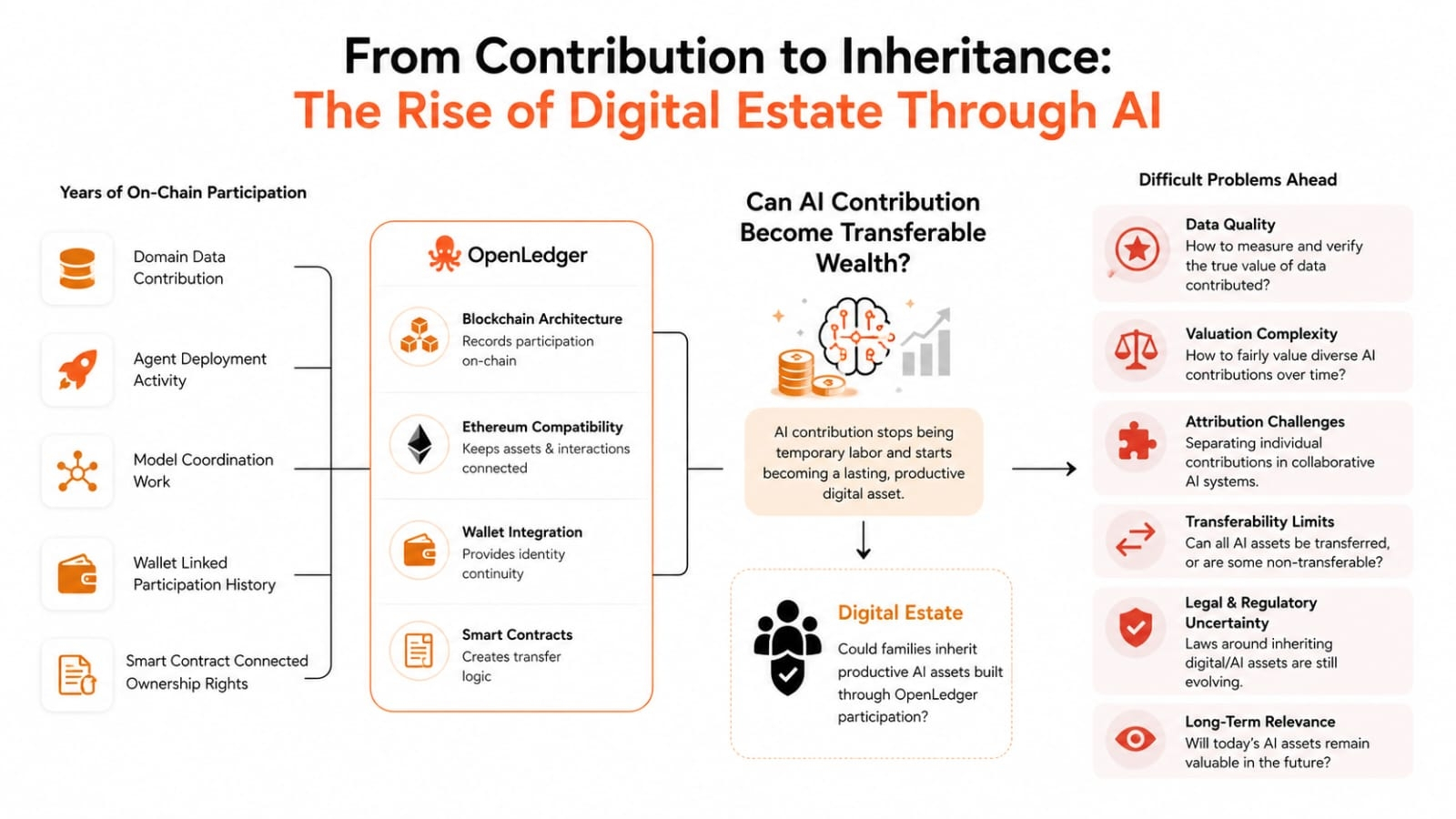
If contributors are rewarded then incentive pressure rises. People optimize systems. They chase returns. OpenLedger knows this because the entire network depends on participation economics. The challenge is whether quality survives once contribution becomes financial inheritance.
Another issue is user behavior.
Do people actually want ownership?
I am not fully sure.
Crypto talks about ownership all the time but many users still move toward immediate rewards. Farming is easier than building. Speculation is easier than patience. OpenLedger asks for something slower. It assumes contributors care about long-term value capture.
The market has not always rewarded that mindset.
There is also the AI narrative risk.
Right now anything connected to AI attracts attention. But narratives fade. Infrastructure stays. I think OpenLedger matters more at the infrastructure level because it is trying to organize AI participation itself. Agent deployment,Contributor incentives, Model value Ownership paths those are structural questions.
The inheritance idea just exposes where that structure might lead.
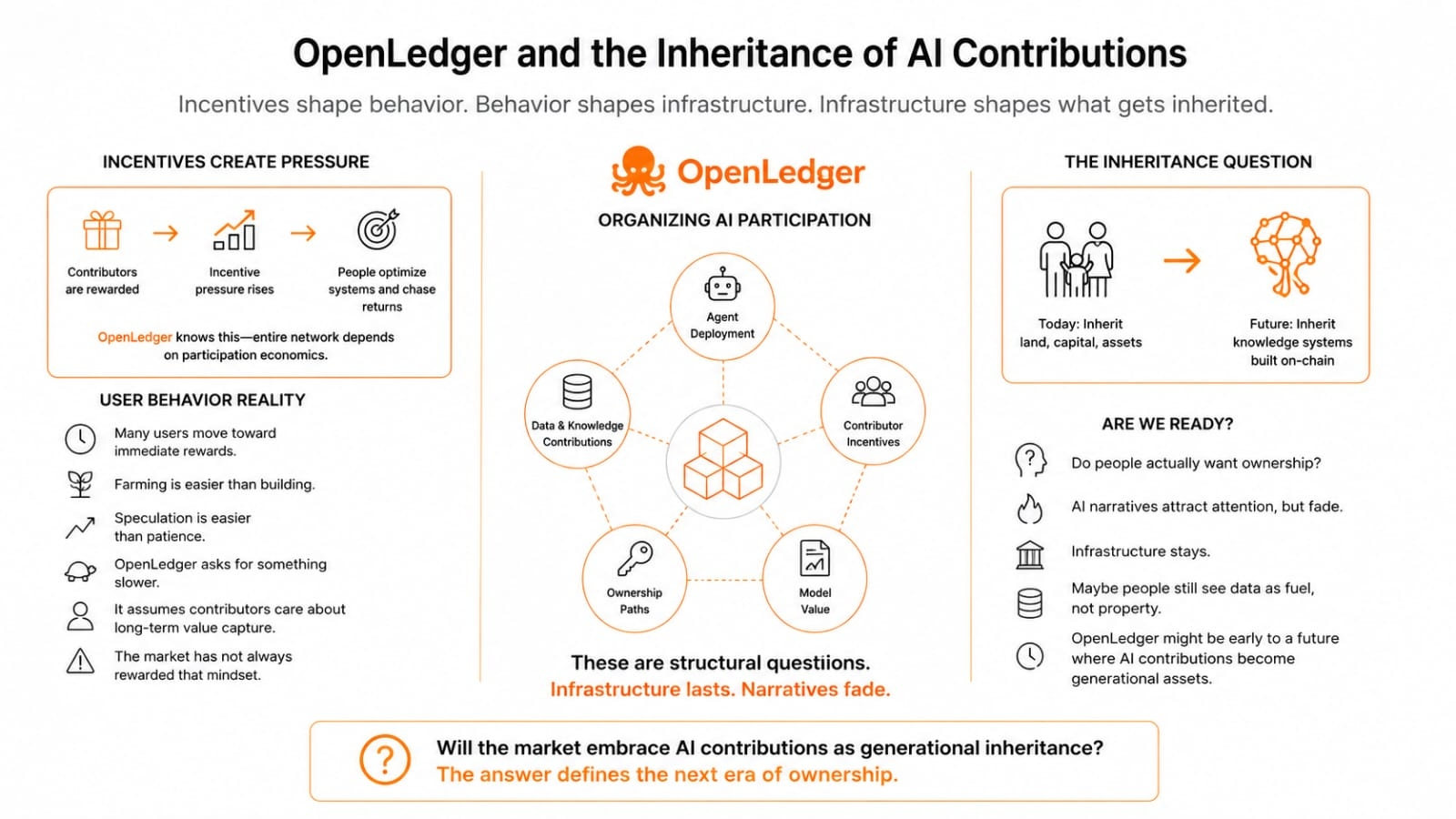
I do not know if the market is ready to think about AI contributions as generational assets yet.
Maybe people still see data as fuel instead of property.
Or maybe OpenLedger is arriving a little early to a future where families inherit not land or capital first but knowledge systems built on chain.
