
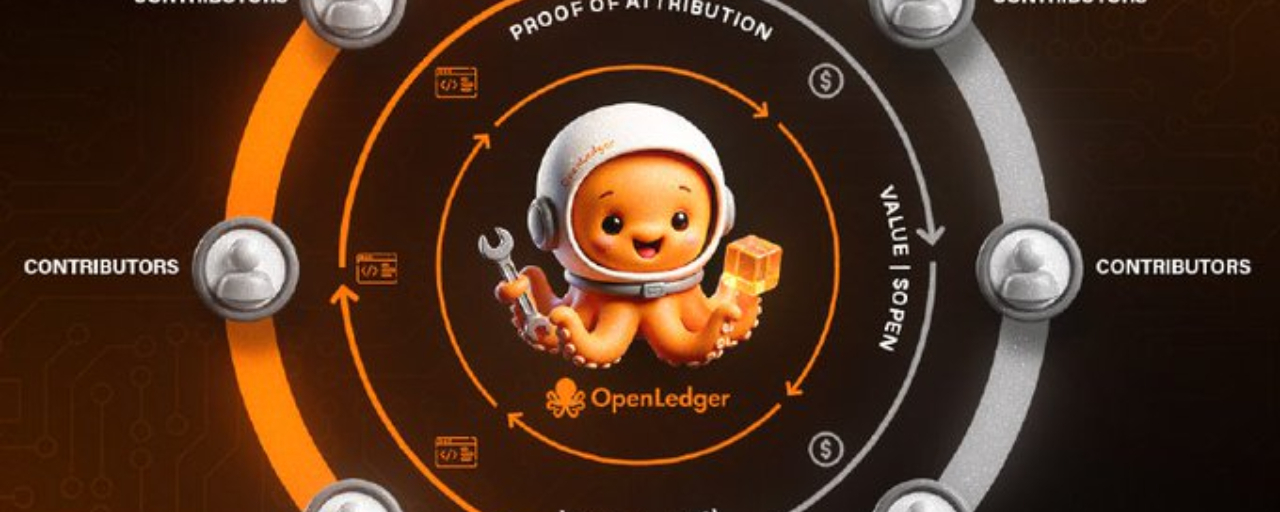

Staring at AI slowly becoming an inseparabIe part of our lives. It's everywhere, it's rising, it's risen, it's evolving, constantly moving and morphing into better versions of itself. Can't help but notice there is a little something that's missing, that's not quite resolved , in fact it's not so little, it's a very important part of it aII. We still haven't found a way to answer the question that imposes itself naturally: with all these AI models and achievements, who is holding the vaIue?
It's a question that is very real and it's been bugging me since the beginning. Imagine the process — one user comes up with the basic data, a coder on the other side of the screen perfects it into code, a third user or corporation loves the idea and actually builds it, and just like that millions of dollars are made. But who gets them? Can we track who did what accurately? What if three users had a similar idea — how do we know which one got perfected? See my point? It's a true mess of intertwined actions that for now we still can't track accurately.
And this is exactly where @OpenLedger comes into the picture.
This is one of the core problems they want to solve. What OpenLedger is building is far from "just another AI blockchain" The part that separates them is the Attribution Layer, and more specifically their Proof of Attribution protocol. The data provenance situation right now is at the point of total mess. We hear every day about some company that got sued or accused of training models on unverified data or using someone else's model, and the worst part is there is no way to prove who is right and who is wrong. The ownership of an idea is very hard to track.
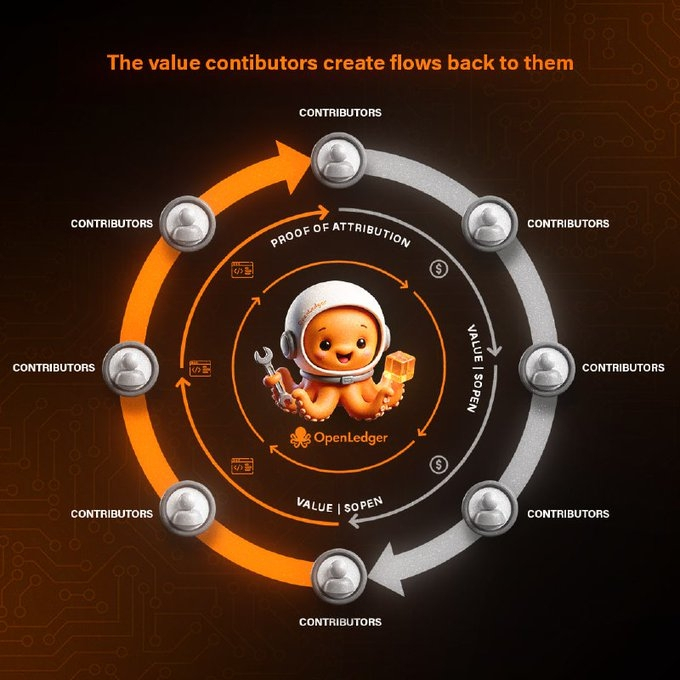
This is why #OpenLedger created the Proof of Contribution system. They built a decentralized ledger that doesn't just log transactions like any ledger - it actually calculates the worth of your data, your fine-tuning, your feedback, and automatically rewards you through the $OPEN token every time your contribution is used. They also built Datanets : community-owned data networks with verified provenance, and ModelFactory, a no-code dashboard where anyone can fine-tune and test AI models. On top of that, OctoClaw just launched : their AI agent that automates and executes complex on-chain workflows in real time, connecting research, execution, and automation in one place.
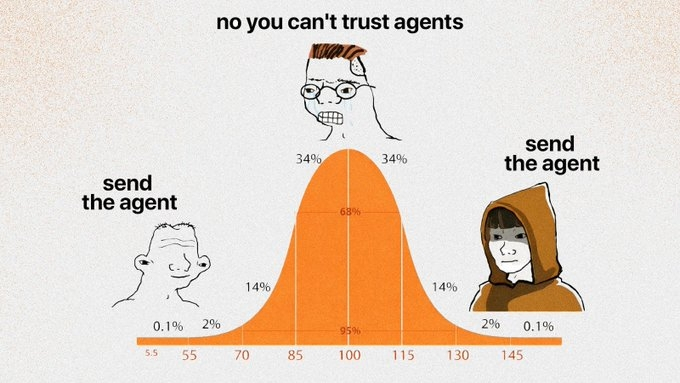
What is still not fully resolved is: what if this solution adds too much weight? What if it bumps up the gas fees or slows down the process? Then it makes your life harder instead of easier and the idea is dead before it started. So the challenge now is for OpenLedger to make the tracking effective, automatic, cheap and even invisible to the user - this is how they would become the DeFAI engine of tomorrow's AI economy.
If they don't deliver, it will be just another beautiful theory...
