
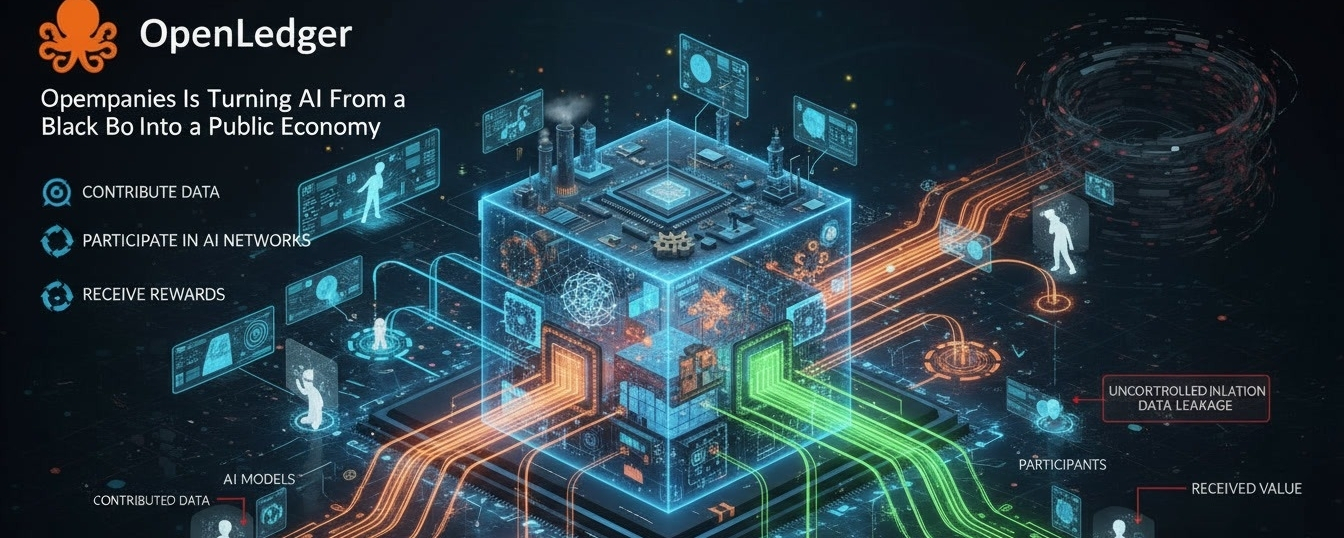

I keep thinking about how comfortable people became with not knowing where AI value actually comes from. Everyone talks about the models. The outputs. The speed. The billion dollar valuations appearing out of nowhere. But very few people stop and look underneath long enough to ask what the machine is really built from in the first place.
It reminds me of those restaurants where the kitchen stays completely hidden behind a wall. Customers only see the finished plate arriving at the table. Eventually people stop asking where ingredients came from, who prepared the food, or how the whole thing operates behind the scenes. They just consume what shows up.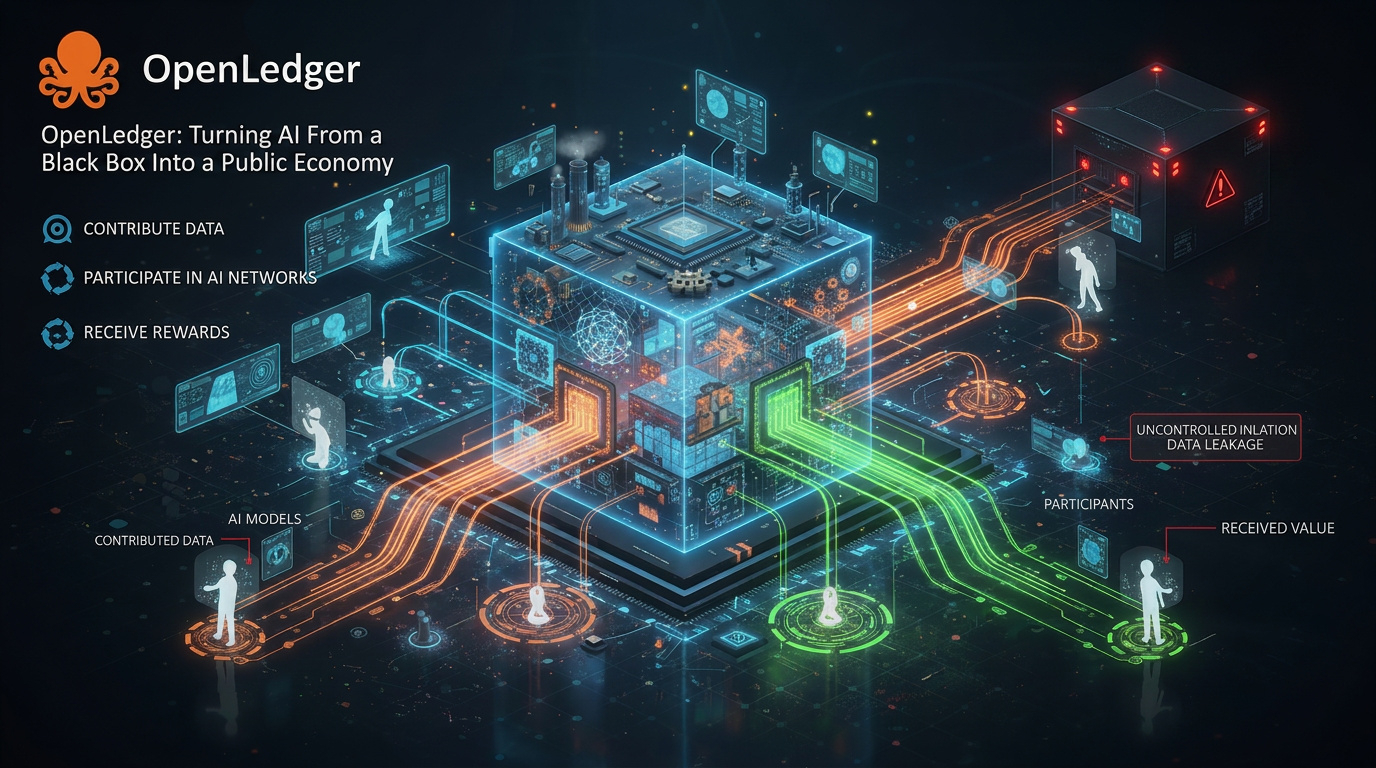
AI started feeling like that.
And honestly, for a while, most users accepted it because the technology still felt experimental. The outputs were inconsistent enough that people treated the entire industry like a giant public demo. But somewhere during the last two years, the tone changed. AI systems became commercially useful fast enough that the hidden structure underneath suddenly started mattering more.
That’s partly why OpenLedger feels interesting to me.
On the surface, the project looks relatively simple. People contribute data, AI activity, models, or useful participation connected to the network, and value flows back toward contributors instead of disappearing upward into a closed company structure. Crypto users understand that logic quickly because we’ve already spent years around systems built on participation and incentives.
But after watching crypto infrastructure evolve for a long time, I don’t think the visible reward layer is the important part here.
The accounting layer is.
Who contributed something useful. Where the contribution came from. Whether value can stay attached to the people improving the system instead of becoming invisible the second a platform reaches scale.
That invisible separation became normal across the AI industry very quickly.
From my experience using AI tools daily now, most people still interact with these systems as if intelligence appears out of thin air. Ask a question. Generate an image. Improve some text. Move on with the day. What gets ignored is the enormous amount of human behavior quietly sitting underneath every useful output. Conversations. Corrections. Images. Preferences. Reactions accumulated over years.
OpenLedger seems to be pushing directly into that hidden area.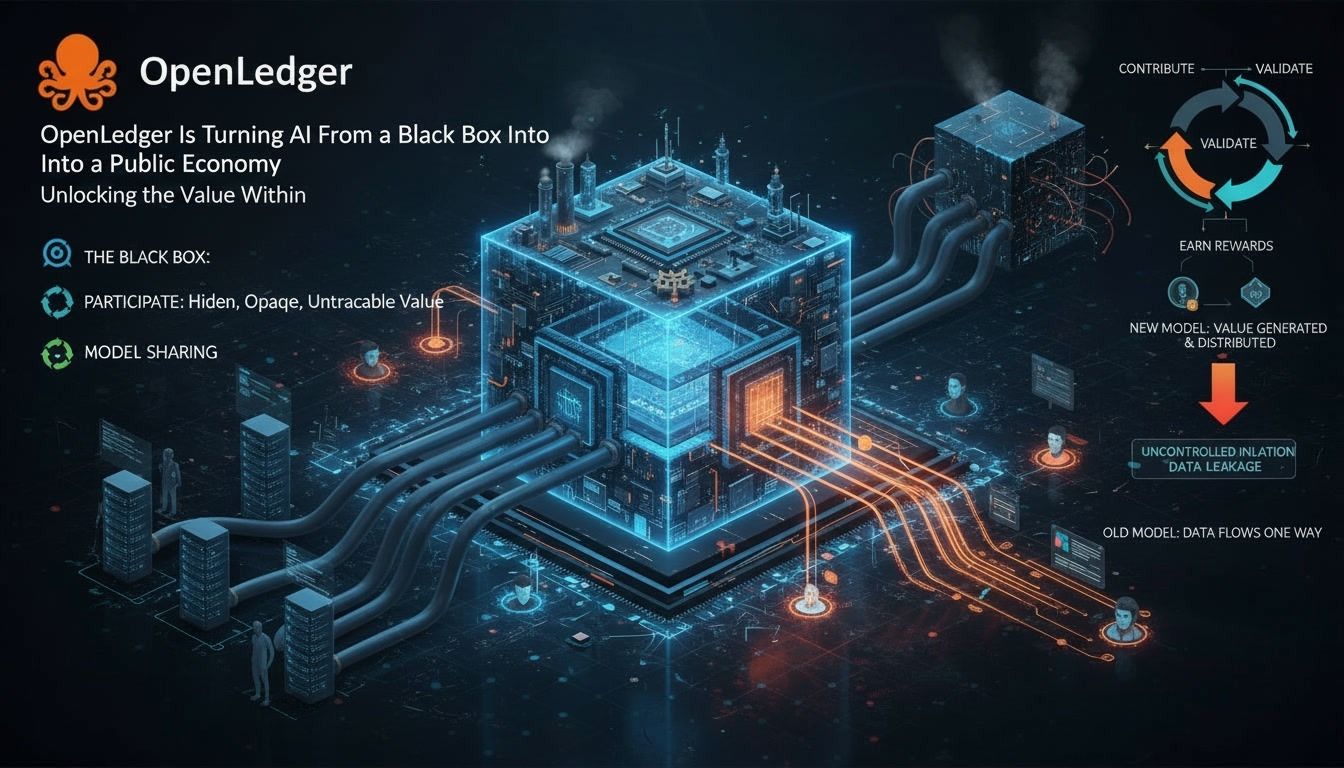
Not by trying to stop AI development. That would make no sense at this point. AI is already becoming infrastructure the same way cloud computing quietly became infrastructure years ago. Most people do not think about cloud systems anymore because they sit underneath daily digital life invisibly. AI is probably moving toward the same place.
The more important question is who owns the economic layer surrounding it.
That changes the conversation completely.
Because once contribution becomes measurable, even imperfectly, behavior changes naturally. People stop treating their data like meaningless internet exhaust. Smaller communities become more protective of the knowledge they generate together. Contributors start asking whether the systems learning from them should remain permanently closed while the economic upside concentrates into fewer hands.
A few years ago those questions sounded ideological.
Now they sound financial.
That shift matters.
Crypto actually prepared people for this discussion earlier than most industries did, although not always successfully. A lot of older projects talked endlessly about ownership while quietly rebuilding the same centralized power structures underneath. Governance theater everywhere. Endless token emissions pretending to be community alignment. Then markets turned, incentives collapsed, and most users realized participation alone does not create fairness automatically.
OpenLedger feels more grounded than that to me because it focuses less on symbolic decentralization and more on visible contribution.
That distinction is important.
In normal money terms, the logic is pretty simple. If your behavior helps create recurring value for a system, eventually you expect some visible relationship to the upside generated from it. Not charity. Not marketing rewards. Actual economic recognition tied to participation.
AI companies became extremely valuable partly because they learned how to aggregate human behavior at enormous scale before most people understood the value of their own digital activity.
That aggregation layer became the real business.
And for years it mostly operated like a black box. Inputs disappeared inside giant systems. Outputs came back polished enough that users rarely questioned the structure in between. But early signs suggest that opacity is becoming harder to maintain as AI money grows larger and regulation quietly matures around it.
That is another thing people misunderstand sometimes.
Clearer rules around sourcing, attribution, and data rights probably help projects like OpenLedger more than they hurt them. Serious enterprise systems cannot operate forever on vague foundations once real financial exposure enters the picture. Eventually companies want cleaner accounting around where intelligence comes from and who contributed to it. Not because morality suddenly became fashionable. Because uncertainty becomes expensive.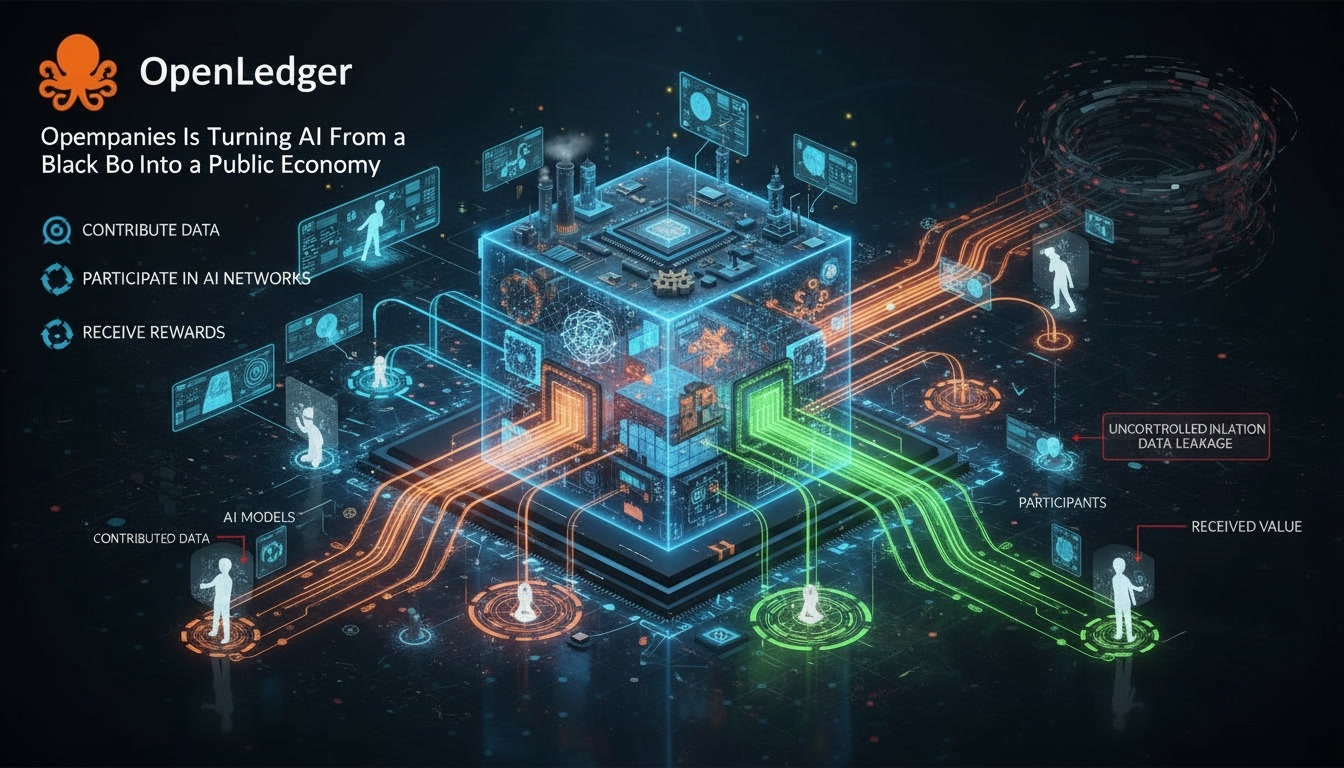
That creates room for infrastructure focused on attribution from the beginning.
Still, I think the hardest part here is cultural, not technical.
Most people are deeply used to free platforms extracting value quietly in the background. The internet trained users into that arrangement slowly over decades. Upload everything. Share everything. Interact constantly. In exchange you receive convenience, visibility, entertainment, connection. The economic layer stays mostly hidden from view.
AI accelerated that model dramatically.
Now almost every interaction online can become training material somewhere. That changes the texture of participation whether people realize it or not. The internet stopped being just communication infrastructure. It became behavioral infrastructure feeding machine intelligence continuously underneath the surface.
OpenLedger is interesting because it treats that behavioral layer as economically visible instead of pretending it does not exist.
And from my own workflow recently, I can already feel smaller changes happening psychologically. People are becoming more selective about what they share publicly. Private datasets suddenly carry more weight. Niche communities with high quality information are realizing their discussions may hold long-term value beyond the immediate conversation itself.
That changes incentives.
Not overnight. Probably not cleanly either. Crypto still has a habit of turning every useful mechanism into a speculative game eventually. It is still unclear how projects like OpenLedger maintain alignment once larger capital flows enter aggressively. Systems built around contribution can still become distorted if financial incentives overpower usefulness.
But even imperfect shifts matter.
Because once users start seeing AI as an economy instead of pure technology, the assumptions underneath the industry begin changing permanently. The conversation moves away from magical intelligence appearing from nowhere and toward the human network quietly feeding these systems every day.
That reframes the entire sector.
And honestly, that may end up being OpenLedger’s real importance long term. Not simply building another AI protocol, but making the hidden labor underneath AI visible enough that people stop treating extraction as the default setting of the internet.
