
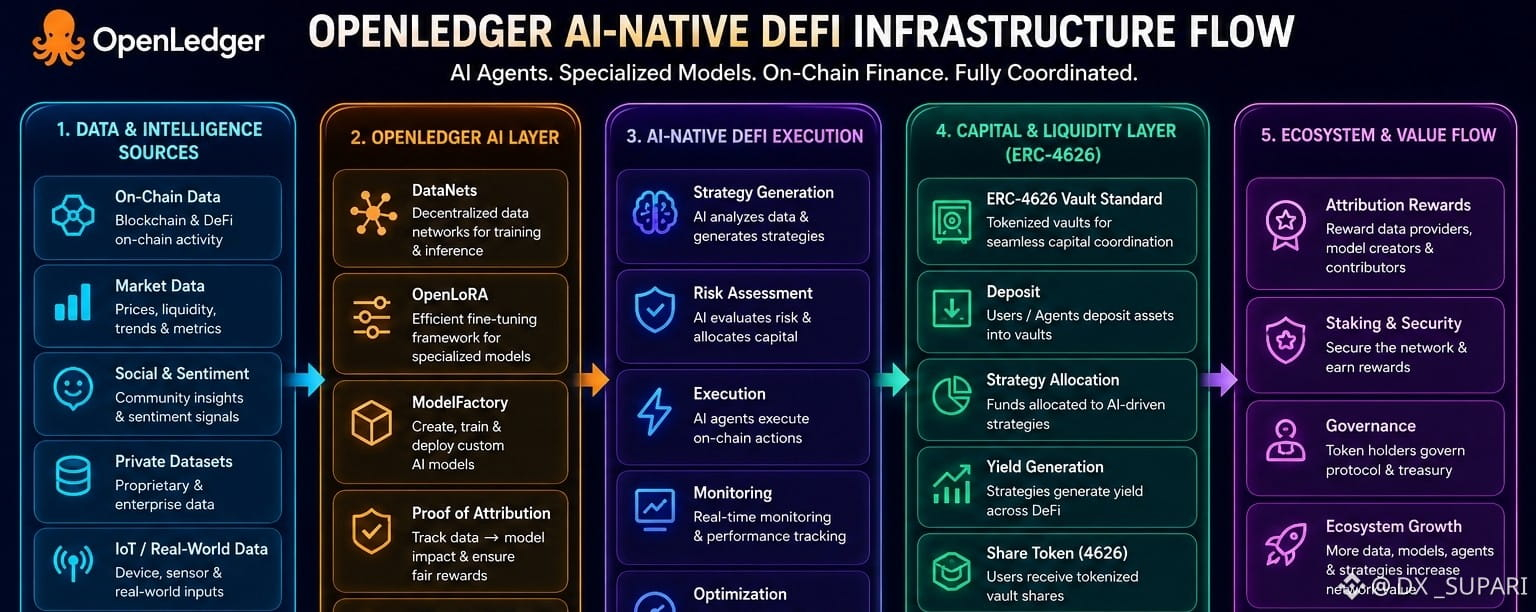
The conversation around artificial intelligence and blockchain is evolving fast, but very few projects are actually building infrastructure that feels designed for the future. Most AI related crypto narratives still focus on hype, speculation, or simple automation tools. OpenLedger, however, is starting to stand out for a completely different reason. Instead of chasing short-term excitement, the project appears focused on building an ecosystem where AI models, data, and autonomous agents can function as real economic participants inside blockchain networks.
Today’s growing attention around OpenLedger is not only about another token entering the AI sector. It is about the idea that AI itself may eventually require an entirely new financial layer. As AI systems become more capable, they will need ways to access liquidity, monetize intelligence, coordinate with other systems, and interact with decentralized applications without relying on centralized control. This is exactly where OpenLedger is positioning itself.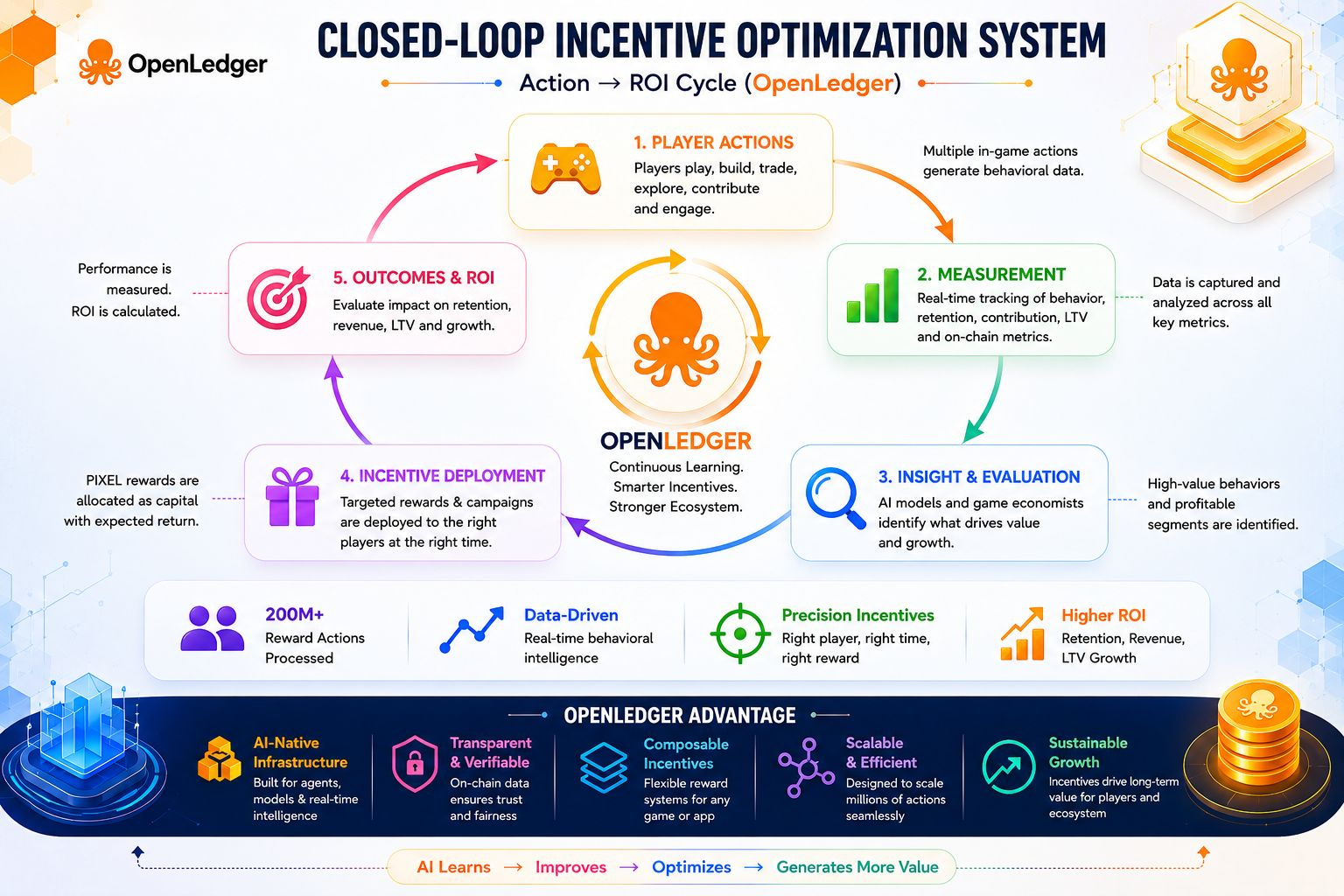
One of the most interesting developments surrounding OpenLedger is its focus on unlocking liquidity for AI driven assets. Traditionally, data and AI models have existed inside closed ecosystems controlled by large companies. OpenLedger introduces a different vision where data contributors, model creators, and AI agents can all participate in a decentralized economy. This changes the relationship between AI and ownership because intelligence itself starts becoming a productive on-chain asset instead of remaining locked behind centralized platforms.
The architecture being discussed around OpenLedger also suggests that the project is thinking long term. Features connected to ERC-4626 vault integrations, AI-native liquidity systems, and composable financial layers indicate a much deeper infrastructure play than many people initially realized. Rather than building another short-lived AI token narrative, OpenLedger seems to be designing a foundation where autonomous systems can operate economically at scale.
Another reason why the project is gaining attention is because the market is beginning to understand that AI agents will eventually require their own economic coordination mechanisms. Autonomous systems cannot rely forever on traditional financial infrastructure that was designed for humans only. AI agents interacting with DeFi, allocating capital, processing data, and executing strategies will need blockchain environments optimized for machine driven participation. OpenLedger appears to recognize this shift earlier than many other projects in the space.
Makes the narrative even stronger is the timing. AI adoption globally is accelerating faster than most industries expected. At the same time, blockchain technology is searching for the next major utility wave beyond speculative trading. OpenLedger sits directly between these two powerful trends. By connecting AI intelligence with decentralized financial infrastructure, the project is entering a position where it could potentially benefit from both industries simultaneously.
There is also a growing belief inside crypto communities that future digital economies may not only be powered by humans. AI agents could eventually manage assets, provide services, generate models, and coordinate economic activities independently. If that future begins to materialize, networks capable of supporting autonomous economies may become extremely important. OpenLedger’s vision aligns closely with this possibility, which is why more people are starting to pay attention to its ecosystem development.
Another important aspect is how OpenLedger focuses on monetization rather than simple experimentation. Many AI projects talk about innovation, but very few explain how value actually flows through the system. OpenLedger is attempting to create a framework where contributors, developers, data providers, and AI systems themselves can all interact economically. That creates a much stronger long-term narrative because sustainability in blockchain usually comes from utility and participation rather than temporary hype cycles.
The rise of AI native finance could eventually become one of the biggest transformations in crypto over the next several years. Markets are already beginning to explore what decentralized AI infrastructure might look like, and OpenLedger is increasingly appearing in those conversations. While the sector remains early and highly competitive, the project’s direction suggests it is aiming far beyond traditional blockchain applications.
As more updates continue emerging around OpenLedger, interest in the ecosystem is likely to keep growing. The combination of AI infrastructure, decentralized finance, liquidity systems, and autonomous economic coordination creates a narrative that feels larger than a typical crypto trend. Whether OpenLedger ultimately becomes a dominant player or not, the project is already helping push the conversation toward what the future relationship between AI and blockchain could actually look like.
OpenLedger is positioning itself as more than just another AI crypto project. It is presenting a vision where intelligence becomes financially active, autonomous systems become economically connected, and blockchain evolves into a foundation for machine driven economies. In a market filled with short term narratives, that long term vision is exactly why #OpenLedger is beginning to attract serious attention.
