
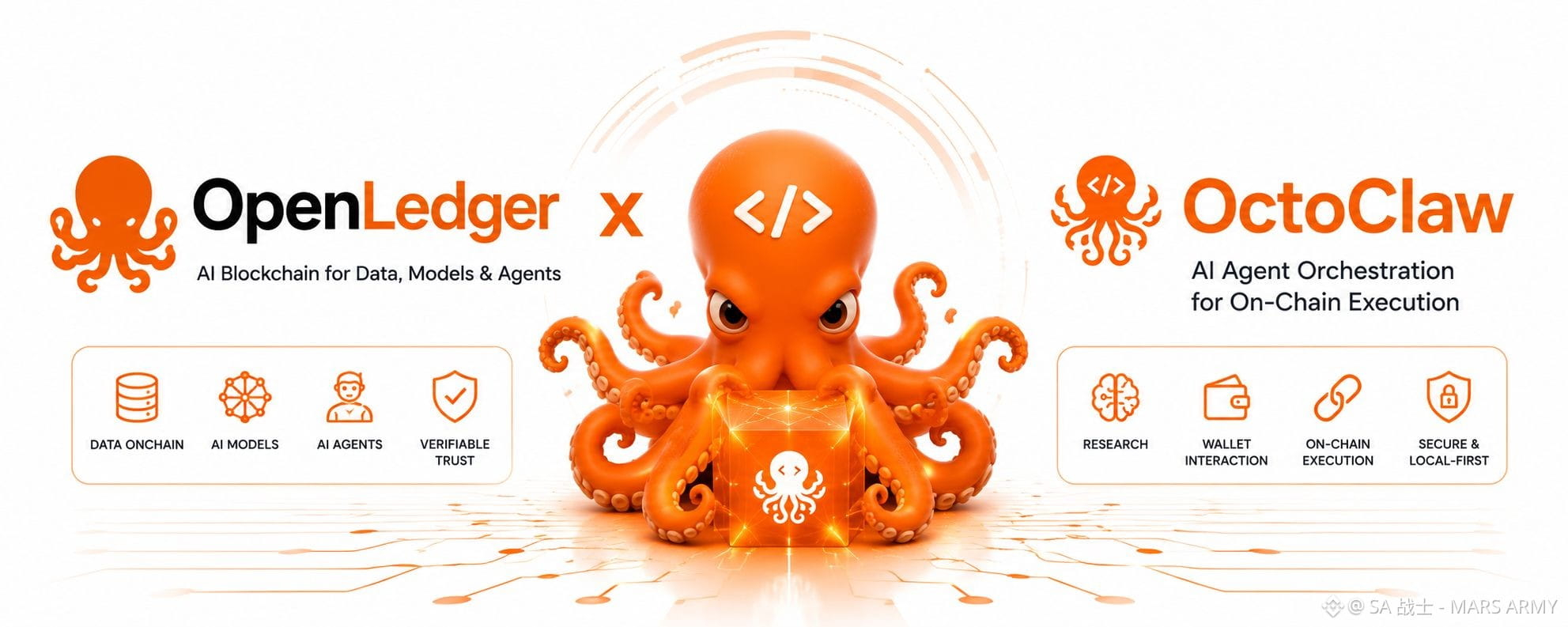
I was having my Tea and reading docs of @OpenLedger when I fell into a rabbit hole around OctoClaw, and what got my attention was the texture underneath the usual AI agent pitch. Most crypto automation tools today still depend on remote dashboards, browser wallets, API relays, and a strange amount of trust for systems supposedly designed around self-custody. OctoClaw seems to be pulling in the opposite direction. Local-first. Root-level installation on macOS. Multi-LLM orchestration running directly on the machine instead of bouncing sensitive execution logic through somebody else’s cloud. That difference sounds subtle until you think about what crypto execution actually means when markets are moving 6% in an hour and wallets can’t afford hesitation.
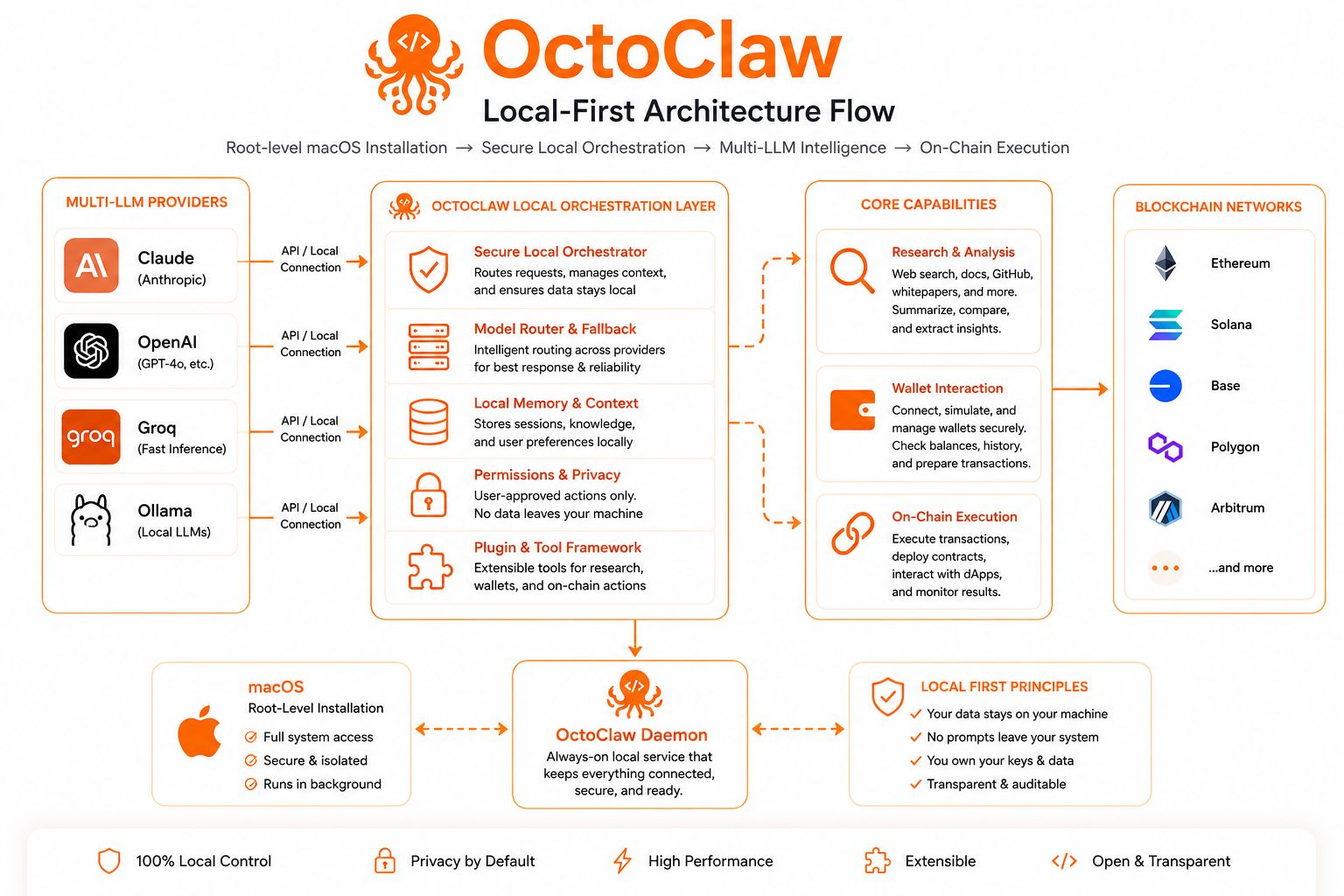
On the surface, OctoClaw looks like another desktop AI agent. You install it on macOS, connect a model provider like Anthropic Claude, OpenAI, Groq, or even Ollama for fully local inference, and it starts behaving like an execution layer between research and action. But underneath that, the architecture reveals something more important. It is trying to collapse the gap between analysis and on-chain execution into one continuous loop.
That matters because crypto traders and researchers still waste huge amounts of time context-switching. One tab for X sentiment, another for token flows, another for governance proposals, another for execution. Meanwhile, volatility doesn’t wait. Bitcoin crossed back above the $100,000 region this month while Ethereum ETF inflow discussions pushed network activity sharply higher, and the average time between narrative formation and market repricing has compressed dramatically. Some meme coins now move 20% to 30% within minutes of coordinated social traction. Understanding that helps explain why OctoClaw is leaning so heavily into real-time orchestration instead of static dashboards.
The local-first design is the key. When I first looked at this, I assumed it was mostly branding language, but the root-level installation changes the trust model entirely. Instead of routing prompts, wallet actions, and API credentials through a centralized intermediary, OctoClaw keeps orchestration close to the machine itself. Claude is reportedly the recommended provider because of its larger context handling and stronger reasoning consistency during chained research tasks, but the support for OpenAI, Groq, and Ollama tells you something deeper. They are designing around optionality, not dependence.
That creates another effect. Different models become specialized workers instead of one monolithic brain. Claude can handle long-context reasoning around governance proposals or tokenomics. Groq can accelerate lightweight inference because its latency is extremely low. Ollama allows fully local models for users who do not want sensitive wallet behavior leaving their machine at all. Surface level, that sounds like convenience. Underneath, it is an attempt to build redundancy into AI execution itself.
The workflow orchestration is where things become interesting. A typical sequence might start with the agent monitoring liquidity shifts across Solana meme coin pairs, then scraping governance chatter, summarizing sentiment changes, checking wallet concentration, and finally preparing an on-chain transaction path before the user approves execution. What users see is one flowing interaction. Underneath, multiple models, APIs, and local permissions are coordinating simultaneously.
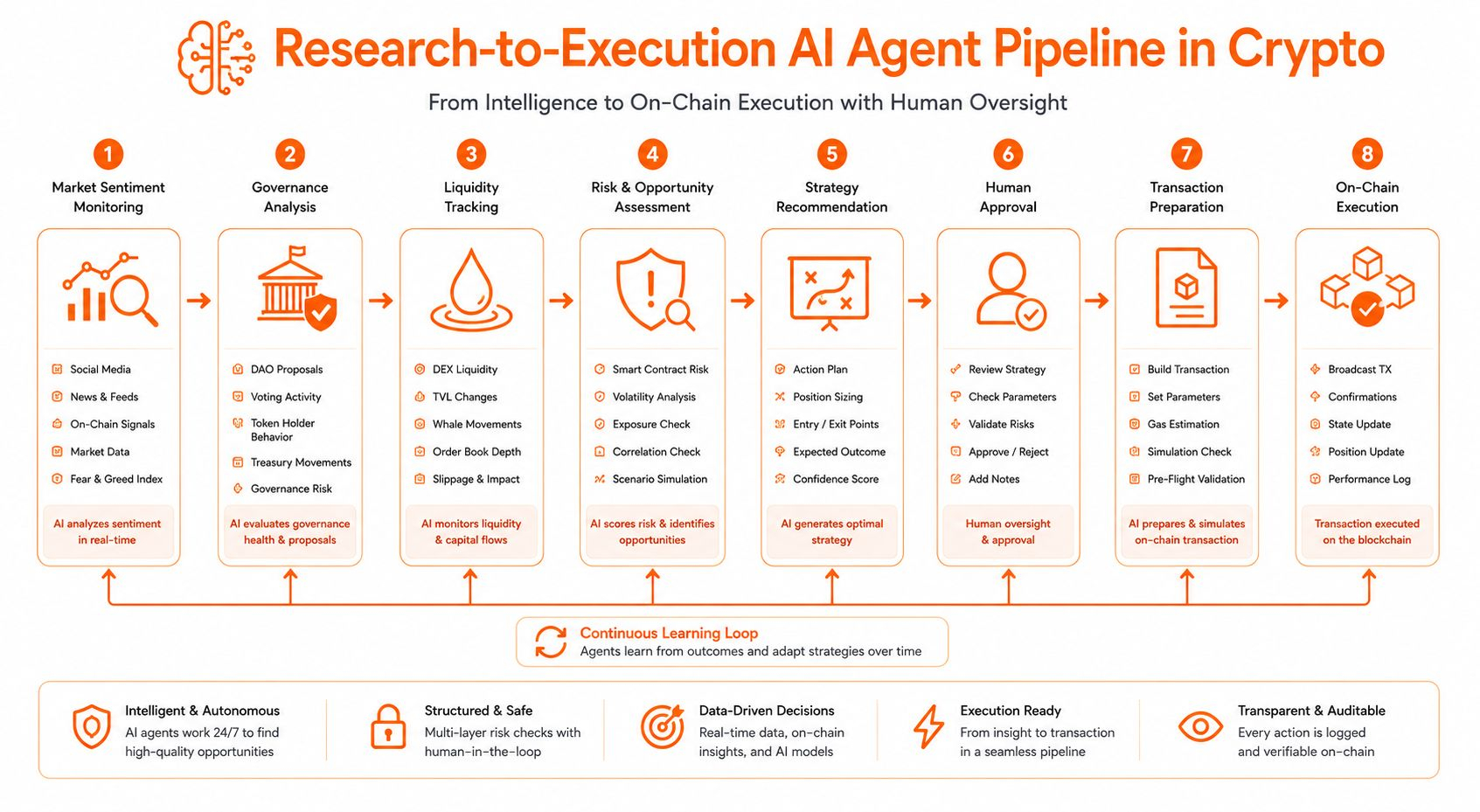
Of course, this creates risk too. Giving an AI agent root-level visibility and execution capability introduces a new attack surface. Even if keys remain local, prompt injection attacks, malicious contract approvals, and poisoned data feeds remain very real problems. Early signs suggest OctoClaw understands this because most demonstrations still keep humans inside the approval loop. That human checkpoint feels quiet but important. Full autonomy sounds attractive until one bad contract drains a wallet in 14 seconds.
Meanwhile, the bigger pattern here is hard to ignore. AI agents are slowly moving from content generation into operational infrastructure. Crypto just happens to be the perfect testing ground because markets run 24/7, data is public, and execution is programmable. If this holds, the next wave of AI products probably won’t look like chatbots at all. They will look more like local operators sitting beside users, watching markets, interpreting signals, and acting with permissioned autonomy.
And maybe that is the real story underneath OctoClaw. Not that AI is entering crypto, but that crypto is becoming the first environment where AI agents can actually do work instead of just talking about it.
