
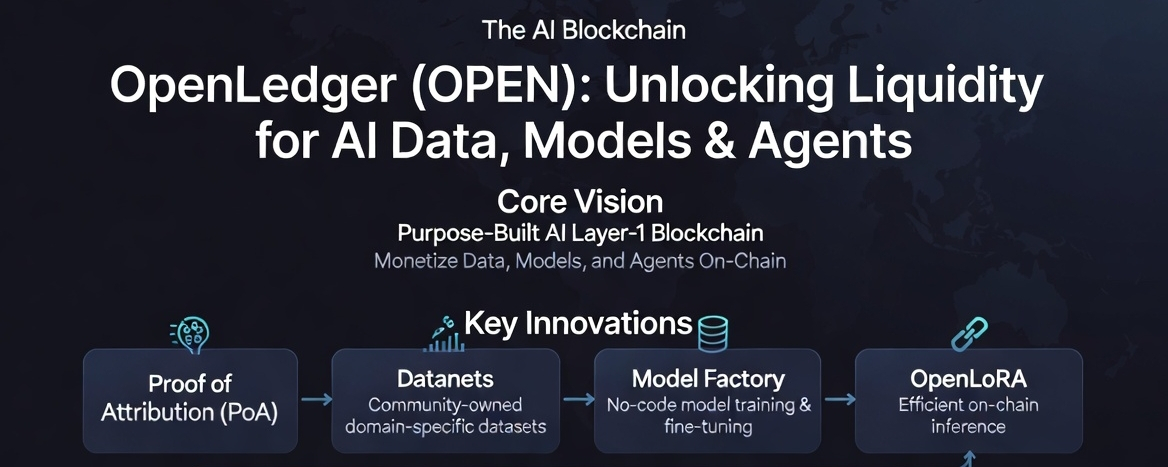
OpenLedger (OPEN) Thread
What fundamental questions does an AI-native Layer-1 raise when it tries to turn data, models, and agents into liquid, monetizable assets on-chain?
OpenLedger is a blockchain built specifically for decentralized AI, emphasizing verifiable attribution for contributions like data and compute. In this thread, I take a measured look at its current on-chain activity, market structure, place in the broader DeAI narrative, and the real risks worth watching. All data pulled from public sources.
On-chain signals currently show modest but steady usage in a still-young ecosystem. Daily fees are sitting around $1,895 over the last 24 hours and roughly $57,760 across the past 30 days, which points to consistent if limited demand for things like AI credits and datanets. Annualized fees hover near $705K. Notably, TVL remains at $0, suggesting the activity is driven more by actual usage and attribution rather than locked capital. Overall, it reflects early traction without broad capital commitment yet.
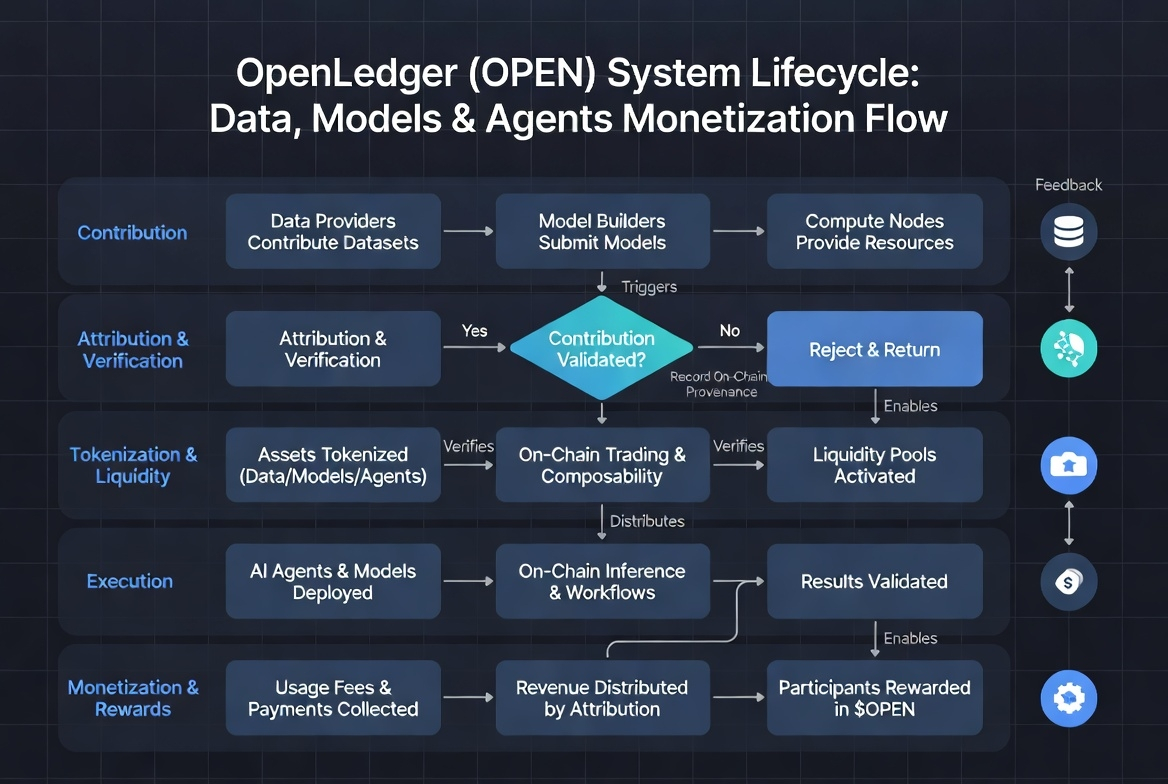
Looking at market structure, trading has been dominated by centralized exchanges. 24-hour volume has recently moved between $14M–$28M, with the vast majority (over 80%) coming from CEXs rather than DEXs. Circulating supply sits in the 215–290M range out of a 1B total supply, putting the FDV at roughly 4–5x the current market cap. Liquidity remains concentrated on major platforms like Binance. This setup tells me price discovery is still very much driven by centralized flows and retail/speculative interest rather than deep DeFi integration.
In the bigger picture, OpenLedger sits right at the crossroads of the growing DeAI narrative. It benefits from increasing demand for transparent, monetizable AI components at a time when regulators and users are questioning centralized model training and data practices. EVM compatibility and tools for easy data/model contribution are helpful tailwinds. That said, it faces stiff competition in the DeAI space, real challenges scaling actual AI workloads on-chain, and the usual crypto market sensitivity to macro liquidity shifts.
A few concrete risks stand out: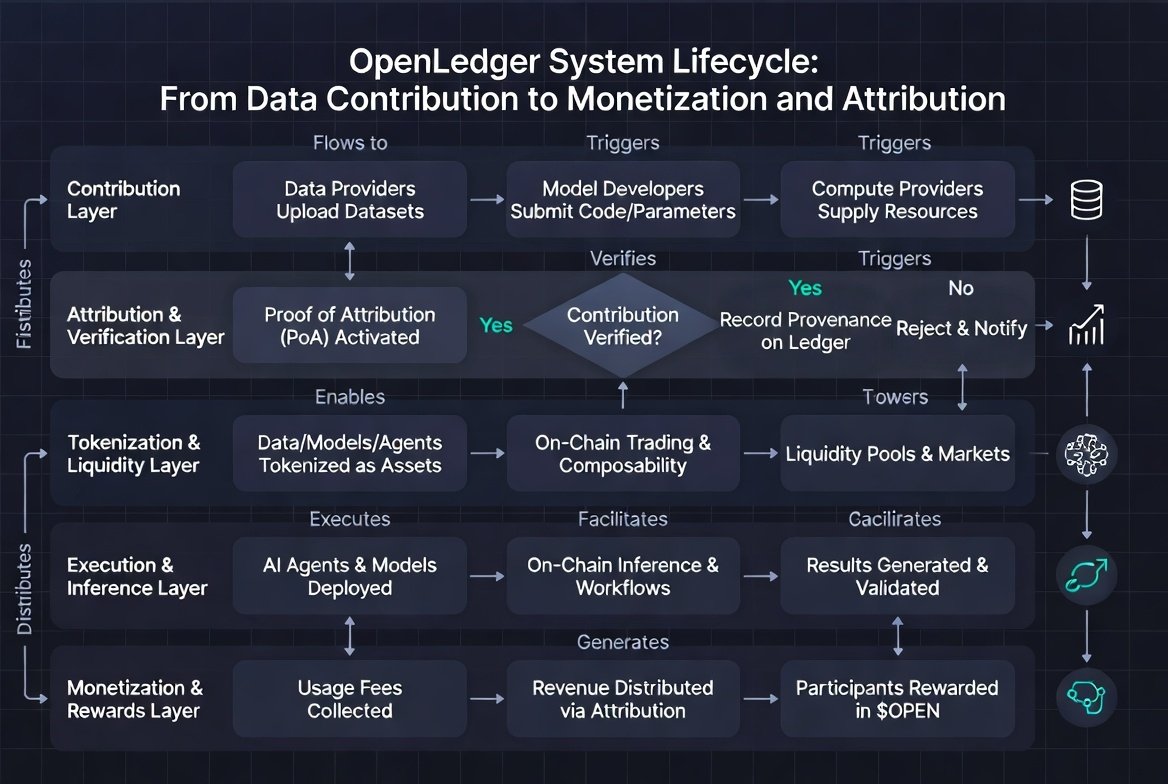
Technical activity remains light, with low TVL and modest daily fees around $1.9K, which raises questions about how well it would handle significantly higher usage.
Market structure is heavily CEX-dependent, making it vulnerable to shifts in centralized liquidity and market maker support.
Token unlocks for the team (15%) and investors (18.3%) with upcoming cliffs and vesting schedules could create measurable supply pressure later in 2026.
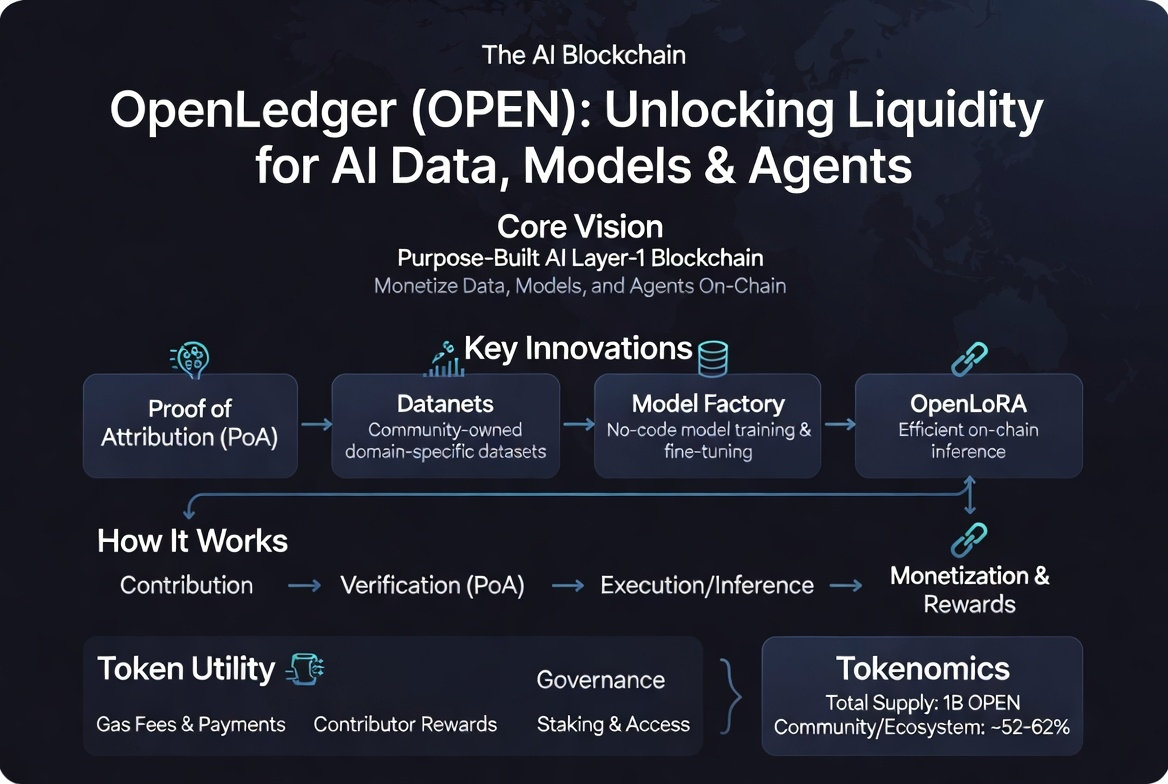
Putting it all together, OpenLedger shows focused development in a narrative with real long-term potential, but there’s still a noticeable gap between its ambitious vision and current on-chain scale. Its attribution system and AI-specific architecture give it clear differentiation, yet the modest metrics and future unlocks mean it deserves careful watching rather than immediate conviction. The strongest counterpoint is that genuine DeAI adoption could accelerate quickly if their integrations start delivering clear, verifiable value.
DYOR. This is not financial advice.
