
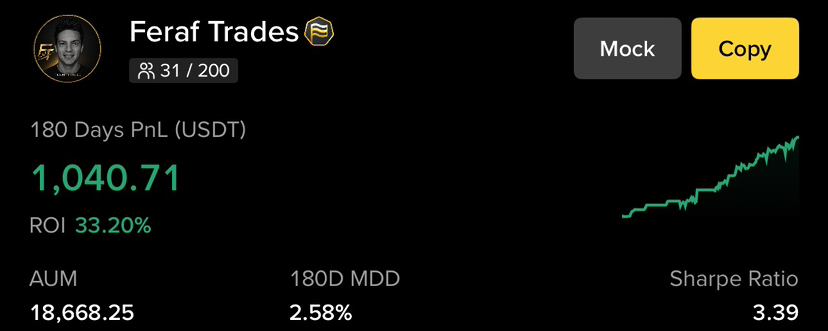
We’ve been talking a lot about copytrading, ROI, win rate, Sharpe Ratio, MDD…
…but what do these numbers actually mean?
And more importantly:
How useful are they REALLY for users and copiers? 👇🏽
(Photo 1)
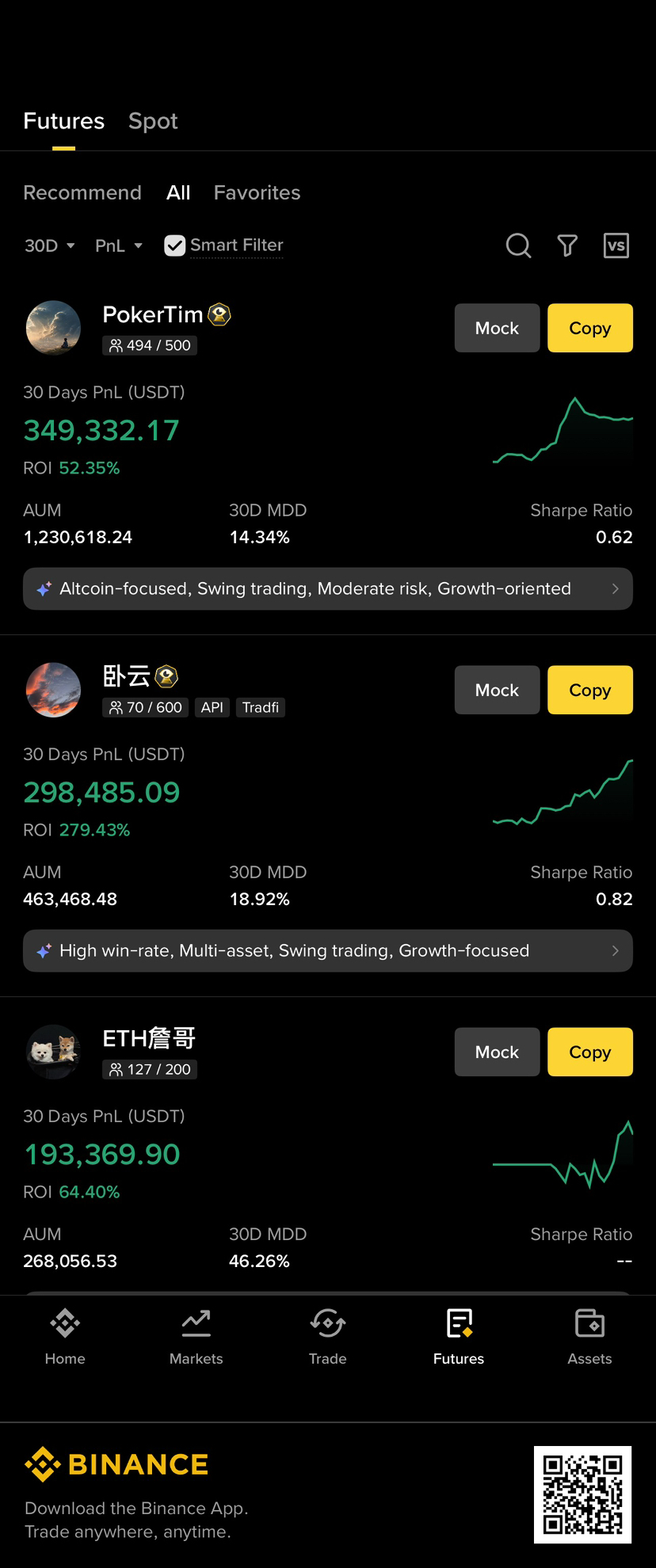
Most exchanges like Binance, Bybit, or other copy trading platforms will initially show traders filtered by:
• PnL
• 30D performance
• ROI
• MDD
• Sharpe Ratio
etc.
You can also change the timeframe:
7D / 30D / 90D / 180D / 360D
Personally, I recommend filtering by:
✅ ROI
✅ 180D or 360D performance
Why?
Because consistency matters much more than short-term hype.
And also because TIME matters.
A Lead Trader who has survived multiple market conditions is usually much easier to evaluate than someone who only performed well for a few weeks.
Some traders look amazing… until a real volatility event arrives.
When BTC dropped from around 122,500 to 101,500 on October 9th, 2025, many “top” Lead Traders completely disappeared.
Even some traders I personally considered good enough to diversify part of my own funds into got wiped out during that move.
That’s when you understand:
Surviving matters more than flexing short-term ROI.
(Photo 2)
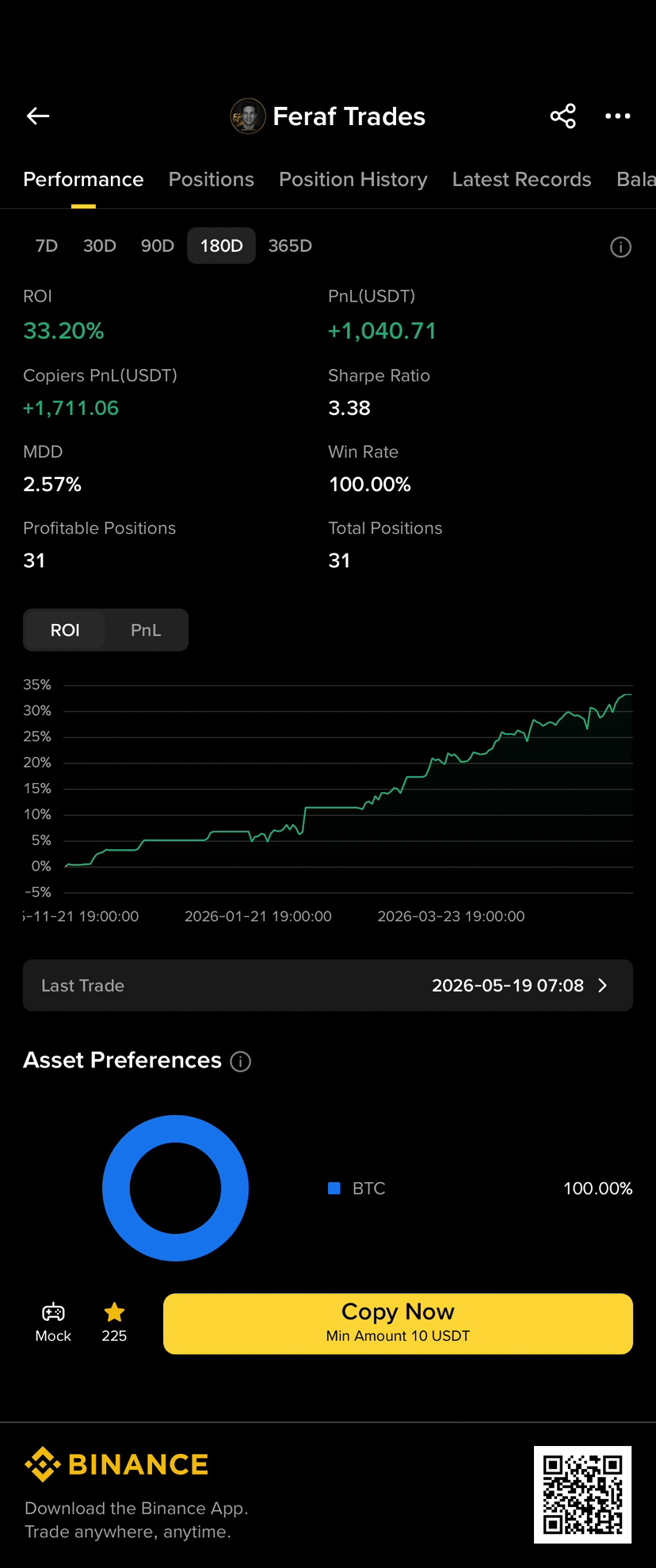
Once you enter a Lead Trader profile, don’t look only at the big green number.
You need to understand what each metric means:
• ROI
Return on Investment.
It shows how much the trader has grown their capital in percentage terms.
Example:
If someone starts with $100 and grows it to $150, that’s a +50% ROI.
High ROI is good, but alone it does NOT tell you how much risk was taken to achieve it.
—
• MDD (Maximum Drawdown)
This shows the biggest drop from a peak to a low point.
In simple words:
How much pain the strategy had to survive before recovering.
Example:
If an account goes from $10,000 down to $7,000 before recovering, that’s a 30% drawdown.
Usually:
• under 10% = very controlled
• 10-20% = acceptable/moderate
• 30%+ = aggressive/high risk
A trader making +100% ROI with 50% drawdown is VERY different from someone making +30% ROI with 5% drawdown.
—
• Sharpe Ratio
Risk-adjusted performance.
This measures how efficiently returns are generated relative to the volatility/risk taken.
In traditional finance:
• Sharpe Ratio above 1 = considered good
• above 2 = very strong
• above 3 = exceptional
That’s why many hedge funds and institutional portfolios care more about Sharpe than raw ROI.
Higher Sharpe usually means:
more consistency with less chaos.
—
• Win Rate
The percentage of trades closed in profit.
Example:
8 winning trades out of 10 = 80% Win Rate.
Useful, but dangerous if analyzed alone.
A trader can have:
• 90% Win Rate
…and still lose money if the losing trades are massive.
—
• Copier PnL
This shows how much money copiers are ACTUALLY making.
Very important.
Because the Lead Trader can be profitable while copiers:
• get worse entries
• pay more fees
• experience slippage
• or receive delayed execution
—
• Number of copiers
This shows trust and demand, but it is not enough by itself.
More copiers does NOT automatically mean:
better trader.
Sometimes it simply means:
better marketing.
—
• Trading history duration
The longer the history, the better.
A trader with:
180D or 365D of consistent results
is usually much easier to evaluate than someone showing only:
7D or 30D.
A trader doing 300% in 30 days means nothing if the risk was extreme or if copiers are not making money.
(Photo 3)
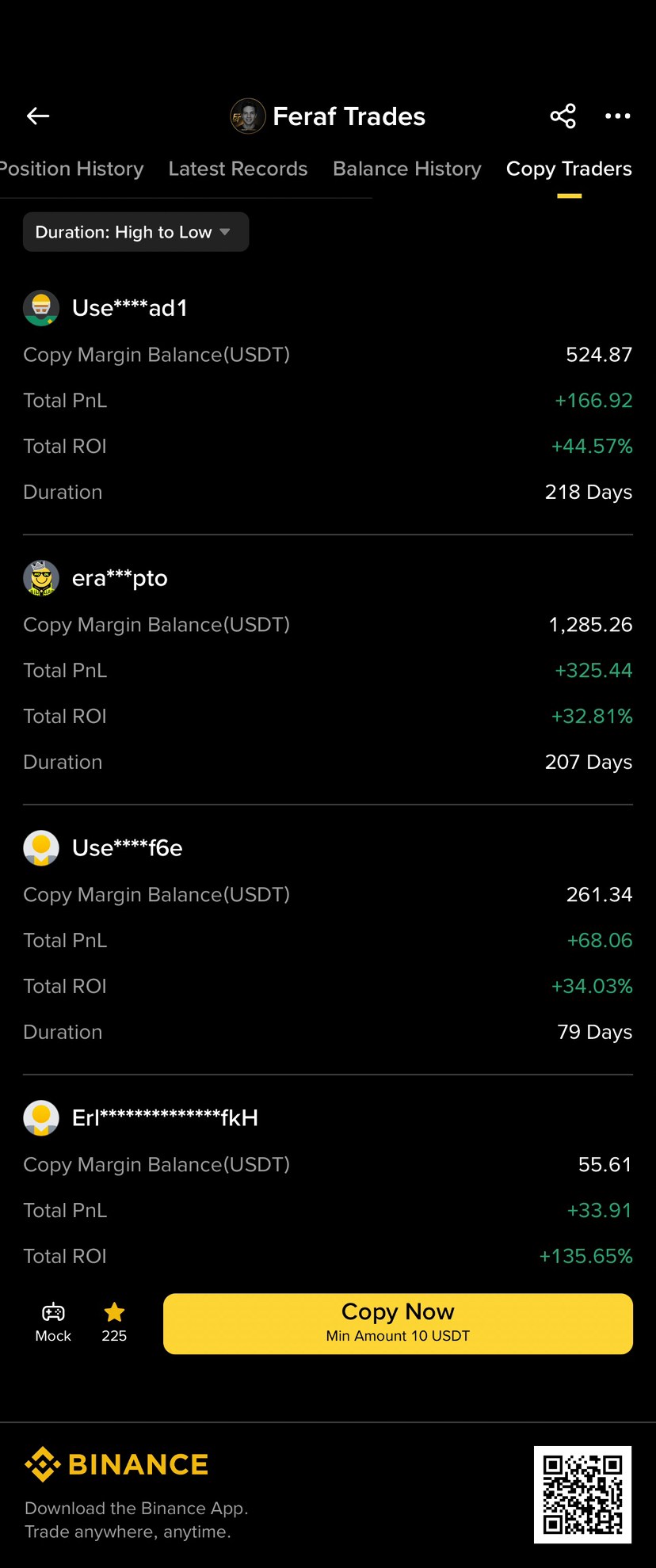
This is probably the MOST important section.
Check:
✅ how long copiers have stayed with the trader
✅ copier ROI over time
✅ consistency across long periods (+180D preferably)
Why does this matter?
Because copy trading execution is NOT identical to the Lead Trader execution.
This is the small text nobody explains 👇🏽
The Lead Trader may execute:
• limit orders
• market orders
• custom entries
BUT copiers usually receive a MARKET execution AFTER the Lead enters.
That means:
❌ different entry price
❌ different liquidation price
❌ different fees
❌ slippage
❌ delayed execution
So what happens?
Some “bot/quant/high leverage” traders can generate huge ROI for themselves…
…but their copiers may barely make money, make less than 10%, or sometimes even lose money because execution quality matters.
There are traders showing:
300%+ ROI in 180D
while their long-term copiers barely generated returns.
That’s a HUGE red flag.
A sustainable Lead Trader strategy should also work FOR THE COPIERS.
This is actually one of the reasons why, since becoming a Lead Trader, I intentionally give more space to:
• entries
• re-entries
• stop losses
• exits
If I were trading completely alone, I could probably trade much more aggressively or “sniper-like”.
But because copiers receive delayed market executions after my orders are filled, I need to leave enough room for them to:
• enter properly
• survive volatility
• re-enter positions
• and exit correctly as well.
That execution difference changes EVERYTHING in copy trading.
And finally…
If you don’t want to manually analyze everything:
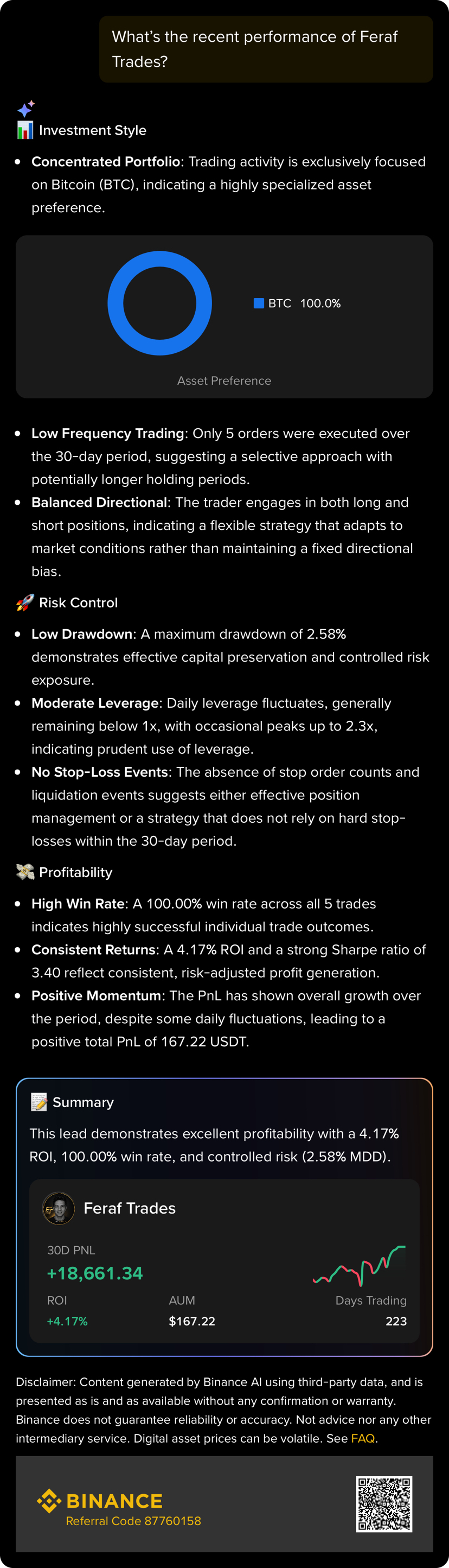
Binance AI Analysis (Photo 4) is actually becoming a pretty useful tool 😉🛸
BUILDING FREEDOM