
That’s been my main takeaway after spending the last year bouncing between chains, testing DEX routes, farming random incentives, and trying every “AI-powered” dashboard people keep posting about. Most of them stop at information. They summarize sentiment, scrape wallets, explain narratives, maybe point out trends earlier than Twitter does. Useful sometimes, sure. But when markets move fast, information alone rarely matters. Execution does.
That’s why @OpenLedger and the Octoclaw launch caught my attention more than I expected.
Not because I suddenly think AI agents will magically replace traders. I don’t. Honestly, most agent narratives still feel early and a little overhyped. But Octoclaw seems focused on something more practical: reducing the friction between decision-making and execution across chains.
And if you trade on-chain regularly, you already know friction is half the battle.
A lot of profitable setups die during the process itself. You bridge assets, wait longer than expected, gas spikes hit at the wrong moment, approvals fail, liquidity shifts before execution finishes, or some route suddenly becomes inefficient. Sometimes the opportunity cost hurts more than the actual loss. I’ve had trades where the thesis was correct but execution across chains completely ruined the entry.
That’s the part people outside DeFi underestimate.
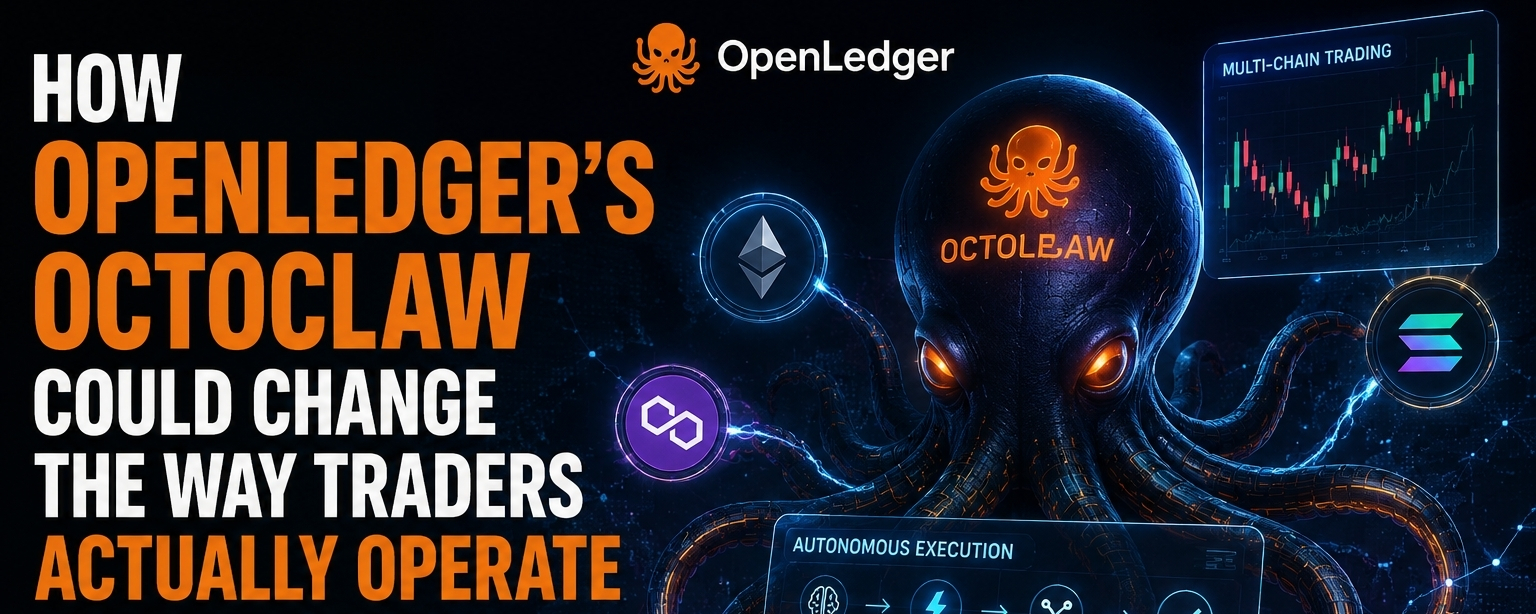
The interesting thing about Octoclaw is that it’s leaning toward autonomous action instead of passive assistance. There’s a big difference between AI telling you something and AI actually carrying out a sequence of transactions efficiently across multiple environments.
I think timing matters here too.
A few years ago, this kind of infrastructure probably would’ve broken under its own complexity. Bridges were unreliable, account abstraction barely existed in practice, and modular systems weren’t mature enough. Now the tooling is noticeably better. Cross-chain infrastructure still isn’t perfect, but it’s far more usable than during the last cycle.
That doesn’t mean there aren’t risks.
If an AI agent eventually gets permission to move capital, route trades, rebalance positions, or interact with contracts automatically, security becomes the entire conversation. Permissions, wallet architecture, exploit surfaces, contract vulnerabilities — those issues don’t disappear because the interface feels smarter. In fact, they probably become more important.
So I’m still skeptical. I think everyone should be.
But I also think the direction makes sense.
If autonomous systems improve enough, speed advantages could eventually become commoditized. Right now, experienced on-chain traders still gain edge from reacting faster manually, navigating liquidity quicker, or understanding cross-chain flows better than average users. But if agents can execute those mechanics instantly, the edge may shift somewhere else entirely.
Maybe future advantage comes from strategy design instead of execution speed.
Maybe traders spend less time clicking buttons and more time designing frameworks, risk models, and conditional logic for agents to operate within.
That’s where @OpenLedger starts looking less like “another AI crypto project” and more like infrastructure.
And infrastructure usually becomes most valuable when users stop noticing it.
Nobody logs in excited about TCP/IP or cloud routing layers. People care because everything works smoothly on top of them. If Octoclaw eventually reaches that kind of invisible reliability for cross-chain execution, that could matter more than any short-term narrative around AI agents.
Still early. Still plenty of unanswered questions.
But compared to most AI stories in crypto right now, this at least feels connected to an actual trading problem.