
I remember when i first started digging into artificial intelligence projects, almost every narrative sounded the same to me. Faster models. Bigger GPUs. Smarter agents. More automation. But the deeper i went into the AI industry, the more i noticed something strange happening behind the scenes.
The people actually feeding AI systems with value were barely visible.
Writers, researchers, coders, communities, niche experts, even normal users generating online activity every single day… all of them were contributing to the growth of AI. Yet the real economic upside was flowing almost entirely toward centralized corporations.
That imbalance kept bothering me.
And honestly, i didn’t fully understand how broken the system was until i started researching [OpenLedger](https://www.openledger.xyz?utm_source=chatgpt.com).
What caught my attention wasn’t just the blockchain side. It was the idea underneath it.
OpenLedger is trying to build an entirely different economic structure for AI itself.
The deeper i looked, the more i noticed this project isn’t simply trying to become another “AI coin.” It’s attempting to solve one of the biggest invisible problems in modern AI:
who deserves to get paid when intelligence is created?
Right now, most AI systems operate like giant black boxes. Companies gather huge amounts of data, train models, monetize outputs, and scale profits. But contributors rarely know where their data goes, how much influence it had, or whether it generated value later. OpenLedger calls this problem the lack of “data liquidity.”
When i started understanding that concept, i realized this isn’t just about blockchain anymore.
It’s about ownership.
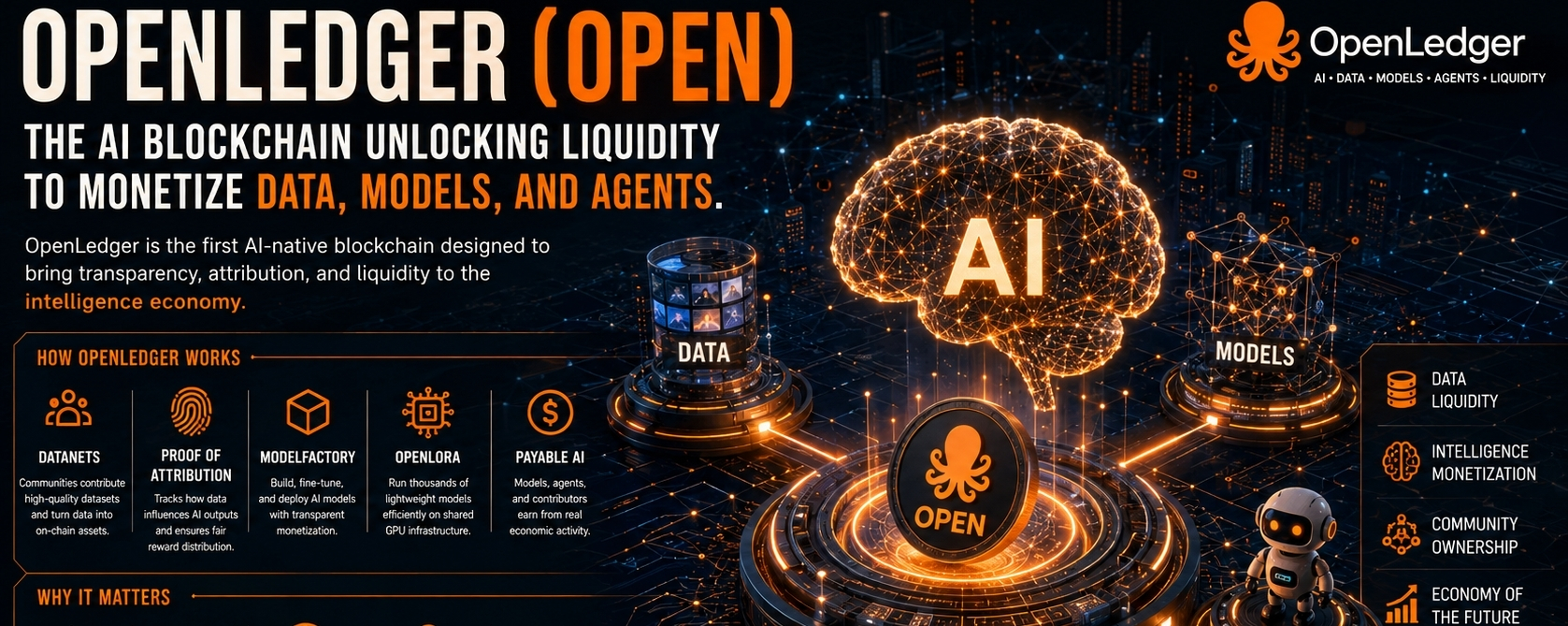
OpenLedger introduces something called Datanets, decentralized networks where communities can contribute specialized datasets for AI training.
At first glance, that sounds technical. But when i looked deeper, the implications became massive.
Because instead of data being silently extracted by corporations, contributors can actually become part of the economic layer behind AI models.
And the most important piece is something OpenLedger calls “Proof of Attribution.”
This mechanism attempts to trace which data influenced an AI model’s output. Meaning if your contribution helped shape the result, you can potentially earn rewards from future usage.
The moment i understood that, i noticed OpenLedger is trying to transform AI from an extraction economy into a participation economy.
That changes everything.
Instead of people uploading value once and losing ownership forever, contributors remain economically connected to the intelligence they helped create.
Honestly… that might become one of the biggest ideological battles of the AI era.
Because AI is no longer just software.
AI is becoming infrastructure.
And whoever controls the infrastructure behind machine intelligence could eventually control enormous parts of the digital economy.
What makes OpenLedger even more interesting is that it doesn’t stop at datasets.
The ecosystem also includes infrastructure for:
AI model deployment
inference payments
AI agents
on-chain attribution
decentralized training systems
transparent reward distribution
I noticed something important while researching this architecture.
Most AI crypto projects focus almost entirely on hype narratives.
OpenLedger is focusing on incentives.
That’s a huge difference.
Because the future of AI may not be decided only by who builds the smartest models… but by who creates the best economic system around intelligence itself.
And i think that’s where the “Payable AI” concept becomes powerful.
When i first heard the phrase, i assumed it was just marketing language.
But after reading deeper into the model, i realized OpenLedger is basically trying to make intelligence financially programmable.
Almost like what DeFi did to money.
Under OpenLedger’s vision:
data becomes an asset
models become monetizable infrastructure
AI agents become economic participants
contributors receive attribution-based rewards
intelligence itself becomes liquid
That is a radically different future from today’s centralized AI systems.
And honestly, i think many people are still underestimating how valuable attribution could become once autonomous AI agents start interacting economically at scale.
Because future AI systems won’t just answer questions.
They’ll negotiate. They’ll trade. They’ll automate decisions. They’ll operate businesses. They’ll coordinate digital economies.
And once that happens, tracing where intelligence comes from may become critically important.
I also noticed OpenLedger is trying to solve efficiency problems too, not just ownership problems.
Their OpenLoRA infrastructure focuses on running thousands of lightweight AI models efficiently on shared GPU infrastructure.
That matters because GPU costs are one of the biggest bottlenecks in AI scaling right now.
A lot of decentralized AI projects sound exciting until infrastructure economics enter the conversation.
OpenLedger at least appears aware of that challenge.
Still, i think the biggest question remains unanswered:
can decentralized AI ecosystems actually compete with centralized AI giants?
That’s the real test.
Because companies dominating AI today possess:
enormous capital
proprietary datasets
massive compute infrastructure
elite researchers
global distribution advantages
Execution will matter far more than narrative.
But i noticing something interesting lately…
More people inside both crypto and AI communities are beginning to question whether centralized AI ownership is sustainable long term.
And that shift in thinking may be exactly why projects like OpenLedger are gaining attention.
The more i researched OpenLedger, the more i realized this project is really asking one giant question:
What happens when intelligence itself becomes an economy?
Not content. Not attention. Not social media engagement.
Intelligence.
And if that future actually arrives, then attribution layers like OpenLedger may become far more important than most people currently imagine.