
$OPEN is sitting at a clean confluence on the 12H — above the VPVR point of control, above the pivot POC, and holding the 100 MA. Volume is climbing alongside open interest, and the liquidation clusters below suggest retail is getting chopped while larger positions quietly build. That's the kind of structure that usually precedes a directional move rather than a fakeout.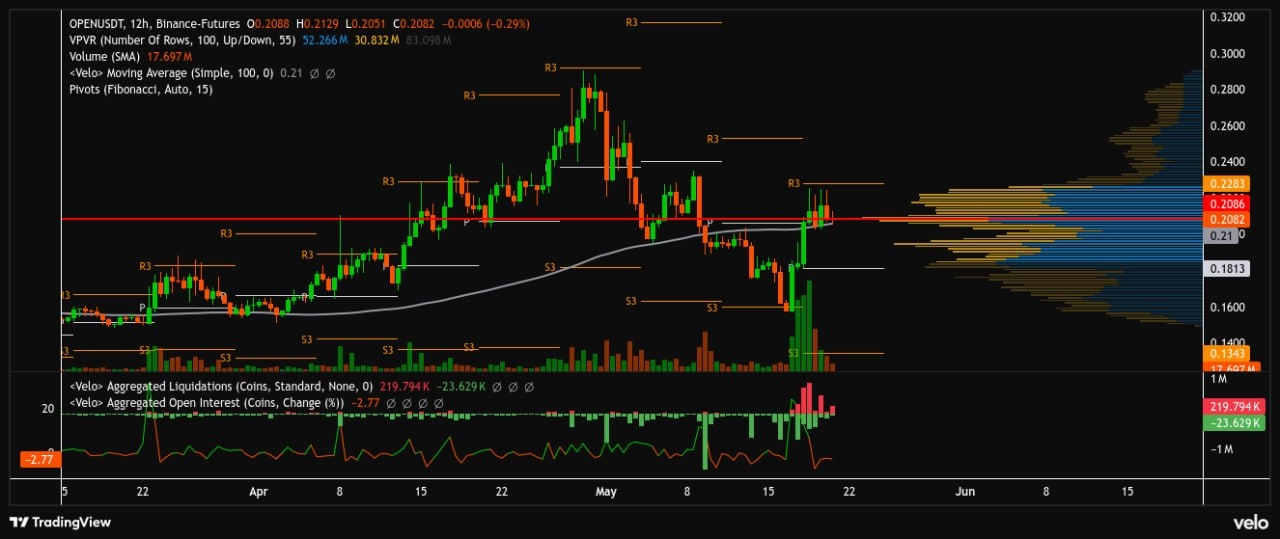
But here's what separates this from your typical altcoin setup: OpenLedger isn't just riding the AI narrative. It's running an L2 on OP Stack with EigenDA, purpose-built for something most AI projects ignore — Proof of Attribution. Through Datanets and the ModelFactory, the protocol tracks which data points actually influence model outputs and routes rewards to contributors in $OPEN . When enterprise pilots are already running across finance and healthcare, and the team is using real revenue for token buybacks, the demand side starts looking less speculative and more structural.
From a trading perspective, the entry is straightforward. Long around current levels with a stop below the 100 MA. If this confluence holds, the path is higher. If it breaks, cut it — no heroics. The difference is that with most altcoins you're betting on hype cycles. With $OPEN , you're trading a chart while the project is actually shipping infrastructure that makes data monetization verifiable on-chain.
The AI Marketplace release is on the 2026 roadmap, and the Yapper Arena rewards program is still distributing 2 million OPEN tokens to community contributors. Those aren't empty milestones — they're usage drivers that should reflect in on-chain activity and, eventually, price.
So is this accumulation before a push, or another distribution trap? The chart says the former, but the stop below the 100 MA is what keeps you honest.