
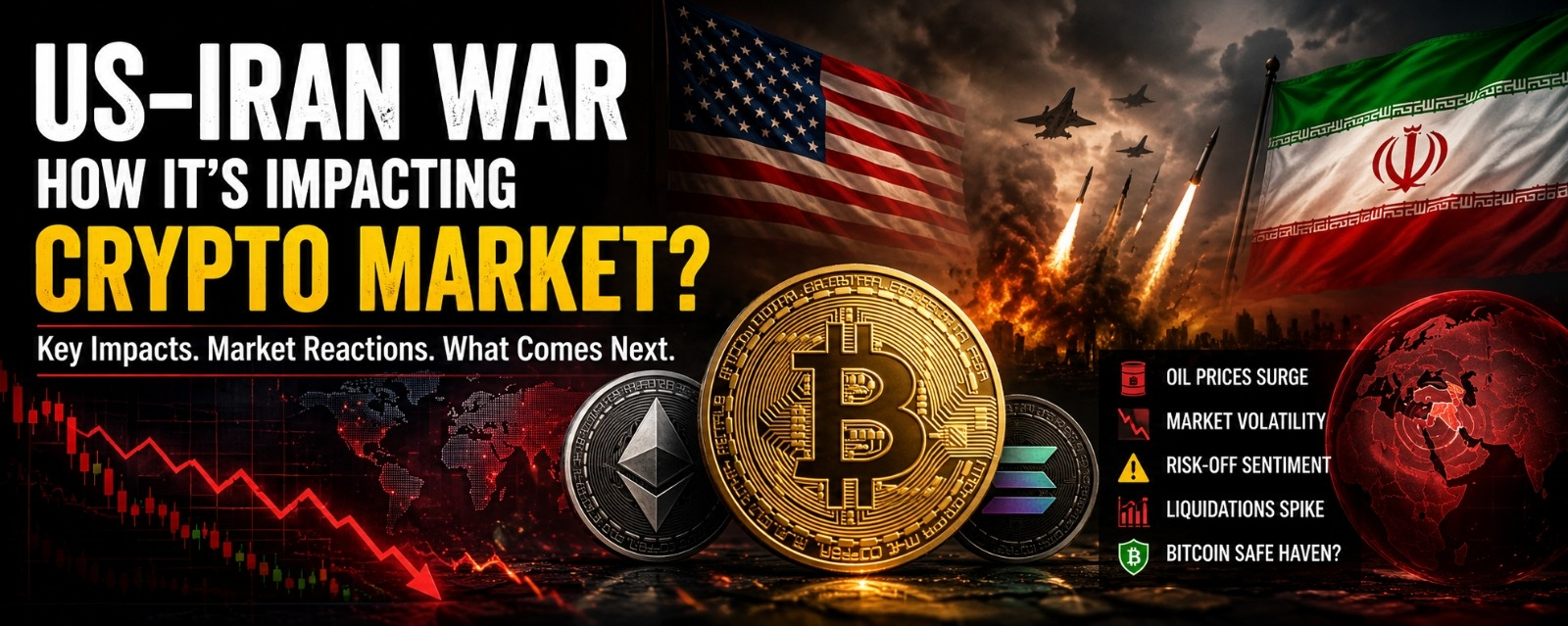
The longer I watch the market react to the growing tension between the United States and Iran, the more I realize that crypto still behaves less like an independent financial system and more like a nervous extension of global liquidity. A lot of people still repeat the old idea that Bitcoin becomes a “safe haven” whenever geopolitical instability appears, but recent price action tells a more complicated story. What I’m seeing right now is not a clean flight into crypto. It’s a market constantly trying to decide whether it should behave like digital gold, a high-risk tech asset, or simply another liquidity sponge connected to macro fear.
The U.S.-Iran conflict matters because modern markets no longer separate politics, energy, military risk, and speculative capital. Everything flows together. Oil reacts first, bond markets react second, equities start repricing growth expectations, and crypto eventually absorbs all of that emotional pressure. The reaction is often delayed by a few hours or days, but it almost always arrives.
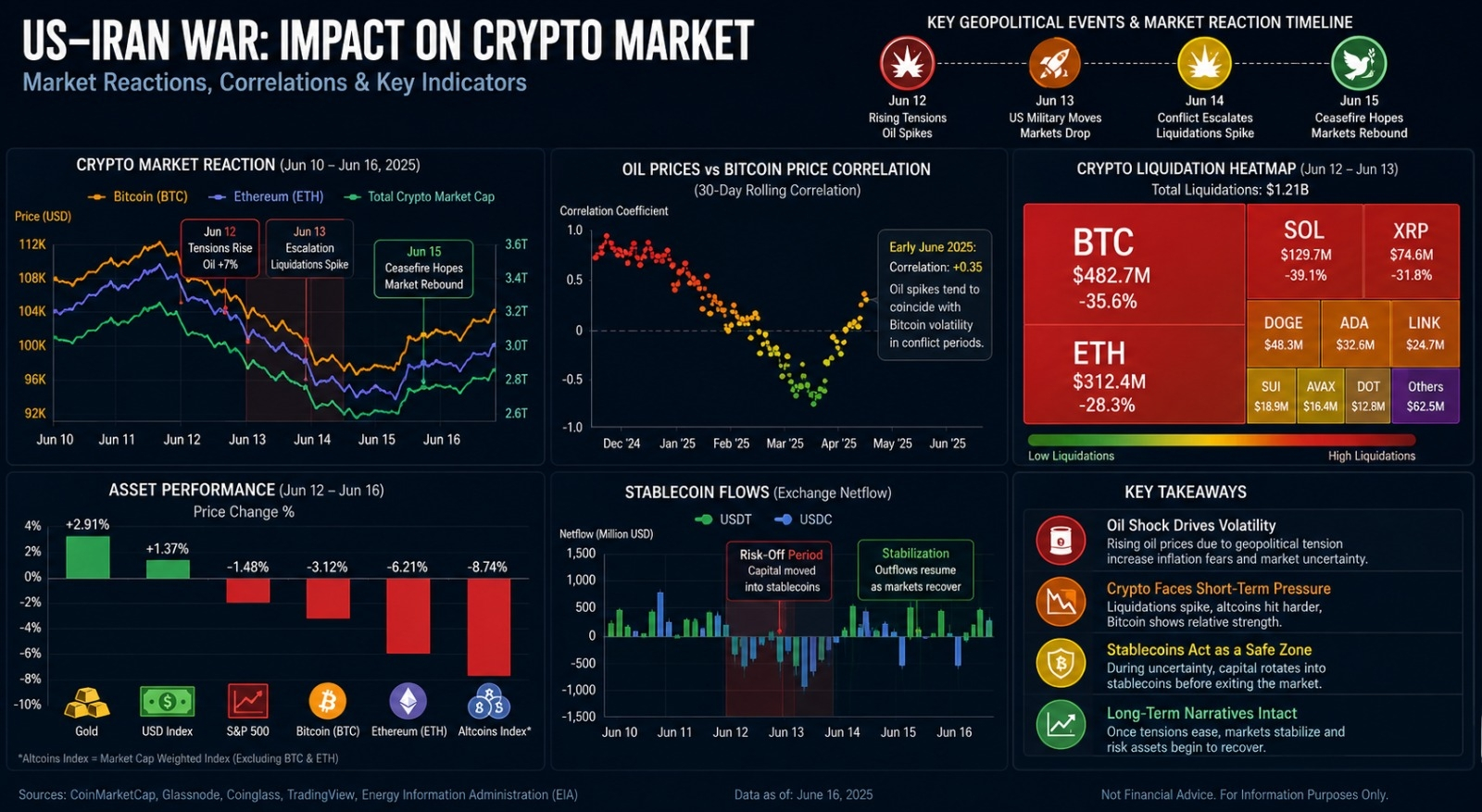
One thing I think many traders overlook is how heavily crypto still depends on confidence in global liquidity conditions. When tensions rise between major powers or oil-producing regions, investors immediately start pricing in uncertainty around inflation, interest rates, shipping routes, and economic stability. Iran sits near one of the most strategically important energy corridors in the world. Even the possibility of escalation affects oil expectations. Higher oil prices eventually create inflation concerns, and inflation concerns force markets to rethink how aggressive central banks might remain.
That is where crypto starts struggling.
For years, the crypto market benefited from cheap money and abundant liquidity. The environment after 2020 created one of the largest speculative expansions in modern financial history. But geopolitical instability changes investor psychology very quickly. In uncertain conditions, institutions reduce exposure to volatile assets first. Retail traders become more defensive. Leverage gets wiped out faster. That is why whenever headlines around military escalation appear, Bitcoin often experiences sudden liquidations instead of immediate rallies.
I noticed something interesting during recent market reactions. Every major war headline caused a very short-term spike in Bitcoin dominance, but not necessarily because investors suddenly trusted crypto more. It happened because altcoins were being abandoned even faster. That distinction matters. In stressful environments, capital usually compresses toward the largest and most liquid assets first. Bitcoin absorbs some of that rotation because it is viewed as the most established crypto asset, but smaller tokens often suffer severe drawdowns because speculative appetite disappears.
Ethereum also reflects this tension in a unique way. A lot of people talk about Ethereum as infrastructure, and that’s true, but during geopolitical uncertainty, infrastructure narratives become secondary to liquidity behavior. Traders stop caring about long-term innovation for a while and focus entirely on survival. Gas usage, DeFi activity, and meme coin speculation tend to slow down when macro fear rises. On-chain activity becomes more defensive rather than expansionary.
The uncomfortable truth is that war creates volatility before it creates opportunity.
I think many people misunderstand how institutions interact with crypto during geopolitical events. Institutions are not emotional participants. They do not buy Bitcoin because they believe in decentralization during wartime. They manage exposure based on risk models, correlations, and liquidity depth. If oil spikes aggressively and treasury yields rise, many funds automatically reduce speculative positions across multiple sectors, including crypto. This is why Bitcoin sometimes falls alongside tech stocks even when the narrative online says it should rise as a hedge.
At the same time, there is another side to this market behavior that becomes visible after the initial panic fades.
If geopolitical instability continues long enough to weaken confidence in fiat systems, sovereign debt, or monetary policy credibility, Bitcoin slowly starts regaining its “alternative monetary asset” narrative. But this transition does not happen overnight. Markets first move into cash, then defensive assets, and only later begin searching for asymmetric stores of value. That delayed shift is important. Many traders expect Bitcoin to react instantly as digital gold, but historically the market often needs time before that narrative becomes dominant.
What I personally find most fascinating is how the crypto market now reacts to war through the lens of energy. Mining economics, electricity costs, inflation expectations, and macro liquidity are all interconnected. If Middle Eastern tensions disrupt oil markets significantly, mining operations globally feel indirect pressure through energy costs. That eventually affects miner behavior, treasury management, and selling pressure. Most retail traders never think about this layer, but mining remains one of the hidden macro bridges between geopolitics and crypto price action.
Stablecoins also become extremely important during these periods. I think this is one of the clearest signals of how crypto has matured. During uncertainty, traders increasingly move into stablecoins rather than fully exiting crypto ecosystems. That changes market structure dramatically compared to earlier cycles. USDT and USDC essentially act as internal escape routes inside crypto markets. When fear rises, capital often rotates into stablecoins first before leaving exchanges entirely. Watching stablecoin dominance now gives a better understanding of market stress than simply watching Bitcoin price alone.
Another overlooked factor is derivatives leverage. Modern crypto markets are heavily driven by perpetual futures and leverage positioning. War headlines create violent repricing because traders are overexposed in both directions. One sudden geopolitical update can trigger hundreds of millions in liquidations within hours. Sometimes the move itself becomes less important than the forced unwinding that follows. That is why market structure during geopolitical tension often looks irrational. The liquidation engine temporarily matters more than fundamentals.
I also think social media distorts how people interpret these events. Every escalation immediately creates two extreme narratives. One side claims Bitcoin will collapse because global markets are at risk. The other side claims Bitcoin will instantly replace traditional safe havens. Reality usually sits somewhere in between. Crypto is still maturing. It still trades partly like a risk asset and partly like an emerging monetary alternative. Which side dominates depends entirely on liquidity conditions and investor psychology at that moment.
Right now, what I notice most is hesitation.
The market is no longer reacting with the reckless optimism that defined earlier crypto cycles. Traders are more cautious. Institutions are more involved. Macro conditions matter more than ever. Geopolitical instability is no longer treated as background noise because the market understands that military conflict can reshape inflation expectations, interest rate paths, and global capital flows very quickly.
That changes how crypto behaves.
I do not think the U.S.-Iran situation automatically means a bullish or bearish future for crypto. I think it exposes what crypto has actually become. The market is no longer isolated from the real world. It reacts to oil, treasury yields, military escalation, shipping risk, and global liquidity just like every other major asset class. The difference is that crypto reacts faster, harder, and with far more emotional volatility.
And maybe that is the most important realization from all of this.
For years, many people treated crypto as an escape from the traditional financial system. But moments like this reveal something deeper. Crypto is not outside the global system anymore. It is now emotionally and structurally connected to it. Every geopolitical shock tests whether Bitcoin is truly evolving into a global monetary asset or whether it still depends on the same fragile liquidity environment that drives everything else.
I think the answer is still being decided in real time.
#IranIsraelConflict #TRUMP #BTC走势分析 $BTC

