
A few weeks ago, I was digging through another wave of AI-related tokens, mostly out of habit at this point. The market has this rhythm to it now. Liquidity rotates fast, narratives burn hot for two weeks, CT finds a new obsession, then suddenly everyone moves on to the next thing pretending they were never there in the first place. We saw it with restaking, modular chains, RWAs, DePIN. AI feels like the latest battlefield where half the market is genuinely curious and the other half is just trying to front-run attention.
Most projects blur together after a while.
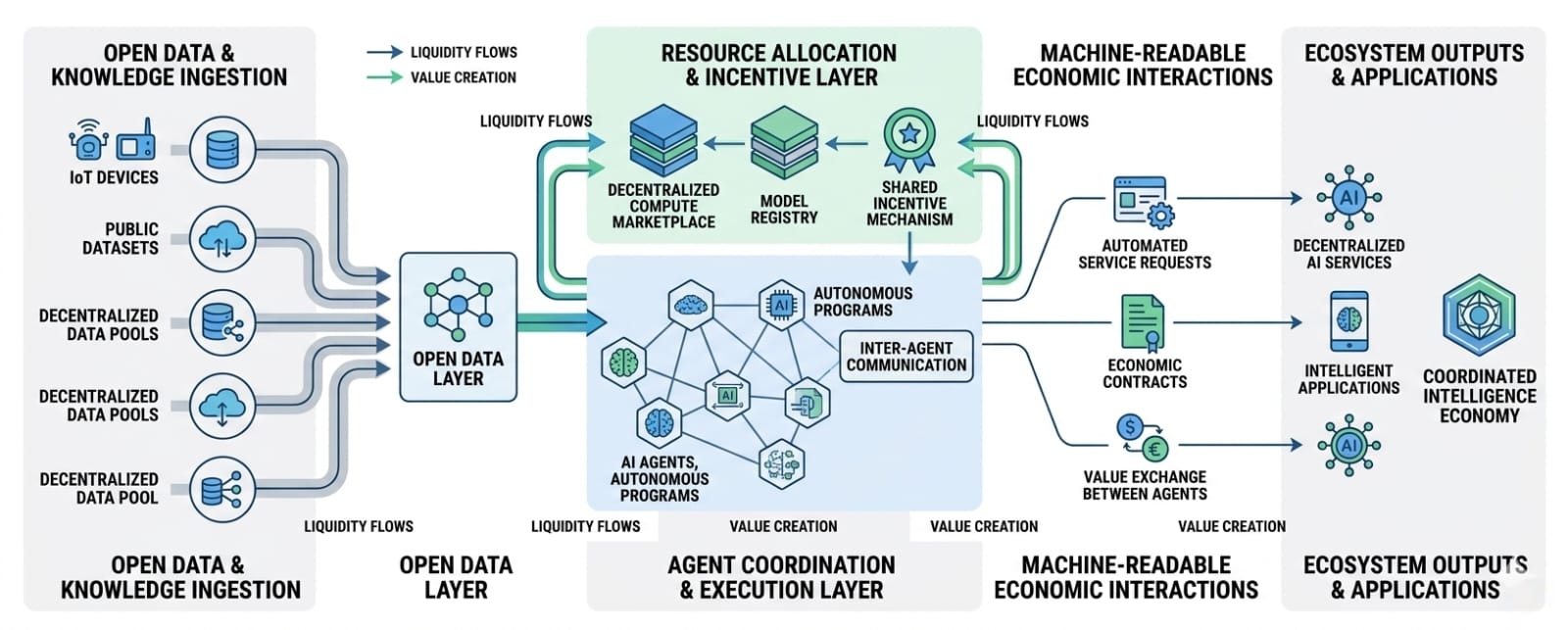
Big claims. Fancy architecture diagrams. Endless talk about “infrastructure for the future.” You stop believing most of it pretty quickly, especially in this market where attention itself became a tradeable asset.
That’s probably why OpenLedger caught me off guard.
Not because it looked revolutionary on the surface. Honestly, the branding looked almost too clean at first, which usually makes me skeptical. But the deeper I went, the more I realized it was approaching AI from a direction most crypto projects still don’t fully understand.
Everyone talks about AI models. Very few talk about the economy underneath them.
That’s the part OpenLedger seems obsessed with.

Right now, AI feels powerful but weirdly centralized. The models depend on massive amounts of data contributed by millions of people, huge amounts of compute power, and constant coordination between systems. Yet almost all the value concentrates into a handful of companies with the infrastructure to own the stack.
Crypto people love talking about decentralization philosophically, but OpenLedger seems to treat decentralization more like a coordination problem.
And honestly, that framing feels much more relevant.
Because once you strip away the hype, the real issue isn’t whether AI exists. It already does. The issue is who owns the rails underneath it. Who controls the data. Who provides the compute. Who gets compensated when machines start interacting economically with each other instead of just serving users through centralized apps.
That’s where OpenLedger became interesting to me.
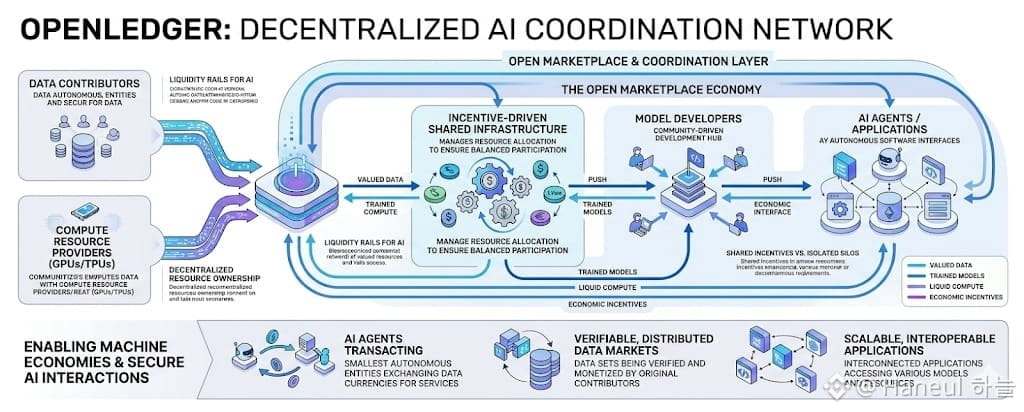
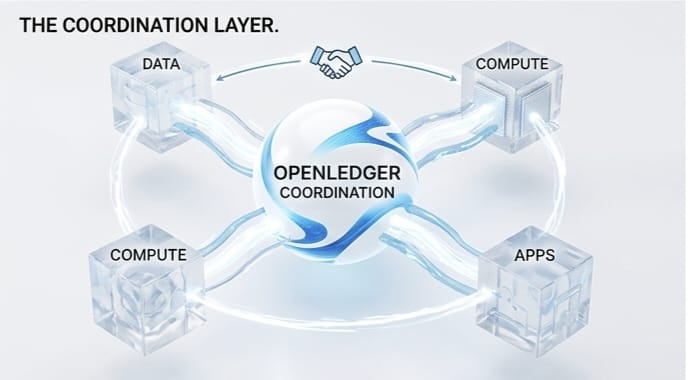
The idea is surprisingly simple once you remove the jargon. Instead of AI systems operating inside isolated corporate silos, OpenLedger tries to create a network where datasets, models, compute resources, and AI agents can interact through shared incentives. Almost like turning AI into an open marketplace instead of a closed factory.
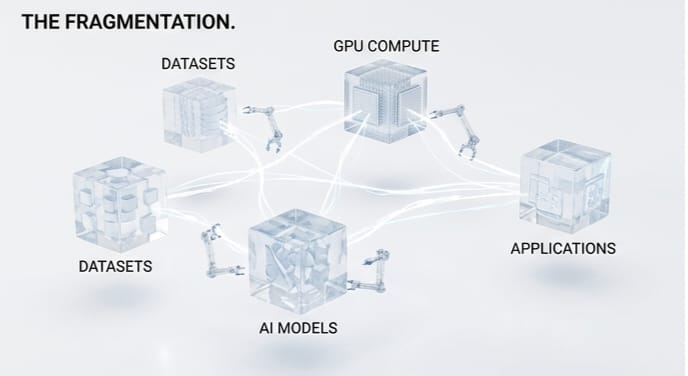
That sounds abstract until you think about how fragmented things currently are.
One group owns the data. Another group rents GPUs. Another builds models. Another distributes applications. None of them coordinate naturally. Everyone extracts value separately. OpenLedger is basically betting that future AI infrastructure will need shared economic coordination more than another slightly better chatbot.
And honestly, I think there’s something real in that thesis.
Especially now.
The market is entering that phase again where capital is becoming more selective. Retail attention isn’t infinite anymore. People are slowly getting tired of empty AI wrappers pretending to be infrastructure plays. You can feel the shift. Narratives are still powerful, but the market suddenly cares whether projects actually connect to real economic behavior.
OpenLedger at least feels aware of that.
The interesting thing is that it doesn’t position itself purely as “AI on blockchain,” which usually ends badly. It feels more like an attempt to build liquidity rails for machine economies. Data providers contribute information. Developers contribute models. Compute suppliers contribute infrastructure. Agents interact across the network. Incentives tie the system together.
In theory, it makes sense.
But theory is always the easy part.
The real question is whether networks like this can attract genuine activity without subsidizing everything artificially. That’s where I still have questions. Crypto has a long history of manufacturing temporary demand through incentives that disappear the second emissions dry up. You can build beautiful systems that nobody actually needs once the rewards stop flowing.
I think OpenLedger understands this risk, which is probably why they focus heavily on monetizable AI interactions instead of just governance theater. Still, adoption in these ecosystems is fragile. If developers don’t see economic opportunity, they leave. If data quality drops, the network weakens. If compute providers find better yields elsewhere, liquidity disappears fast.
And competition here will become brutal.
Not just from crypto projects either. Traditional AI companies move faster than most people in crypto realize. The second decentralized coordination starts looking economically efficient, centralized players will try to replicate parts of it while keeping ownership concentrated.
That’s the part people underestimate.
Decentralization doesn’t automatically win because it sounds morally better. It only wins if coordination becomes more efficient than centralized alternatives. Otherwise users won’t care.
Still, I can’t ignore the broader direction this space seems to be moving toward. AI systems are becoming increasingly autonomous. Agents will eventually transact, source data, rent compute, and execute tasks without constant human involvement. Once that happens, markets themselves start looking different. Less like apps. More like living economic networks.
OpenLedger feels positioned around that possibility earlier than most.
Whether that timing becomes an advantage or a problem is harder to tell. Being early in crypto often looks identical to being wrong until liquidity finally catches up.
What I keep thinking about though is something simpler.

Maybe the next phase of AI isn’t about building the smartest model anymore. Maybe intelligence becomes commoditized faster than people expect, and the real value shifts toward coordination layers the systems deciding how data, machines, compute, and incentives interact at scale.
If that happens, projects like OpenLedger stop looking like niche infrastructure experiments and start looking more like prototypes for digital economies we haven’t fully understood yet.
Or maybe it’s just another beautifully packaged idea competing for the same rotating pool of speculative liquidity everyone else is chasing.
